
For more than a decade, the promise of “one cable to rule them all” has hovered just out of reach. Every time it felt close, a new connector, adapter, or proprietary charger would sneak in and reset expectations. In 2026, though, something has genuinely shifted. USB-C is no longer the future — it’s quietly becoming the default.
This isn’t happening because consumers suddenly demanded it en masse. It’s happening because regulation, manufacturing efficiency, and everyday convenience have finally aligned.
REGULATION LIT THE FUSE: THE INDUSTRY IS FANNING THE FLAMES
The clearest catalyst came from Europe. The EU’s common charger regulation requires USB-C charging for many categories of portable electronics sold within its borders, with smartphones and smaller devices already covered and laptops following in 2026. While this is technically European legislation, its impact is global. Manufacturers rarely want to design different charging systems for different regions, and once USB-C becomes mandatory for a market the size of the EU, it quickly becomes the default everywhere else.
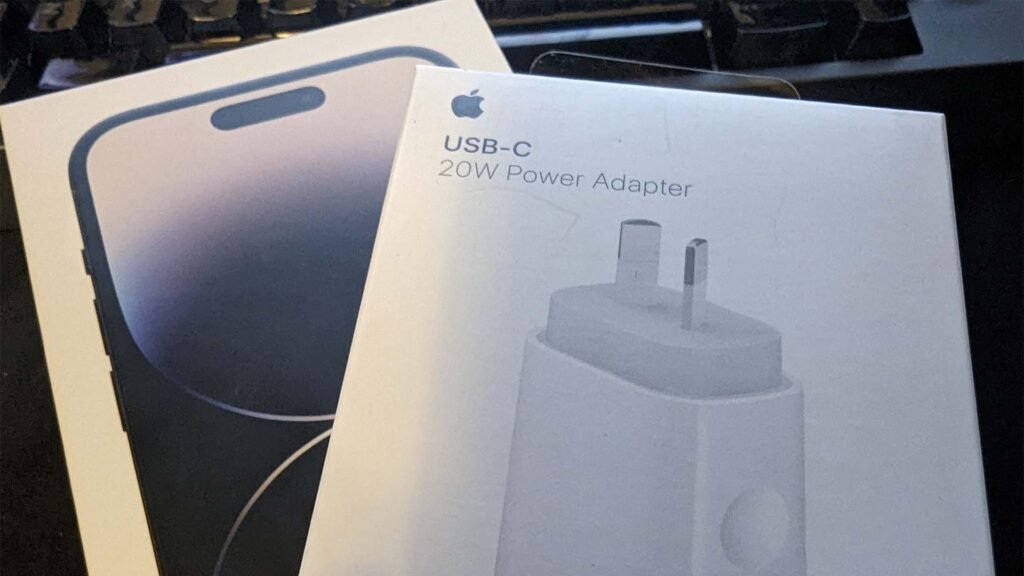
Australian buyers are now benefiting from that momentum. Devices sold locally increasingly mirror global designs, and USB-C has become the safest long-term choice for brands trying to simplify their product lines while staying compliant across multiple regions.
USB-C IS NO LONGER JUST A PHONE CABLE
What makes this moment feel like a tipping point isn’t that phones use USB-C — that part is already largely settled. The bigger change is how USB-C has expanded outward into almost every other category of device.
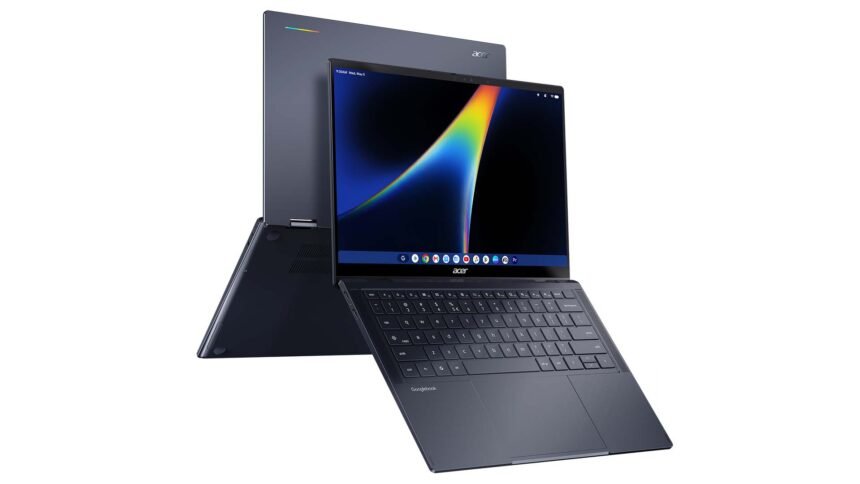
Laptops that once relied on bulky barrel chargers are now increasingly powered entirely through USB-C. Tablets, handheld gaming devices, headphones, portable speakers, cameras, and even accessories like power banks and lights are all converging on the same connector. In higher-end devices, Thunderbolt and USB4 share the same USB-C port, delivering faster data speeds, external display support, and docking capabilities without changing the physical plug.
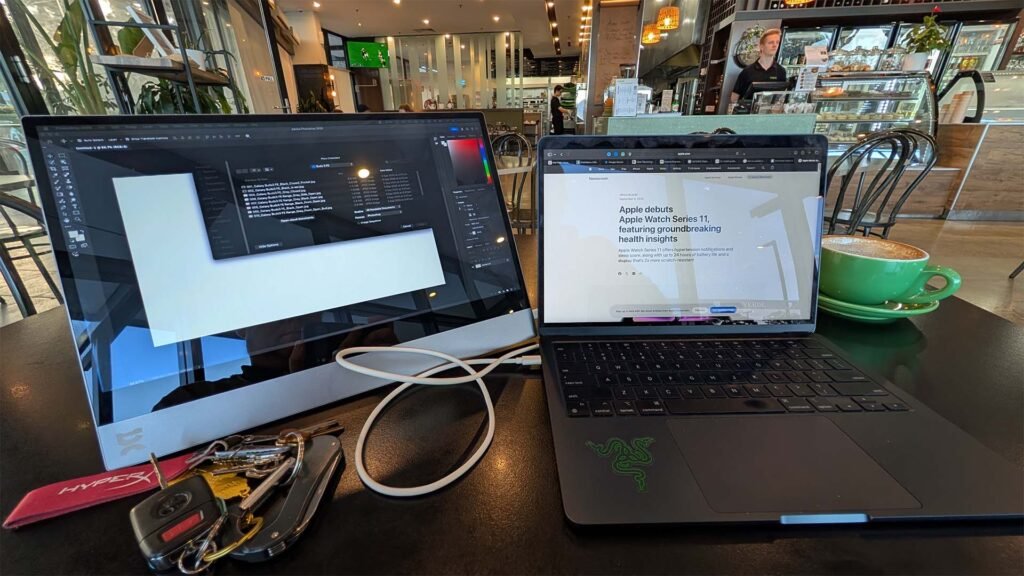
The result is that USB-C is no longer just a charging standard. It has become a universal connection for power, data, and video — a single port that adapts to whatever role a device needs at that moment.
ONE HIGH-QUALITY CHARGER NOW MAKES SENSE
This shift really becomes tangible when you look at charging setups. For years, the idea of carrying a single charger for everything sounded good in theory but fell apart in practice. Phones charged slowly, laptops needed their own bricks, and plugging in multiple devices at once was a mess.
Modern multi-port USB-C wall chargers have changed that equation. Thanks to USB Power Delivery and gallium nitride (GaN) technology, a single compact charger can now intelligently distribute power across several devices at once. It’s entirely realistic for one charger to handle a laptop, tablet, phone, and earbuds simultaneously — without overheating or crawling along at unusable speeds.
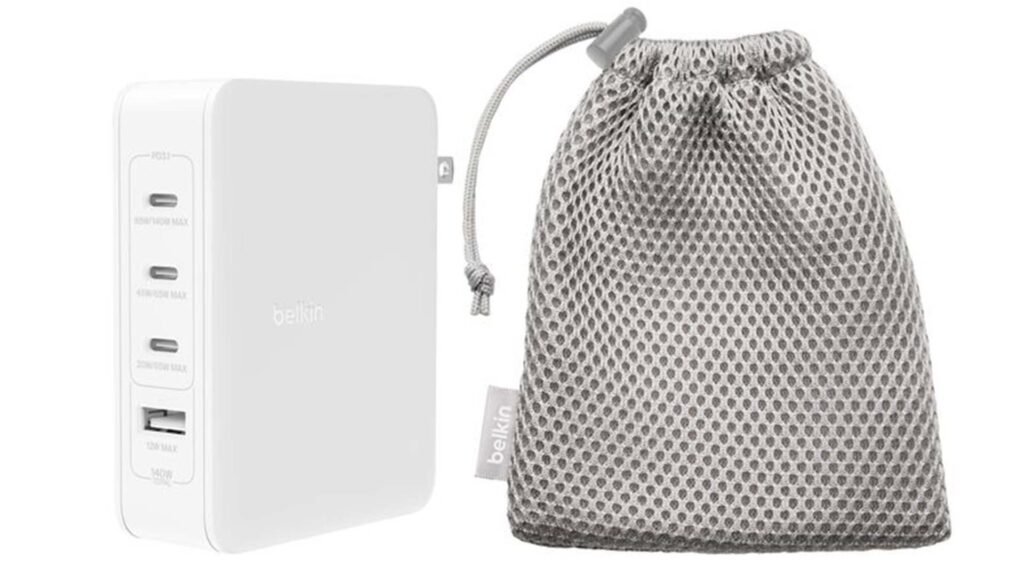
Products like the BoostCharge Pro range from Belkin reflect how mainstream this idea has become in Australia. These chargers are designed around the assumption that USB-C is the common denominator, not a bonus feature. You plug in what you have, and the charger figures out the rest.
FEWER CABLES, FEWER DECISIONS
As USB-C adoption spreads, the biggest benefit isn’t technical — it’s mental. Fewer cable types mean fewer decisions and fewer chances to get it wrong.
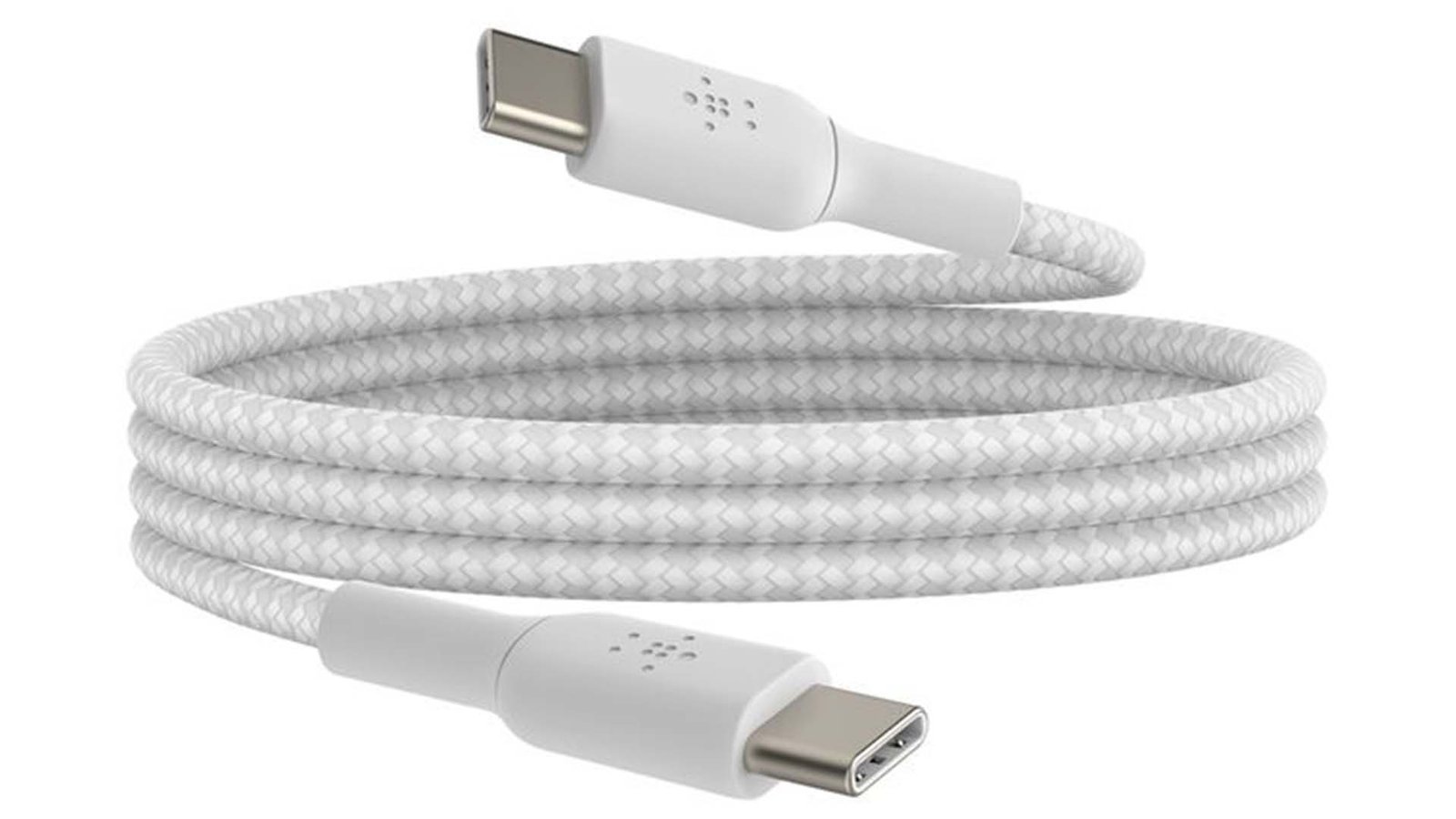
For many people, a single USB-C charger and one or two good-quality cables are now enough to cover everything they carry day to day. Add a USB-C battery bank and you’ve got a travel setup that works across phones, tablets, laptops, and accessories without needing adapters or special cases.

This is particularly noticeable when travelling. Instead of packing a laptop charger, a phone charger, and a collection of device-specific cables, you can often get away with one compact wall charger and a power bank. If everything charges over USB-C, it doesn’t really matter which device needs power first — the same gear handles all of it.
THERE ARE STILL SOME CAVEATS
USB-C isn’t entirely friction-free yet. Not all cables support the same speeds or power levels, and not all USB-C ports do the same things. A cheap cable might charge a phone just fine but struggle with laptop power or external displays. Likewise, a low-wattage charger may technically work with a laptop but charge it painfully slowly.
There’s still — particularly for travellers — some existing infrastructure that will result in you needing to carry a USB-A to USB-C charging cable on the move. Locations like Airports, Planes, hostels, and public charging stations that don’t have USB-C ports for users to plug into.
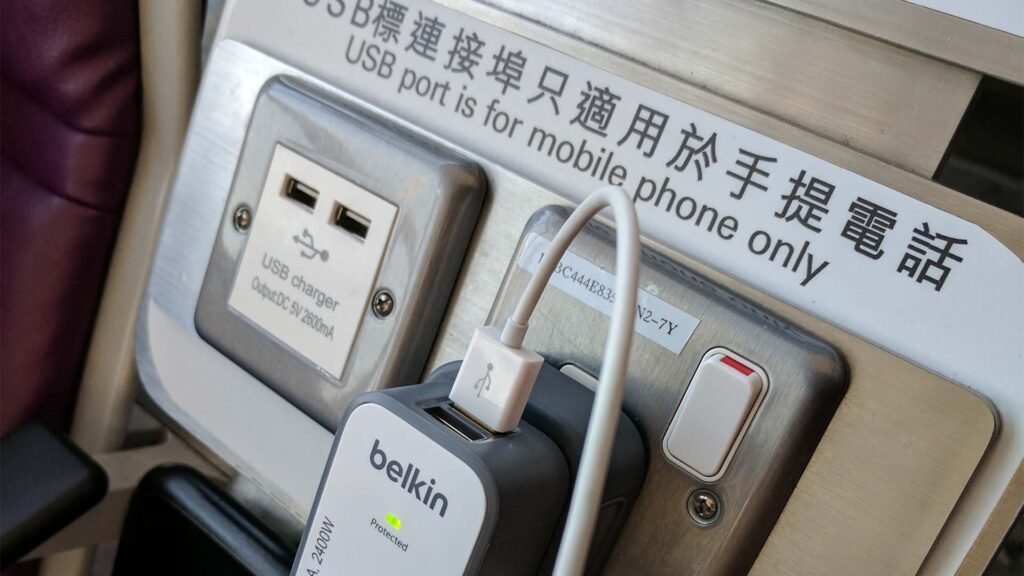
The good news is that these are edge cases rather than everyday frustrations. As USB-C becomes the assumed baseline, clearer labelling and better defaults are steadily reducing the guesswork.
Why this moment feels different
What makes 2026 feel like a turning point is that USB-C is no longer being pushed as a feature. It’s being treated as a common factor, infrastructure if you will…
Between regulatory pressure, near-universal manufacturer adoption, and the rise of genuinely capable multi-port chargers, USB-C has crossed from “almost there” into “good enough for most people, most of the time.” For Australian consumers, that means fewer cables in drawers, fewer chargers in bags, and far less anxiety about whether you’ve packed the right one.
Once you experience a setup where one charger, one cable type, and one battery bank cover nearly everything you own, it becomes obvious: this isn’t just convergence — it’s finally the end of the cable chaos era.