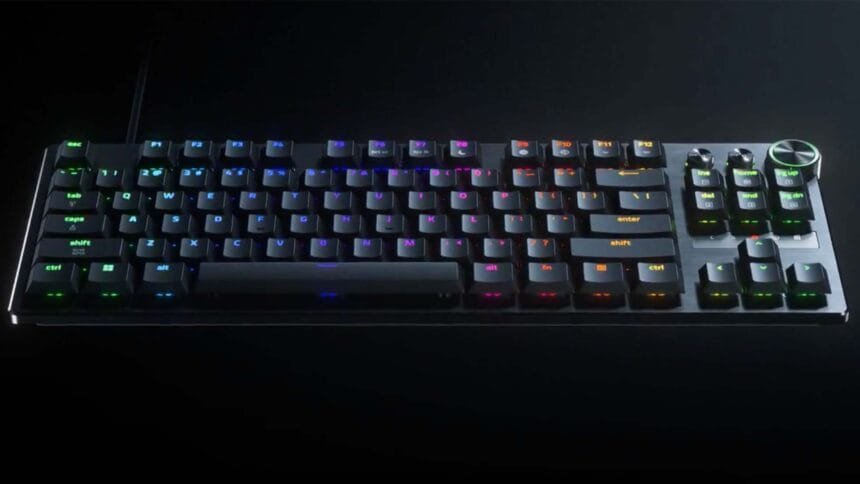

Acer has expanded its Predator gaming lineup at IFA 2026, with new hardware covering both portable PC gaming and some seriously high-refresh-rate desktop displays. The announcements are led by the compact Predator Atlas 7 gaming handheld and the Predator XB253Q U1, a 24.5-inch monitor capable of reaching a rather ridiculous 1000 Hz at Full HD. Acer has also introduced two other Predator displays aimed at gamers who would rather balance outright speed with resolution and image quality.
Predator Atlas 7
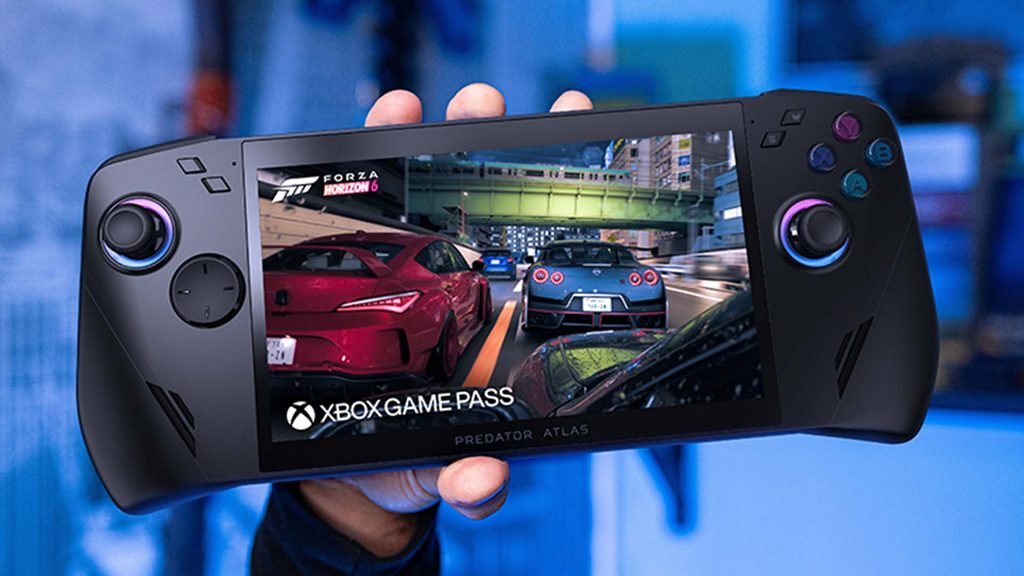
The Predator Atlas 7 takes Acer’s handheld gaming hardware into a smaller 7-inch format. It’s powered by up to an Intel Arc G3 Extreme processor with Intel Arc B390 graphics, paired with up to 24 GB of LPDDR5X memory and 1 TB of PCIe Gen4 storage.
Its 7-inch 1920 x 1080 touchscreen runs at 120 Hz with VRR support and reaches 500 nits, while Gorilla Glass Victus and an included tempered-glass protector should provide some extra resilience when travelling. Acer has also put plenty of effort into the controls, with optional TMR joysticks, Hall-effect analogue triggers and contoured grips.
Cooling comes from a dual-fan arrangement combining an 89-blade metal AeroBlade fan with a second plastic fan and Acer’s Vortex Flow system. Battery capacity reaches 80 Wh, while connectivity includes two Thunderbolt 4 ports, UHS-II microSD, Wi-Fi 7 and Bluetooth 5.4.
Project DualPlay Mini

Not everything Acer showed is ready for store shelves. Project DualPlay Mini is an 8-inch Predator concept exploring the idea of combining a gaming handheld and tiny productivity laptop.
Its flip-and-swivel design allows the screen and controls to transform between a conventional handheld configuration and a mini-laptop mode with a physical backlit keyboard. It can also connect to an external display for productivity use. Internally, Acer says the concept uses a similar dual-fan cooling architecture to its larger Predator handhelds.
It’s an interesting concept, particularly as handheld gaming PCs continue to become more capable general-purpose Windows machines, but for now that’s all it is — Acer has confirmed the DualPlay Mini isn’t a commercial product.
Predator XB253Q U1
If you thought 500 Hz gaming monitors were getting excessive, Acer apparently disagrees.
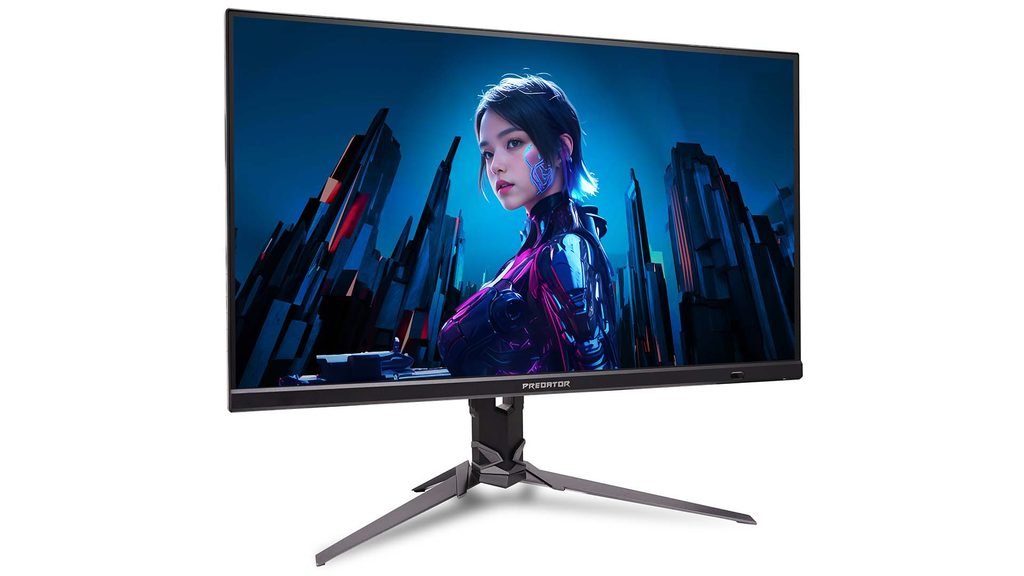
The Predator XB253Q U1 is a 24.5-inch Full HD IPS gaming monitor capable of reaching an enormous 1000 Hz refresh rate. It’s clearly aimed at competitive and esports players rather than gamers chasing resolution, with Acer also including its VRB Pro technology to reduce motion blur and ghosting.
The panel has a quoted 0.3 ms VRB Pro response time, DisplayHDR 400 support, 99% sRGB coverage and support for both AMD FreeSync Premium and NVIDIA G-SYNC Compatible variable refresh technologies.
A 1000 Hz monitor is obviously going to be niche — you’ll need a system and game capable of producing frame rates that can take advantage of it — but it certainly makes for an eye-catching specification.
Predator X32 V3
At the opposite end of the spectrum is the Predator X32 V3, where image quality takes priority over chasing four-digit refresh rates.
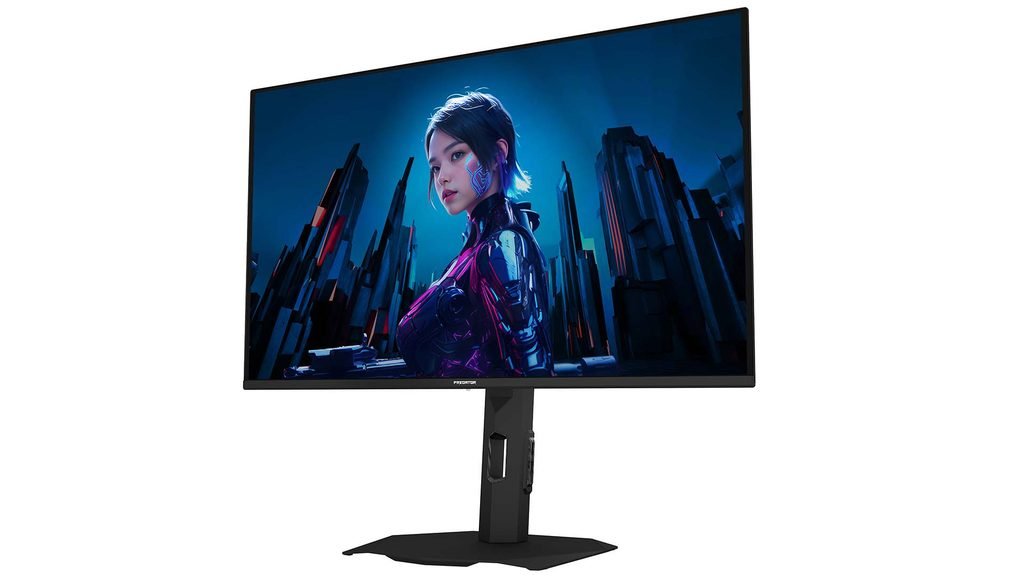
The 31.5-inch monitor uses a QD-OLED Penta Tandem panel, employing a five-layer emission structure that Acer says improves brightness, efficiency and panel longevity. It runs at 3840 x 2160 at 180 Hz with a quoted 0.03 ms response time.
There’s also VESA DisplayHDR True Black 400 certification, 99% DCI-P3 coverage, Delta E<1 colour accuracy, AMD FreeSync Premium Pro and NVIDIA G-SYNC compatibility. It’s arguably the more conventional premium gaming monitor of Acer’s new Predator releases, combining OLED image quality with a refresh rate that’s still plenty fast for gaming.
Predator XB273K V7
The Predator XB273K V7 sits somewhere between Acer’s two extremes. Its 27-inch IPS panel normally operates at 4K and 160 Hz, but Dynamic Frequency and Resolution technology lets users trade resolution for substantially more speed, switching to Full HD at up to 500 Hz.
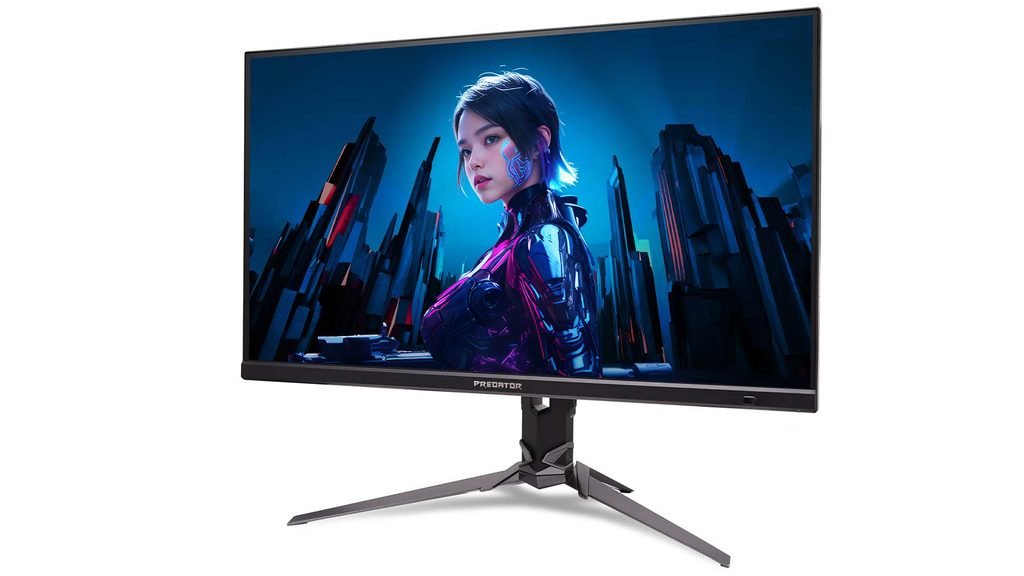
That gives it an interesting dual purpose: 4K for visually demanding games, everyday use and creative workloads, then 500 Hz for competitive titles where responsiveness matters more than pixel count.
The XB273K V7 also offers 95% DCI-P3 coverage, DisplayHDR 400, AMD FreeSync Premium and NVIDIA G-SYNC compatibility, along with HDMI 2.1, DisplayPort 1.4 and USB-C connectivity.
Pricing and Availability
Australian pricing is currently confirmed for two of the three new Predator monitors. The Predator X32 V3 is expected in Australia during Q2 2027 from A$1,999, while the Predator XB273K V7 is also scheduled for Q2 2027, starting at A$899. Australian pricing and availability haven’t been announced for the 1000 Hz Predator XB253Q U1.
Acer says the Predator Atlas 7 will begin arriving in North America during Q4 2026 and Europe from November, but the supplied announcement doesn’t provide Australian pricing or availability. Project DualPlay Mini remains a concept with no commercial release announced.
Conclusion
Acer’s latest Predator announcements cover two very different directions in PC gaming. The Atlas 7 reflects how quickly handheld PCs are developing, squeezing increasingly capable Windows gaming hardware into a smaller package without abandoning features such as Thunderbolt 4, Wi-Fi 7 or a sizeable battery.

The monitors are where Acer gets considerably more aggressive. 1000 Hz at Full HD is the headline grabber, but the X32 V3’s QD-OLED panel and the XB273K V7’s ability to switch between 4K/160 Hz and FHD/500 Hz are arguably more interesting for gamers who play more than competitive esports titles.