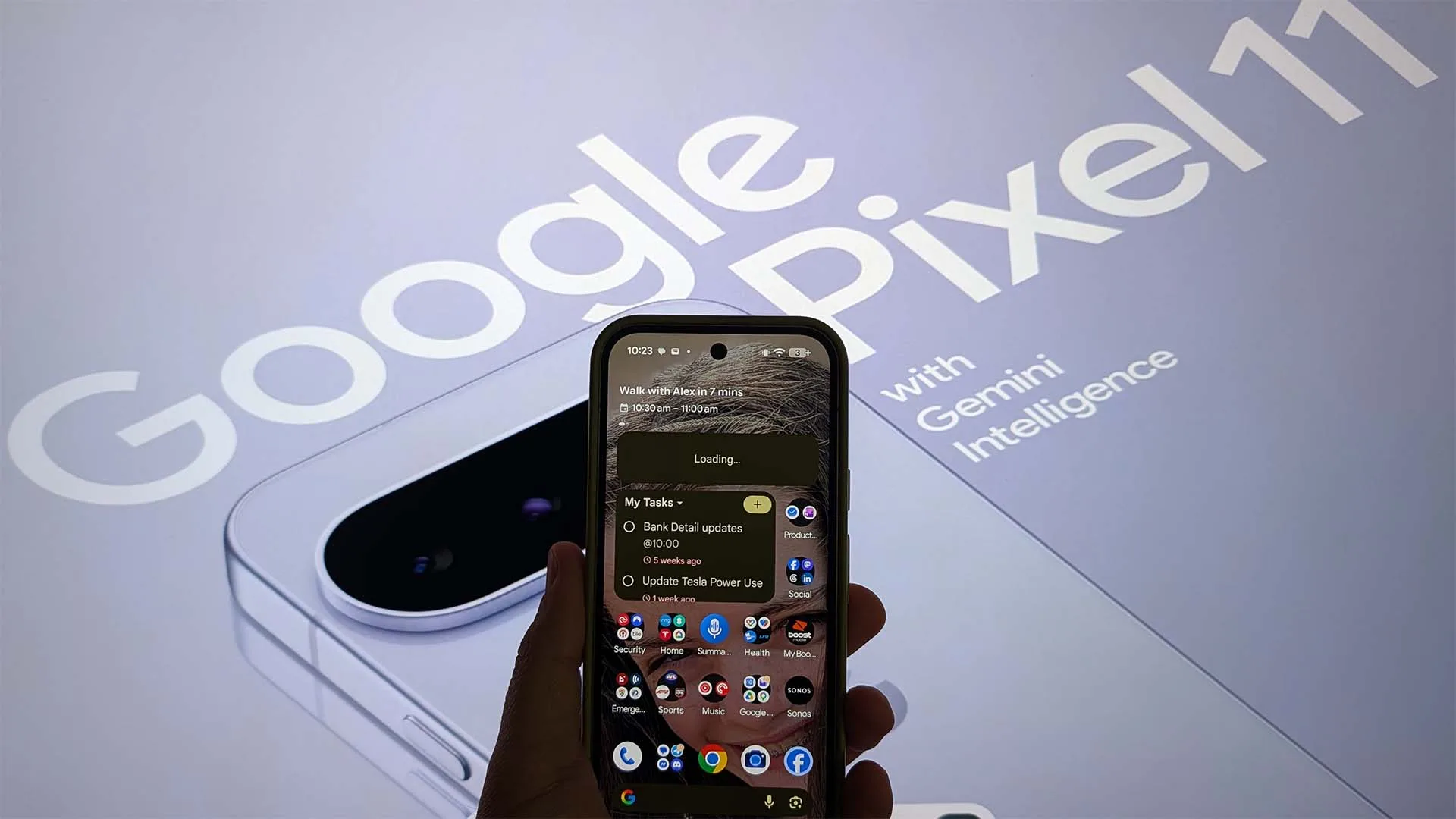

- Crisp and Bright Screen
- Great Battery Life
- Consistent and Reliable Performance
- Charging be Faster
- Pixelsnap doesn't have a lot of accessories yet
- A Higher Storage Capacity would be great
With the release of the Pixel 11, Google has evolved the device in a number of expected ways; refining what is already a really solid phone and putting a lot more emphasis on the AI component. Rather than overhauling an already established identity, the Pixel 11 directly addresses long-standing user criticisms regarding cellular connectivity, sustained thermals, and base storage, while doubling down on on-device generative intelligence and computational photography.
The result is a generationally refined, more cohesive Android phone built to handle life in the real-world, rather than simply chasing benchmark leaderboards.
Design and Hardware
The Pixel 11 retains the clean, industrial design introduced in recent generations, featuring flat polished rails, gentle corner radii, and Google’s signature independent camera island. It is protected by Corning Gorilla Glass Victus 2 across both the front display and back panel, packaged securely inside with an anodised satin aluminium frame.
The whole thing weighs 197 grams, the chassis feels really well-balanced in your hand, carrying an IP68 rating for water and dust resistance to protect against sweaty gym sessions, accidental spills and rainy commutes.
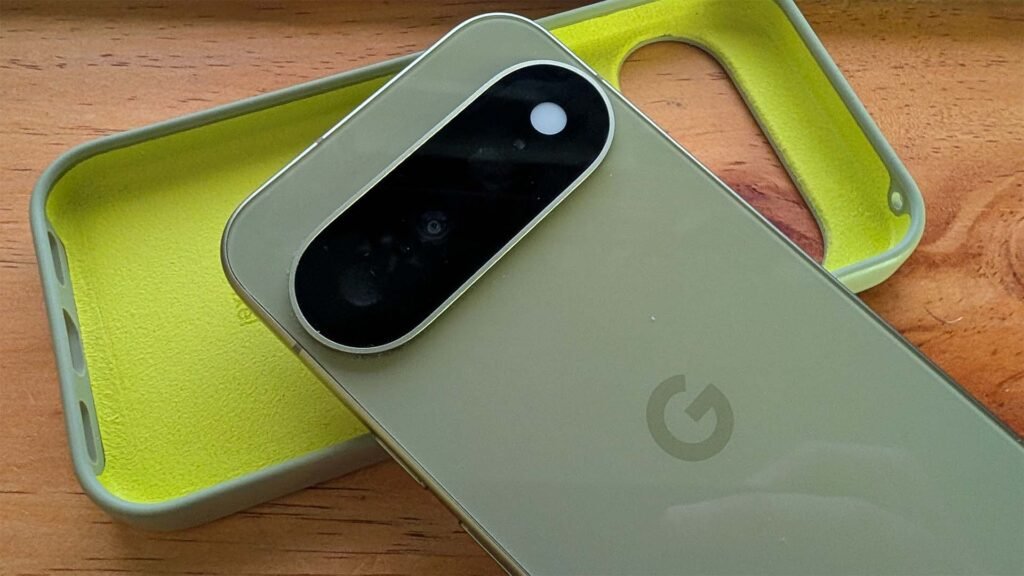
A now standout hardware feature (first introduced in the Pixel 10) is the integrated Pixelsnap magnetic ring array embedded directly into the rear casing, which provides native support for magnetic wallets, car mounts, and aligned chargers without requiring a third-party accessory case.
The Pixel 11 standard is offered in four distinct finishes: Frost, Pistachio, Hibiscus, and Obsidian.
Display: More Than Just Specs
Being what we most interact with on a phone, a bad display can “break” an otherwise really good phone. The Pixel 11 has an excellent display; that is bright enough to be clearly visible in bright sunlight. It also displays photos and videos admirably well, with detail, clarity and excellent colour reproduction.
The front of the device is dominated by a flat 6.3-inch Actua OLED panel running at FHD+ resolution (1080 by 2424 pixels). It features a dynamic adaptive 120Hz refresh rate that keeps scrolling and system animations very smooth while dropping down when idle to conserve battery.
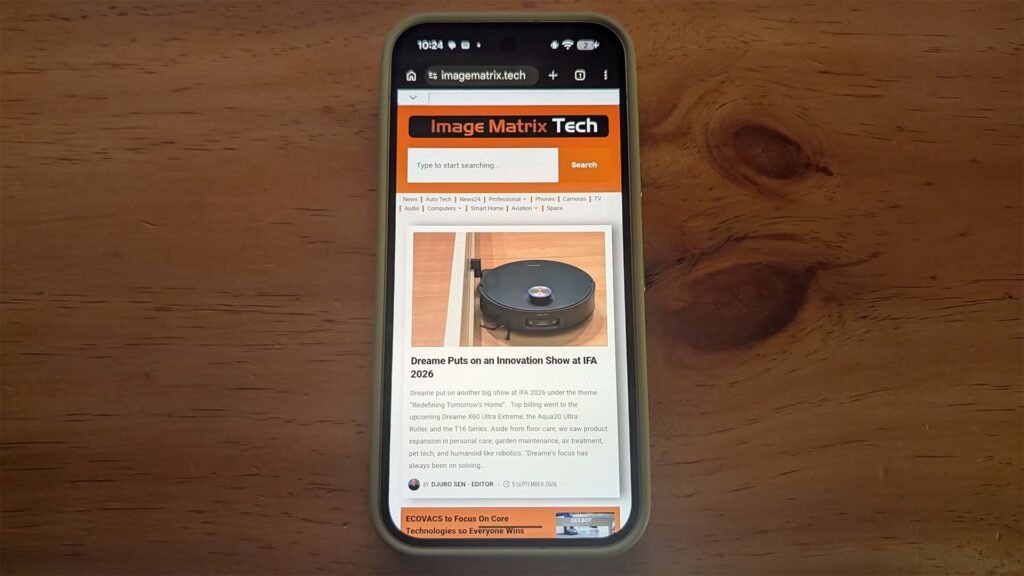
The screen achieves a peak brightness of up to 3,000 nits, ensuring full legibility under direct, harsh sunlight alongside vivid HDR10+ media playback. Biometric authentication is handled by a swift ultrasonic under-display fingerprint sensor that operates reliably even with damp fingers, complemented by secure Class 3 Face Unlock for banking apps and credential verification.
Tensor G6
At the heart of the Pixel 11 sits Google’s custom Tensor G6 system-on-chip, manufactured on an efficient 3nm process and paired with 12GB of fast LPDDR5X RAM. App launch times feel quicker than previous Pixel generations, web browsing is snappier, and UI transitions remain fluid even throughout intense multitasking.
In a significant pivot, Google has replaced the older Exynos-based modems with a custom MediaTek modem, virtually eliminating the intermittent signal drops, cellular hunting, and excessive idle drain that troubled some earlier generations of Pixel devices.
Thermal management is markedly improved for daily workloads, though sustained high level gaming will still induce gradual throttling since the base model lacks the Pro variant’s vapour chamber. In practical terms, during testing at sites — I’m a Volunteer Firefighter with the CFS here in S.A. —even when I was close up to a burn off, and I’d typically expect thermal warnings on my existing Pixel 10 Pro XL, or indeed several other devices I’ve reviewed, the Pixel 11 was fine.
Hardware security is reinforced by the upgraded Titan M3 coprocessor, introducing post-quantum encryption to protect on-device keys and biometrics.
The Software and AI – Where Evolution Really Shows
The Pixel 11 turns Gemini from a glorified chat overlay into the integrated connective tissue of Android 17. Powered by the Tensor G6 TPU, an upgraded on-device Gemini Nano model parses your ongoing context locally without burning through battery or offloading sensitive personal data to the cloud. The result is a proactive operating system that works quietly in the background rather than waiting for rigid voice prompts.
Where this shone most for me, was across the broader Google ecosystem. Gemini effectively — of course it does, it’s all Google systems — bridges the gaps between Gmail, Google Calendar, Maps, and Messages seamlessly. When you receive a text asking about upcoming travel or dinner plans, the phone automatically cross-checks your flight itineraries or calendar appointments and surfaces a glanceable card with the exact details. You can even task it with multi-step workflows, like finding an emailed invoice, creating a calendar payment reminder, and filing the PDF straight into Drive in a single request.
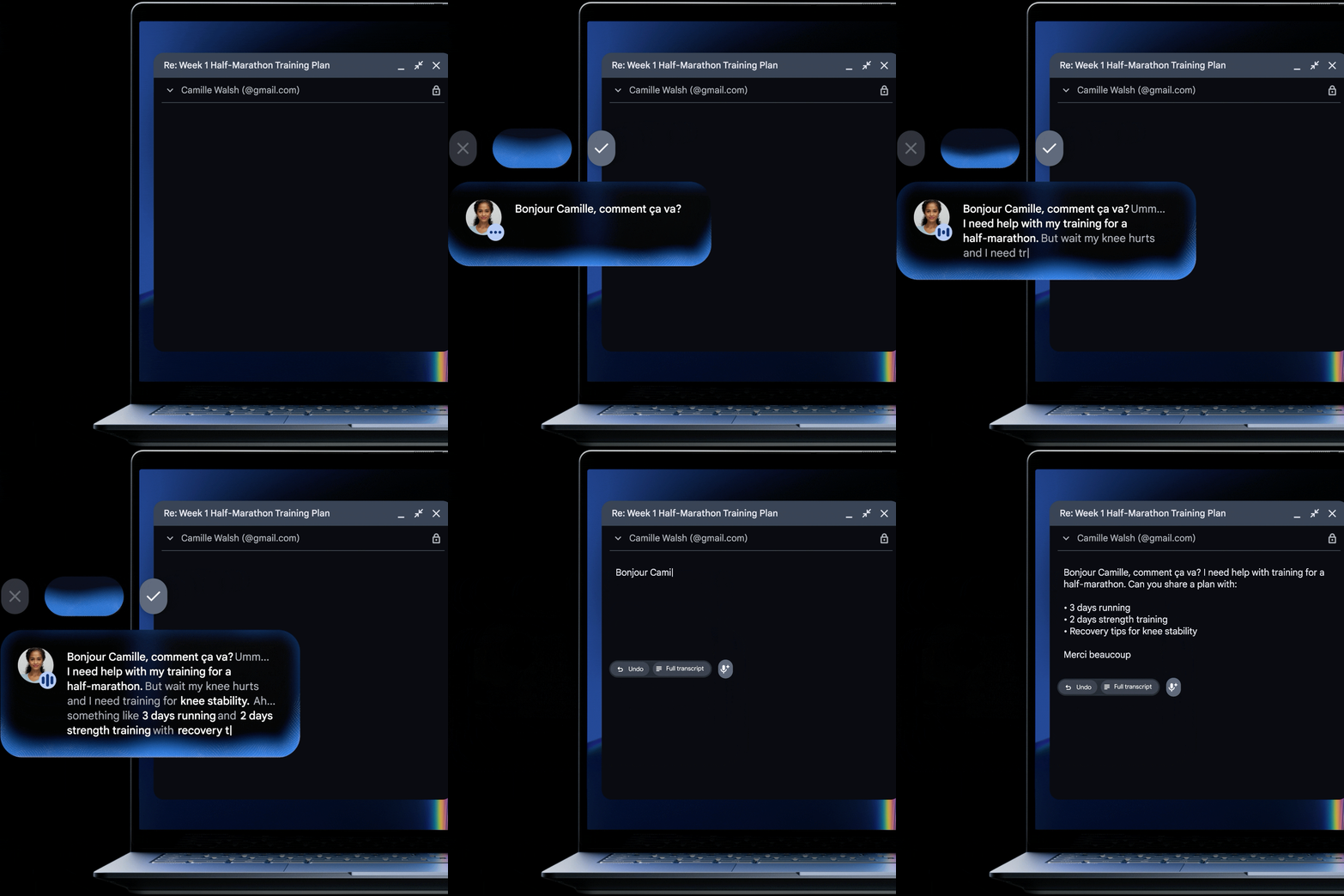
Everyday communication tools feel noticeably sharper as well. The new Rambler voice input in Gboard — Demonstrated during the Google I/O keynote — dynamically strips out verbal fillers like “um” and “ah,” fixing mid-sentence pauses to turn casual speech into clean, formatted text on the fly. Meanwhile, accessibility gets a massive upgrade with native Sign Language-to-Text via the front camera, and Live Translate can now perform real-time neural audio dubbing over foreign-language videos and streams.
All of this intelligence sits on top of Google’s standard-setting promise of seven full years of major Android OS updates, monthly security patches, and quarterly Feature Drops. Rather than feeling like a handset with bolted-on AI gimmicks, the Pixel 11 delivers a genuinely cohesive, attentive platform that eliminates friction across your everyday routine.
The Cameras
Google maintains its photographic leadership by pairing an upgraded 48MP main sensor with a dedicated 10.8MP 5x optical telephoto lens and a 13MP ultrawide camera with macro capabilities, alongside a 10.5MP front-facing shooter.
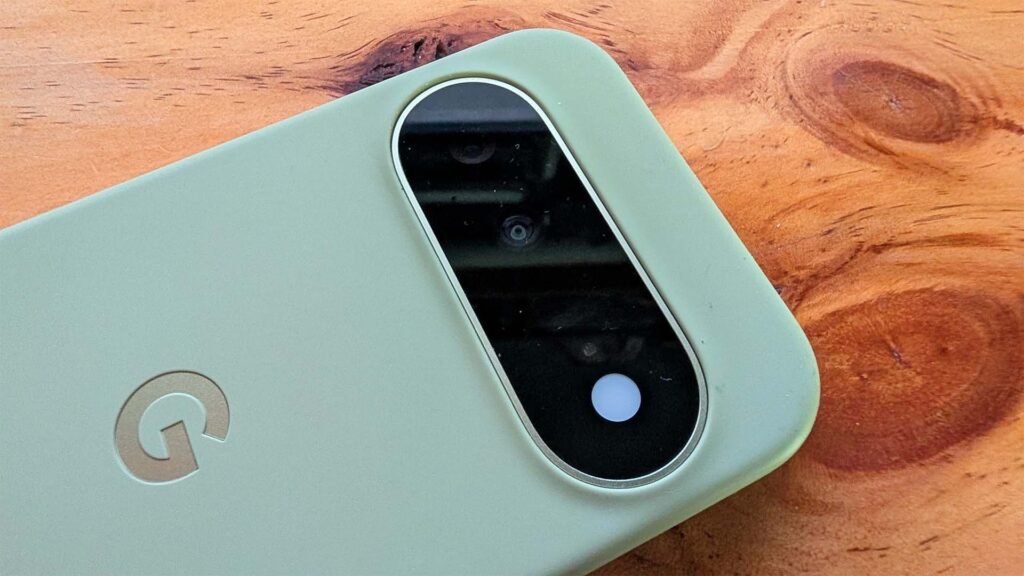
The main sensor gathers over 50% more light than before, yielding richer dynamic range and lifelike colour accuracy through Real Tone calibration. The new Magic Capture feature silently caches rapid background frames whenever motion occurs, automatically extracting blur-free stills of pets and fast-moving children. Supported by the upgraded image signal processor, Night Sight exposures now capture almost instantly, dramatically cutting down wait times in dimly lit environments while the telephoto shooter produces clean, usable Super Res Zoom shots up to 30x digital magnification.






So while it’s not going to compete with the Pro level — due to the lower level sensors, ultrawide resolution and Pro controls — devices, either within the Pixel range, or other devices; you get a capable camera that can handle day to day. Whether it’s happy snaps, action shots, night time photography, or more intimate portrait style photography.
Battery and Charging
Power efficiency is one of the most welcome areas of progress on the Pixel 11. Equipped with a 4,985 mAh battery, the combination of the 3nm processor and the improved modem allows the handset to deliver over 30 hours of typical mixed use, easily yielding around seven hours of active screen time on a single charge.
Wired charging tops out at 30W via USB Power Delivery PPS, which brings the device to 50% in roughly half an hour. That’s a solid result, but remains modest compared to rapid 65W rival handsets. Wireless charging, however, gets a major boost through the adoption of the Qi 2.2 standard with Pixelsnap magnetic alignment, safely allowing up to 25W input on compatible magnetic pads.
The User Experience: Daily Use
In day-to-day handling, the Pixel 11 stands out as an exceptionally comfortable phone to live with. Its modest 6.3-inch footprint makes it one of the few truly pocketable modern flagships that avoids compromising on battery life or optical zoom capabilities.
Reception issues in elevators and low-signal fringe areas are noticeably absent thanks to the new modem, which goes a long way to preventing the warm-pocket syndrome of past years. The stereo speakers deliver rich mid-tones and crisp dialogue for podcasts and video streaming, while the haptic engine provides clean, tactile clicks across every keyboard tap and navigation gesture.
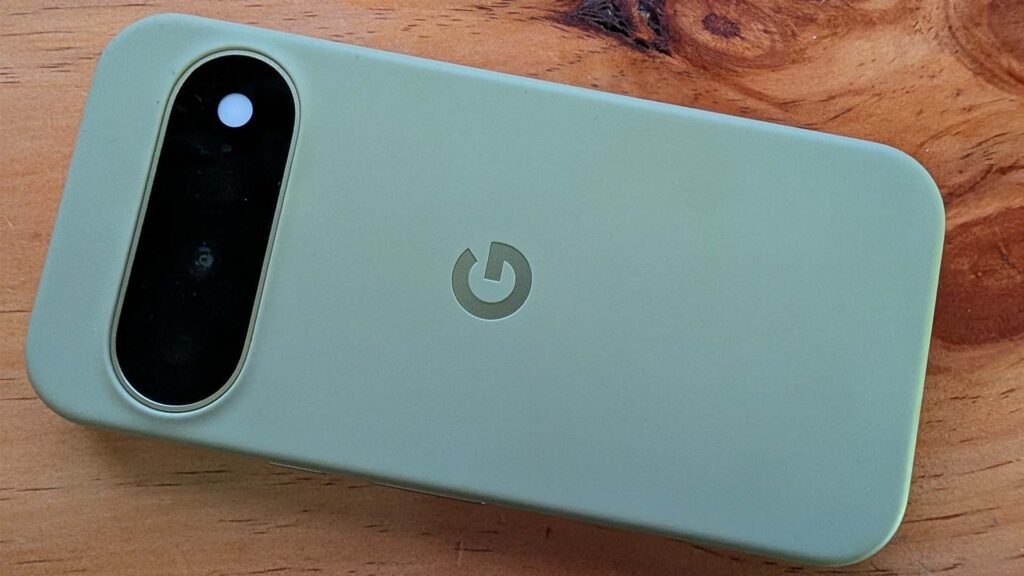
It’s not a “pro” level device, but it’s also not costing well north of two grand – in fact it’s under $1500 if you’re happy with the 128GB model.
Pricing and Availability
In the Australian market, Google has shifted the baseline entry point by eliminating the older 128GB capacity and setting 256GB as the standard floor. The 256GB model retails for A$1,499, while stepping up to the 512GB configuration brings the price to A$1,699. The Pixel 11 is available unlocked through the official Google Store Australia, nationwide consumer electronics retailers including JB Hi-Fi and Harvey Norman, and on consumer plans across Telstra, Optus, and Vodafone. As with recent releases, it ships in compact, plastic-free packaging containing a USB-C data cable and a Quick Switch adapter, leaving the wall charger as a separate purchase.

Conclusion
The Google Pixel 11 does not attempt to reinvent the modern smartphone wheel; instead, it perfects the daily experience. By curing long-standing cellular and thermal inefficiencies with a new modem, providing a dedicated 5x optical telephoto lens, embedding magnetic Qi 2.2 hardware, and elevating base storage to 256GB, Google has produced its most dependable and practical standard handset yet. Users searching for raw benchmark supremacy or 100W charging bricks may look elsewhere, but anyone seeking an ergonomically sound phone with seven years of software support, class-leading still photography, reliable battery life, and genuinely helpful AI features will find the Pixel 11 an easy recommendation.