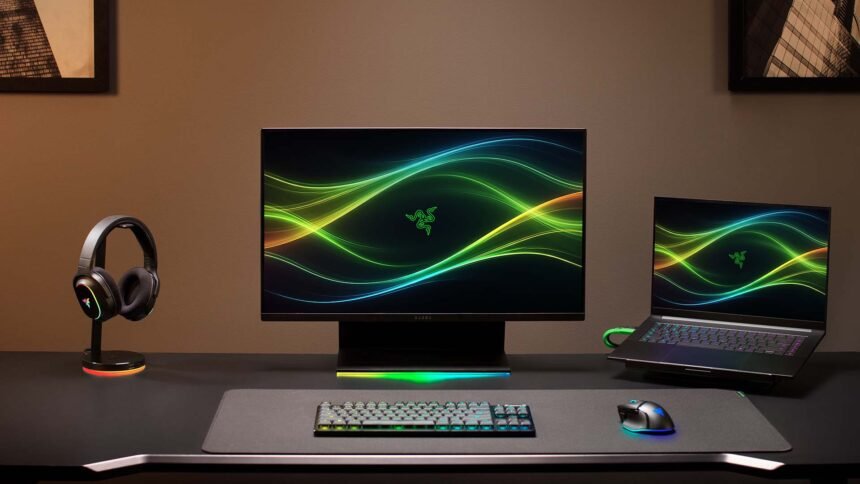

Razer has announced its 2026 Blade 16, updating its flagship gaming laptop with newer Intel silicon, RTX 50-series graphics, faster memory, and improved battery efficiency—all while keeping the same ultra-thin design.
At its core, this is still a high-performance gaming laptop that prioritises portability, but this year’s upgrades focus heavily on real-world usability: better performance per watt, improved battery life, and faster responsiveness across gaming and creative workloads.
THE HARDWARE
The 2026 Blade 16 is powered by Intel’s new Core Ultra 9 386H processor, featuring 16 cores and boost speeds up to 4.9GHz. Compared to the previous model, this brings a noticeable increase in multi-core performance, which matters for gaming, streaming, and content creation running at the same time.
Graphics come from NVIDIA’s RTX 50 Series laptop GPUs (up to RTX 5080 with 16GB VRAM), bringing support for DLSS 4 and improved AI-driven rendering. In practical terms, that means higher frame rates in modern titles and better performance in creative apps like video editing and 3D rendering.
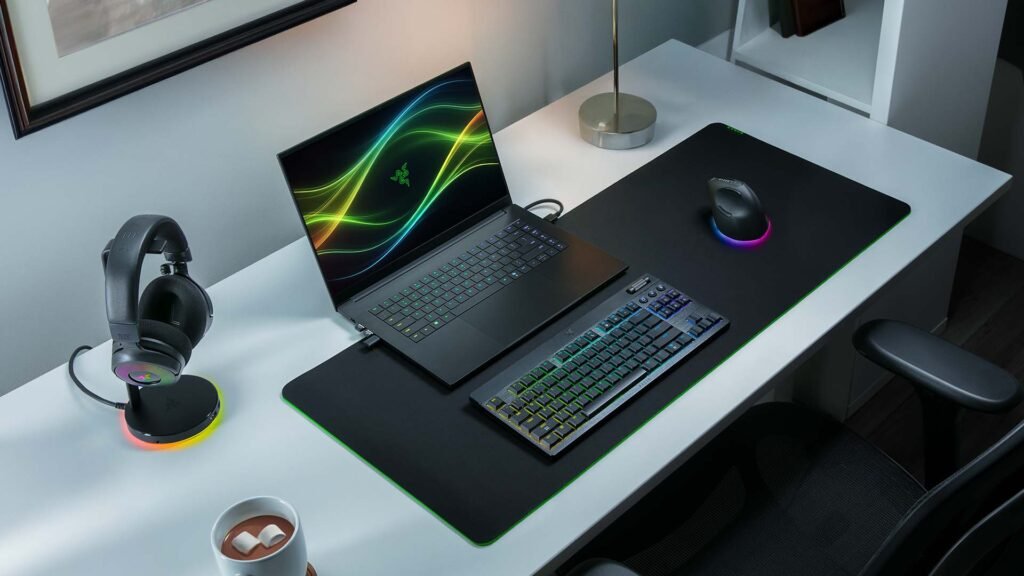
Memory is a standout spec this year, with up to 64GB of LPDDR5X running at 9600MHz. That’s extremely fast for a laptop, translating to smoother multitasking, faster asset loading, and better performance in heavy workflows—but unfortunately, it is soldered and not upgradeable, so you’ll need to choose your configuration upfront.
Cooling has been reworked with a vapour chamber, dual fans, and thin fin stacks to maintain performance in a slim chassis. There’s also optional support for Razer’s external cooling pad, which can push GPU power higher for sustained performance sessions.
DESIGN AND BUILD
The Blade 16 continues with Razer’s signature aluminium unibody design, machined from a single block for rigidity. It’s finished with an anodised coating and fingerprint resistance, which helps it hold up in everyday use.
Razer has also shifted further toward sustainability, using recycled aluminium in the chassis and redesigned packaging that removes plastic where possible.
DISPLAY AND MEDIA EXPERIENCE
The Blade 16 features a 16-inch QHD+ OLED display (2560 x 1600) with a 240Hz refresh rate and a 0.2ms response time. That combination is ideal for fast-paced gaming while still delivering excellent colour and contrast for media and creative work.
Brightness has been increased, with HDR peak brightness up to 1100 nits and a VESA DisplayHDR TrueBlack 1000 rating. In real-world use, that means deeper blacks, better contrast, and improved visibility in bright environments. Ultimately, delivering a better visual experience in both gaming, and media consumption.
The display also covers 100% of the DCI-P3 colour gamut and is factory calibrated, making it suitable for creators who need colour accuracy straight out of the box.
Audio has also been upgraded, with a six-speaker system (four tweeters and two subwoofers) and THX Spatial Audio+. This enables virtual 7.1.4 surround sound, which improves positional awareness in games and adds depth to movies and music.
USER EXPERIENCE
Despite the performance upgrades, the Blade 16 remains one of the thinnest gaming laptops at just 14.9mm thick and around 2.14kg, still a chunky beast compared to something like a Macbook Air (my normal daily carry) but the capabilities are mighty.
Battery efficiency is a key improvement this year. Razer claims up to 13 hours of general productivity use and up to 15 hours of video playback under controlled conditions. In practical terms, that means it’s far more usable as a daily work machine—not just something tethered to a charger.
Connectivity is also future-focused, with Thunderbolt 5 (up to 120Gbps), Wi-Fi 7, and Bluetooth 6.0. That translates to faster file transfers, better wireless performance, and improved support for multi-monitor setups and high-speed peripherals.
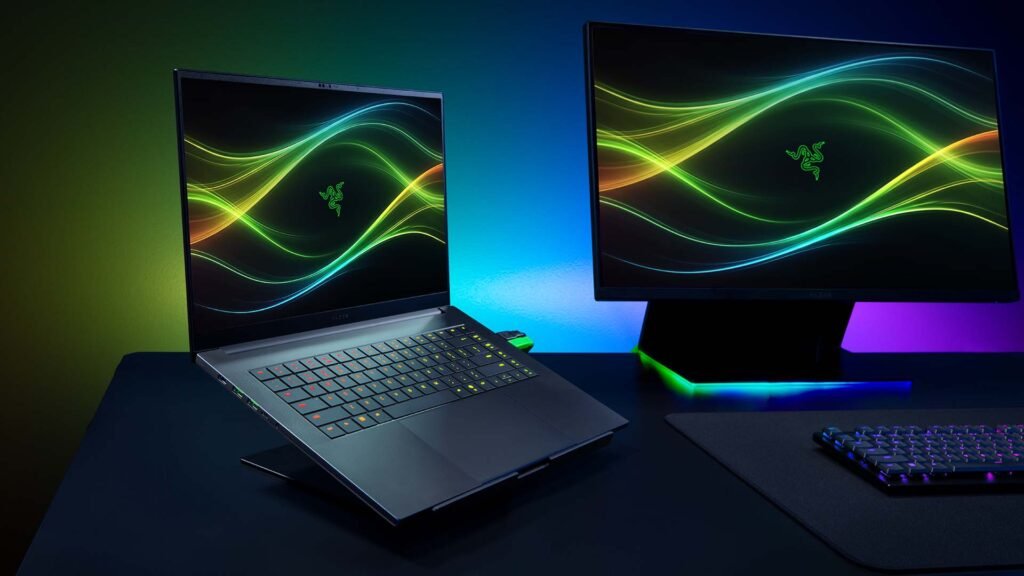
Port selection remains solid for a thin laptop, including USB-A ports, Thunderbolt 4 and 5, HDMI 2.1, and an SD card reader—important for creators who don’t want to live the dongle life. There’s also a growing focus on AI features, thanks to the integrated NPU (up to 50 TOPS), enabling faster local AI tasks like image generation and real-time translation in supported apps.
PRICE AND AVAILABILITY
The 2026 Razer Blade 16 starts at AU$3,699.95, with configurations (peaking at AU$7,699.95) including RTX 5080 graphics and 32GB of RAM. It’s available now through Razer’s website.
THE BOTTOM LINE
The 2026 Blade 16 isn’t a radical redesign—it’s a refinement of what already worked well for the target audience. The key upgrades are under the hood: more CPU cores, faster memory, better GPU performance, and significantly improved battery efficiency which will undoubtedly put it on the radar for a wider audience of users.
For users, that translates to a laptop that’s not just powerful for gaming, but far more practical as an everyday machine—something you can actually take off the desk without sacrificing performance.