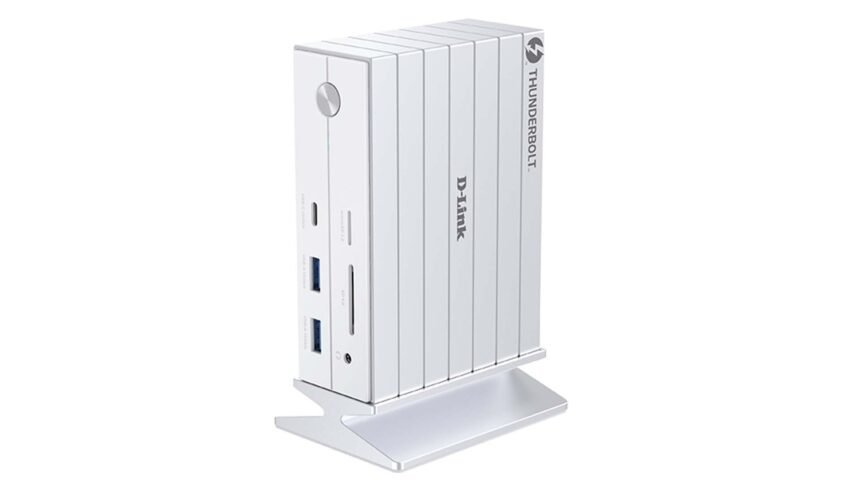

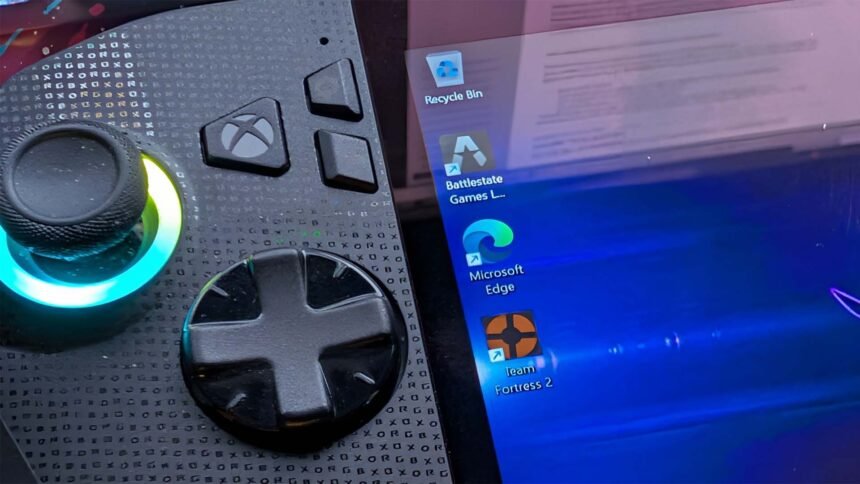
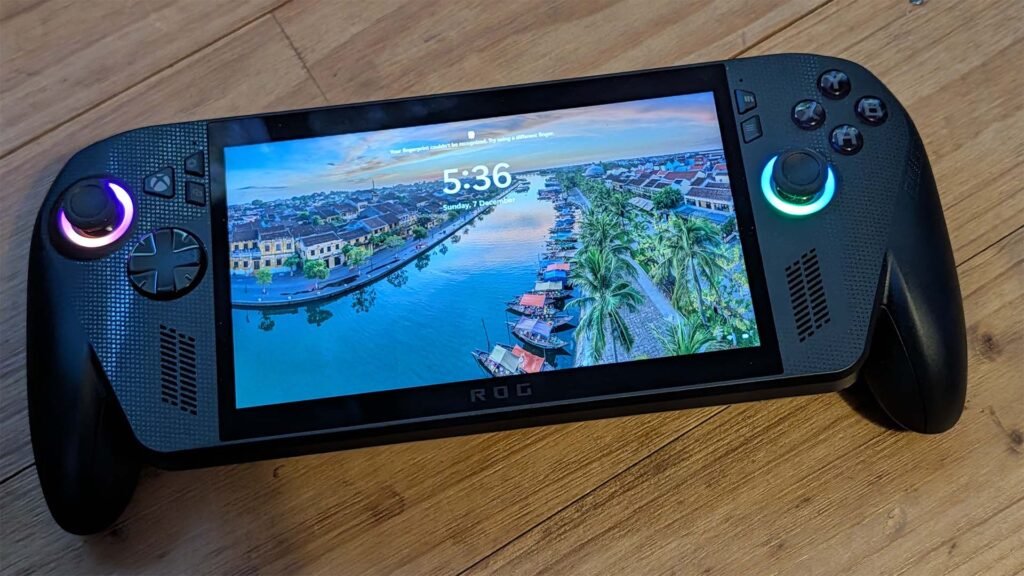
The ROG Xbox Ally X represents one of the most ambitious attempts yet to merge the flexibility of a PC with the accessibility of a console-style handheld. Delivered in a familiar console-style design, the device lends itself to specific genres of games; however, the ability to plug it into a dock with a keyboard, mouse, and monitor attached takes its functionality leaps and bounds forward.
HARDWARE AND SETUP
It is built around AMD’s Ryzen AI Z2 Extreme processor, an eight-core, sixteen-thread APU that pairs Zen 5 architecture with RDNA-based graphics. With 24GB of LPDDR5X memory and a 1TB PCIe SSD, it has the specifications of a compact gaming laptop packed into a device the size of a controller. The 7-inch 1080p display runs at 120Hz and reaches 500 nits of brightness, making it sharp and responsive even during fast-paced games.
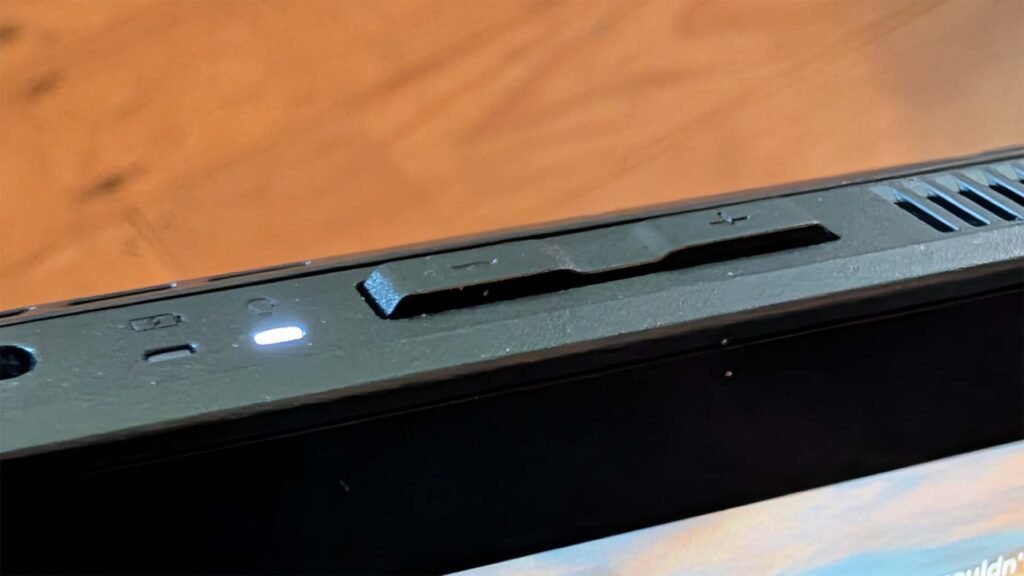
Despite its power, the design remains comfortable to hold thanks to grips shaped similarly to an Xbox controller, and ASUS has paid attention to small details such as textured triggers, tactile buttons and rear macro paddles. Setup is slightly more involved than a console because the device boots into the Xbox Full Screen Experience overlay, but still runs full Windows 11 underneath. Updates, drivers, and launcher installs, all of which will take some time on first boot. The performance tuning still requires using ASUS’ Armoury Crate software, which sits outside the Xbox interface and can pretty much be left alone unless you’re really struggling for performance in some particular games.
GAME COMPATIBILITY
Game compatibility is one of the strongest aspects of the Ally X. Because it runs Windows, it supports virtually all major PC launchers, including Steam, Epic Games Store, Battle.net and others, giving it immediate access to a vast catalogue of PC titles. Xbox integration is particularly smooth, especially with Xbox Play Anywhere titles and Game Pass PC games, which behave much like they would on a desktop. Cloud gaming through Xbox Cloud Gaming is also well-implemented, offering a console-like experience while reducing hardware load and extending battery life.
Performance in demanding games is impressive for a handheld. My testing time was somewhat limited in time, but I did get some testing in with recent releases like Escape from Tarkov, Call of Duty: Black Ops 7 (review coming ASAP) and even a classic, Team Fortress 2, while connected to my desktop environment. I also took some time to play more “console-targeted” sports games like F1 2025 and NBA 2K25, all of which performed well, with solid frame rates and no discernible performance issues.
As with all portable PCs, however, wattage settings make a big difference; maximum performance on battery naturally reduces endurance, and some of the heaviest modern AAA titles may require graphical compromises. That’s not too much of an issue in practicality, though, compared to the need for directional sound on FPS games; the absence of which made some titles very difficult to play. Of course, this is something that’s relatively easy to overcome with a headset, but that does reduce some of the portability of the unit.
USER EXPERIENCE
The overall user experience is shaped by the Ally X’s hybrid identity: part handheld console, part Windows machine. On the positive side, the ergonomics are excellent, and the device feels more comfortable over long sessions than many competitors. The display is clear and responsive, and the cooling system manages heat surprisingly well, with fan noise staying relatively controlled except in the highest performance mode.
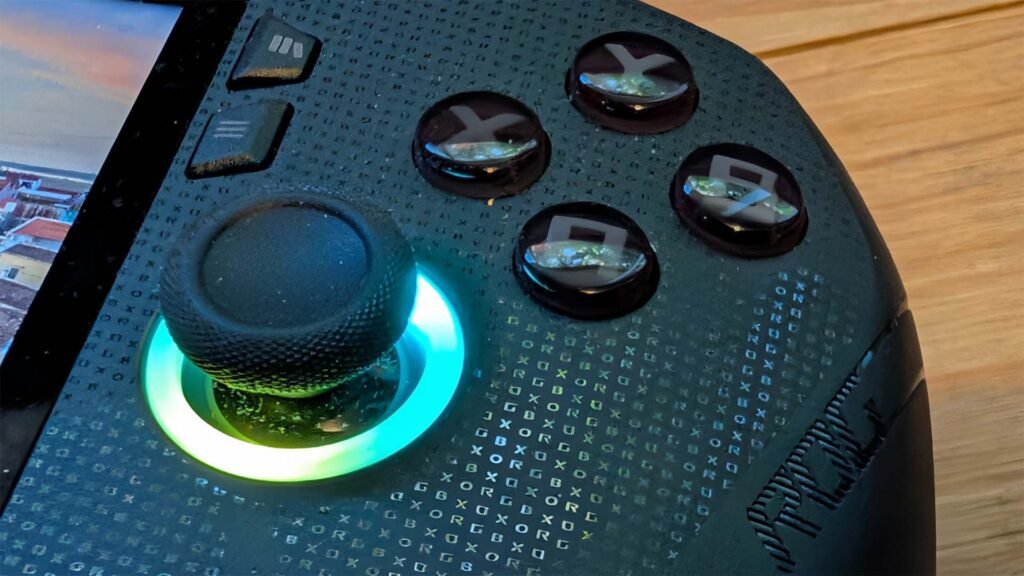
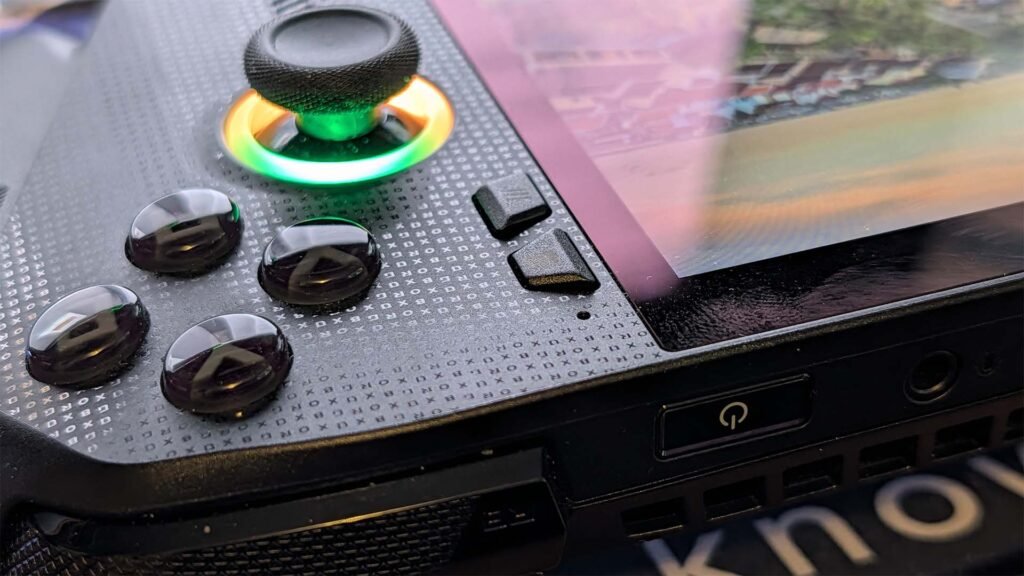
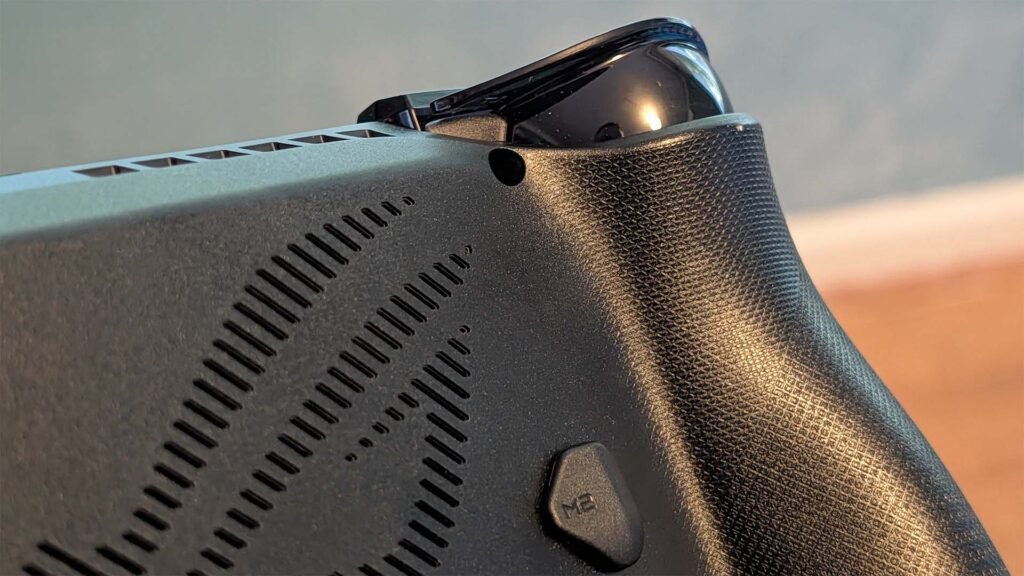
Software usability is a bit of a mixed bag; switching between the Xbox overlay and standard Windows is easy, but the need to use Armoury Crate for system-level performance profiles interrupts the otherwise console-like flow. While 95% of the time it was fine, there were times when buttons and triggers felt a little inconsistent in their response.
The only other real criticism I have of the Ally X, is that for the price I expected it to come with a carry case. I’m not buying a portable game console to leave it at home. I wanted it to come with a good quality, hard case to protect the investment while on the move, travelling or just commuting with it in my backpack.
Battery life ranges from around two hours during full-power gaming on something like Call of Duty: Black Ops 7 to several hours in mid-level performance modes (on older games) and can stretch dramatically longer during light tasks or cloud gaming, where there’s little graphical pressure, and most of the processing is done online.
Something that was a notable surprise to me was the ALLY X’s ability to operate as a PC — while docked — for productivity purposes. In fact, much of this review has been written in the browser installed on the device while I have had the unit docked on my desk.
PRICING AND AVAILABILITY
In terms of price and availability, the Ally X sits firmly in the premium bracket. It’s one of the more expensive handheld PCs on the market, and in Australia it retails at AU$1,599.00. It is available through ASUS directly, Microsoft’s online store, and major electronics retailers, although demand has caused periodic shortages.
CONCLUSION
My final thoughts on the ROG Xbox Ally X is that it’s a powerful and highly capable handheld device that bridges the gap between PC and console gaming more effectively than most of its competitors. Its strong performance, excellent ergonomics and broad game compatibility make it a formidable choice for enthusiasts who want portable access to both their PC and Xbox libraries. It is not without compromises—setup can feel more complex than a console, battery life under heavy load is limited, and the price is undeniably high—but for players seeking a compact device that can run modern games with surprisingly good outcomes, and bridge the gap to the productivity world; the Ally X stands out as one of the most complete handheld gaming PCs available today.