2026 is shaping up as the year of the robot if CES was any guide. Even booths that had nothing to do with robotics had robots. The rise of humanoid robots is the obvious change. The best of all is “Atlas,” the incredible Sci-Fi looking humanoid robot from Boston Dynamics. For the first time, Atlas went on public display at CES, and it was impressive.
From the swagger on stage to the insane twisting and repositioning of its legs, torso, and head, Atlas is unmatched. Atlas will be operational at Hyundai Motor Group Metaplant America in Savannah, Georgia, by 2028 doing simple tasks. By 2030, applications will extend to component assembly, and over time, Atlas will also take on tasks involving repetitive motions, heavy loads, and other complex operations.
ATLAS KEY FEATURES
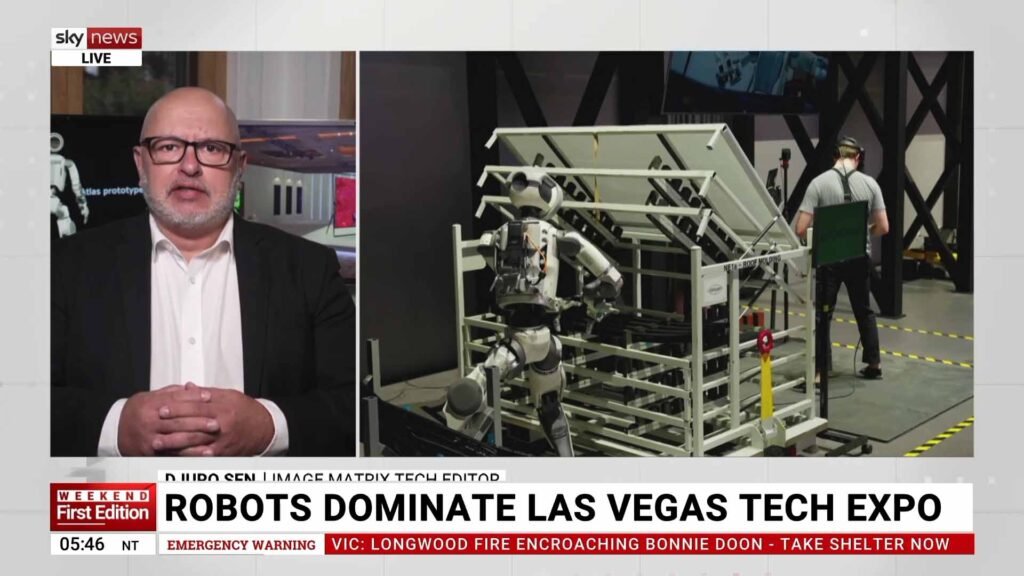
Ease of task training: Most tasks can be taught in under a day, streamlining deployment timelines.
Autonomy and self-sufficiency: Atlas operates independently from day one, with capabilities such as automatic battery replacement and continuous operation.
Strength and precision: Able to lift up to 50 kg and perform precision tasks, Atlas excels in environments requiring repetitive and exhausting manual labour.
Durable and weatherproof: Atlas is water-resistant, designed for washdowns, and operates at its full capabilities – including strength capacity – between 20°C to 40°C.
ROBOTS AND AI
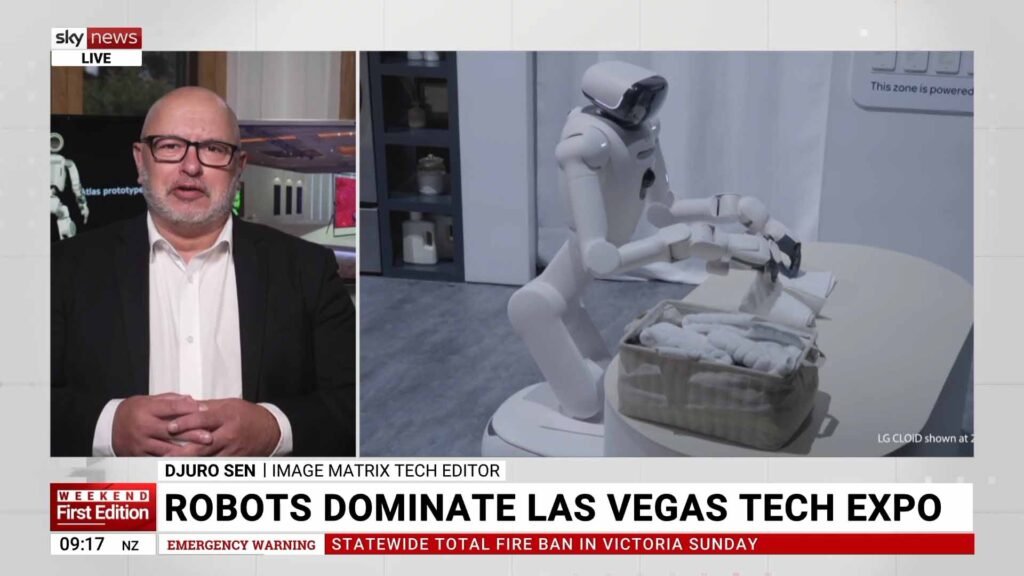
The other key factor is AI. It’s now far easier to embed AI into a device or robot, running locally. LG CLOiD consists of a head unit, torso with two articulated arms, and a wheeled base equipped with autonomous navigation. The torso can tilt to adjust its height, enabling the robot to pick up objects from knee level and above.
LG went with the wheel drive after learning from its robot vacuum and LG Q9 AI companion. It found this form factor was selected for stability, safety, and cost-effectiveness, with a low centre of gravity that reduces the risk of tipping if a child or pet makes contact.
The head functions as a mobile AI home hub. It is equipped with a chipset – which functions as LG CLOiD’s brain – a display, a speaker, cameras, various sensors, and voice-based generative AI. Collectively, these elements allow the robot to communicate with humans through spoken language and “facial expressions,” learn the living environments and lifestyle patterns of its users, and control connected home appliances based on its learnings.
There were hundreds more humanoid robots at CES, many doing a similar job to LG’s CLOiD.
ROBOROCK SAROS ROVER

It’s my belief that robovacs hold the key to robotic home helpers. They already do an incredible job, cleaning our homes autonomously. All manufacturers need to do is expand the capabilities of a machine that knows how to get around your house.
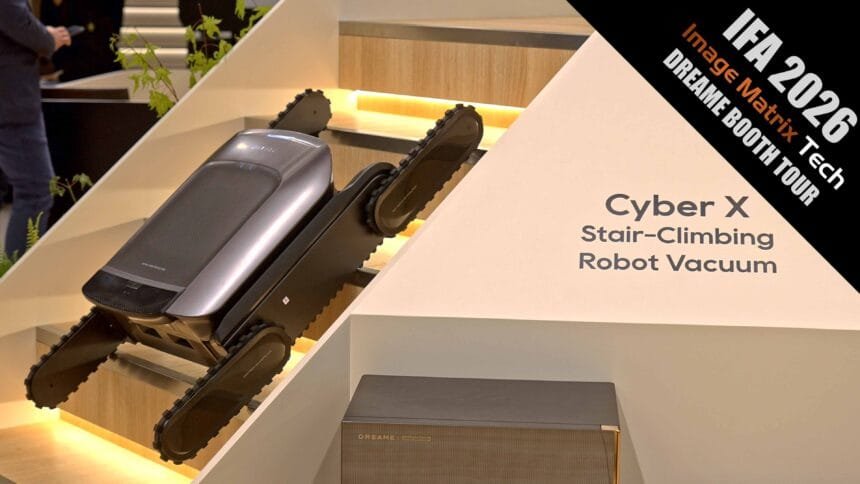
Last year, we saw models with robotic arms pick up objects and clean hard-to-reach areas. We also saw robots taking robot vacuums up stairs for the first time. But Roborock went one better at CES by unveiling the Saros Rover, the world’s first robovac that not only climbs stairs on its own but also cleans the steps too.
This is a huge leap from the other systems that use a second robot to carry the robovac upstairs. It’s a product in development, but we don’t know when it will be available.
There is no doubt… 2026 is the year of the robot.