Australian company XRG (xReality Group) is set for a global expansion after securing big contracts with law enforcement and defence department in the United States. At first glance, its VR training system looks like a video game, but in reality, it’s a serious tool in the fight against terror and armed criminals. ‘Operator XR‘ puts police and military special forces into realistic simulations that can be analysed over and over again.
“Although it’s sometimes hard to get a contract here in Australia, we’ve succeeded really well in the USA, and that started to now filter back into the Australian Government, and we’ve got a good bunch of customers here now as well,” xReality Group CEO, Wayne Jones, explained to Image Matrix Tech.
“So yeah, very proud to be Australian and seeing what we’re taking on the world with.”
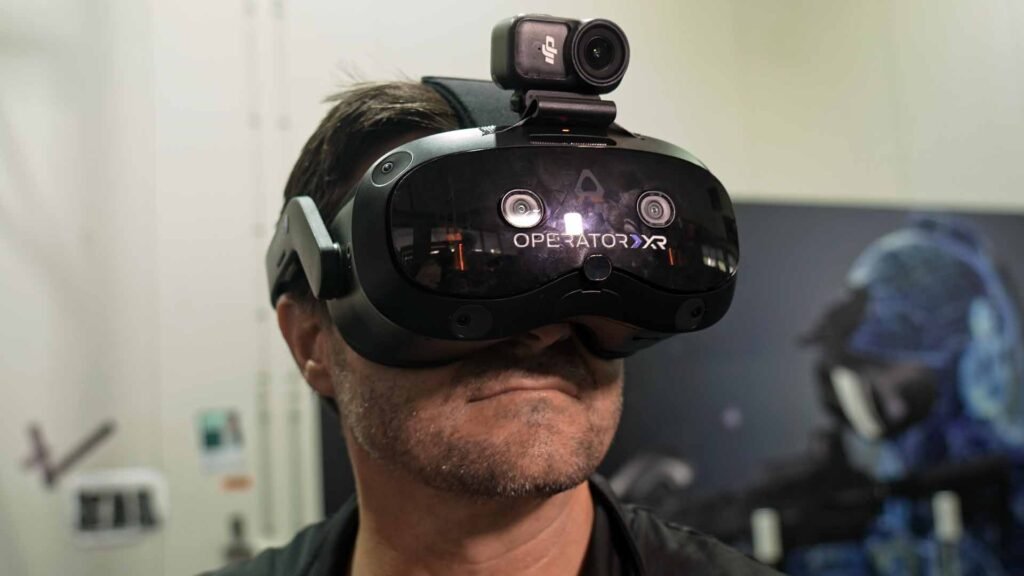
XRG was recently awarded a $2.1 million grant through the Australian Government’s Industry Growth Program, enabling the company to scale its VR-based tactical training for defence and law enforcement agencies. Internationally, XRG picked up a A$5.6 million subcontract from the U.S. Department of Defence to deliver immersive VR/AR training capabilities for subterranean and subway environments.
Jones is a former Special Air Service Regiment commander who is now using his experience in the virtual world with scenario-based AI tools. The ultimate aim is to prepare Australia’s next generation of defence and security for the realities of hybrid warfare, asymmetric threats, and high-tech security operations.
HOW REALISTIC IS IT?
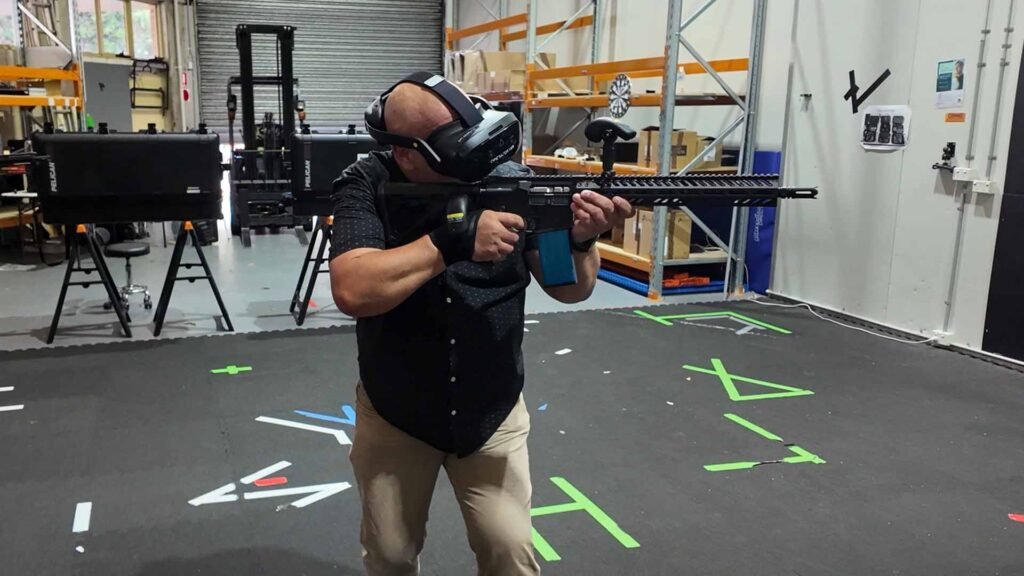
Despite using off-the-shelf hardware, the team at Operator XR has produced a compelling VR experience. In my days in Rugby management, I was able to take part in a training exercise that involved breaching a ‘real’ building to take on the bad guys. We teamed up in pairs, just like I did with Wayne Jones in the Operator VR system. When I compare the experiences, I have to admit the VR system comes extremely close to the real thing. Plus, it has many advantages.
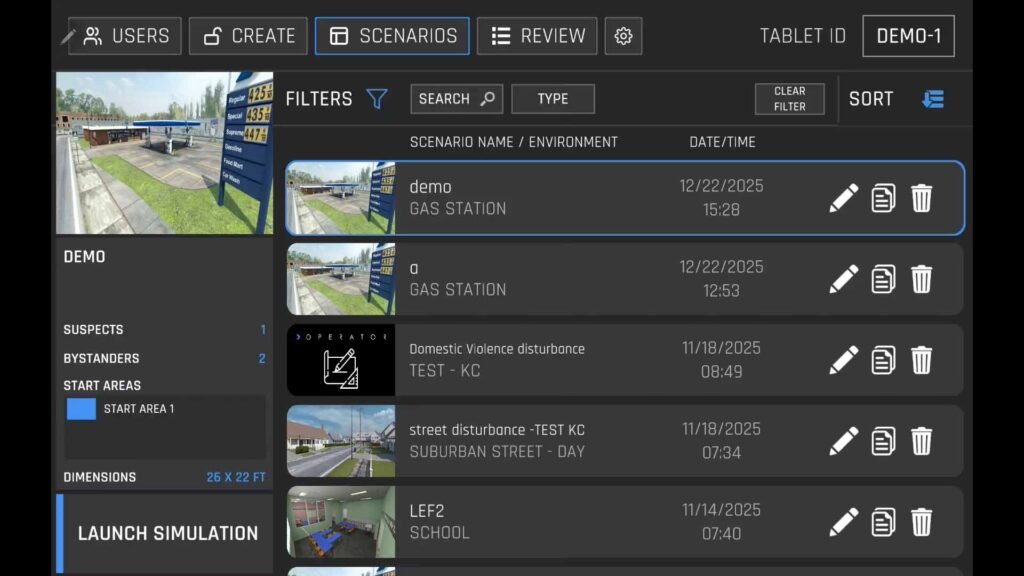
Using the tablet that comes with the kit, you can create any scenario. This isn’t possible in a permanent structure. The other benefit is the very low, to no risk of injury.
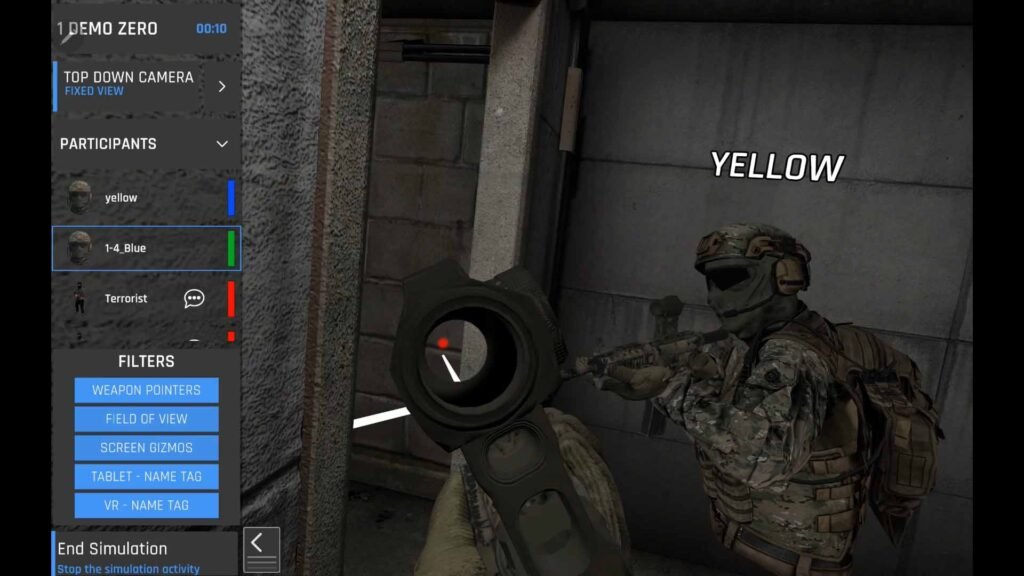
The main goal isn’t expert marksmanship; it’s decision-making. In a hostage situation, seconds count. One wrong move could lead to death or injury. The beauty of this system is that it can be reviewed over and over to improve the tactical approach by police or military personnel.
HOW DOES IT WORK?
The system is very simple to use and doesn’t require a complicated tracking rig. Aside from eye-tracking in the VR headsets, trackers are placed on the weapon and wrist of the participant.
The activity is controlled by a tablet. Commanders can set the location, number of enemies, and location with a few swipes. Afterwards, the event can be analysed from any angle or POV.
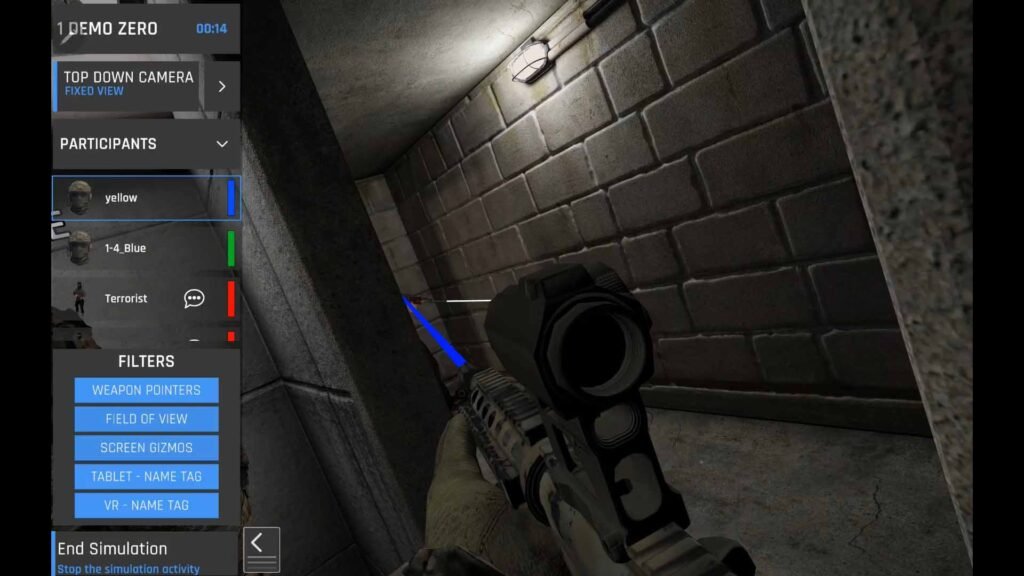
The other key factor is the weapon. A real rifle or handgun is used to best approximate what the assault team would carry normally. In our session, we used M4 assault rifles, which have been converted so they no longer fire rounds.
“For us to be using our own weapon is important because of the various trigger pressures and the requirements that come with that,” explained Jones.
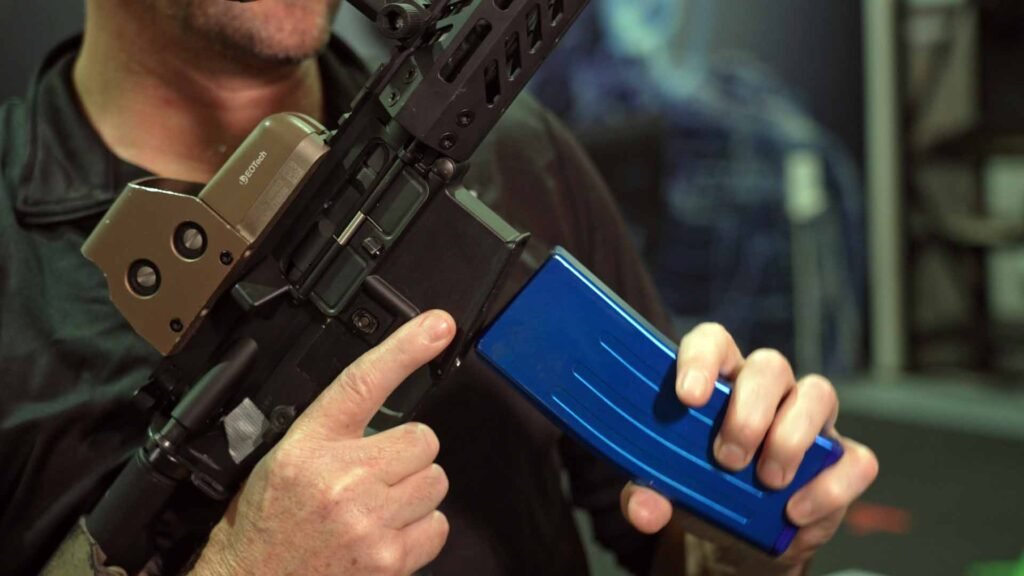
“We have replaced the live bolt with a tethered gas system bolt, and we’ve replaced the live magazine with a magazine containing carbon dioxide. And this is the complete system, which gives us the ability for the weapon to cycle.”
Although it’s not the same as live weapon it does give realistic burst when making sure you’ve neutralised the threat.
WHY IT MATTERS?
In the wake of the Bondi terror attack Australians want a more rigorous approach to combating terrorism. There are many factors to consider, including intelligence and hate speech.
Better training for our special forces, police tactical units and general beat cops is also vital. This will help take out active shooters more efficiently and assist assault teams in developing better strategies to save innocent lives. VR is a place where you can make mistakes and no one gets hurt.
That’s why it matters.