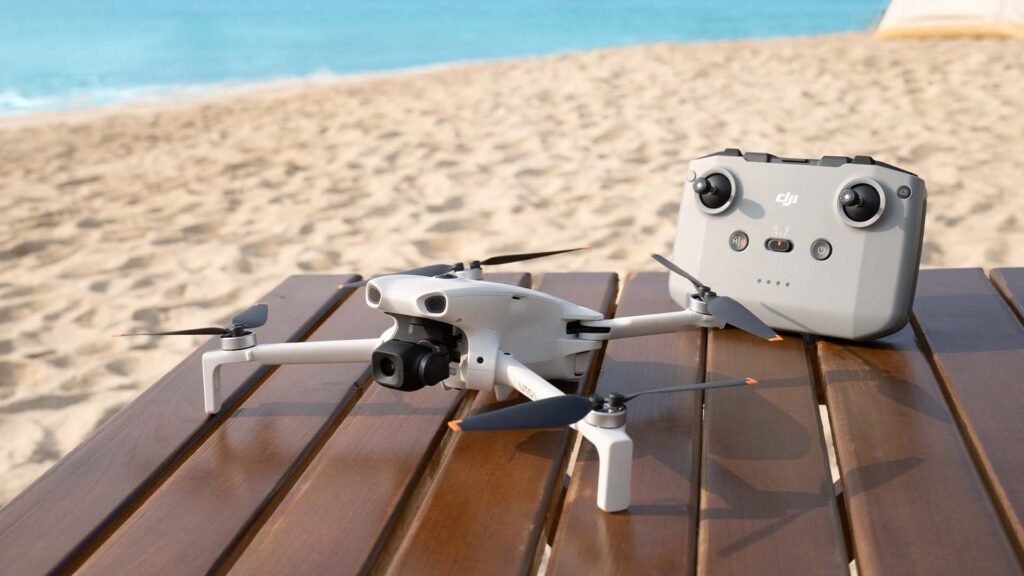
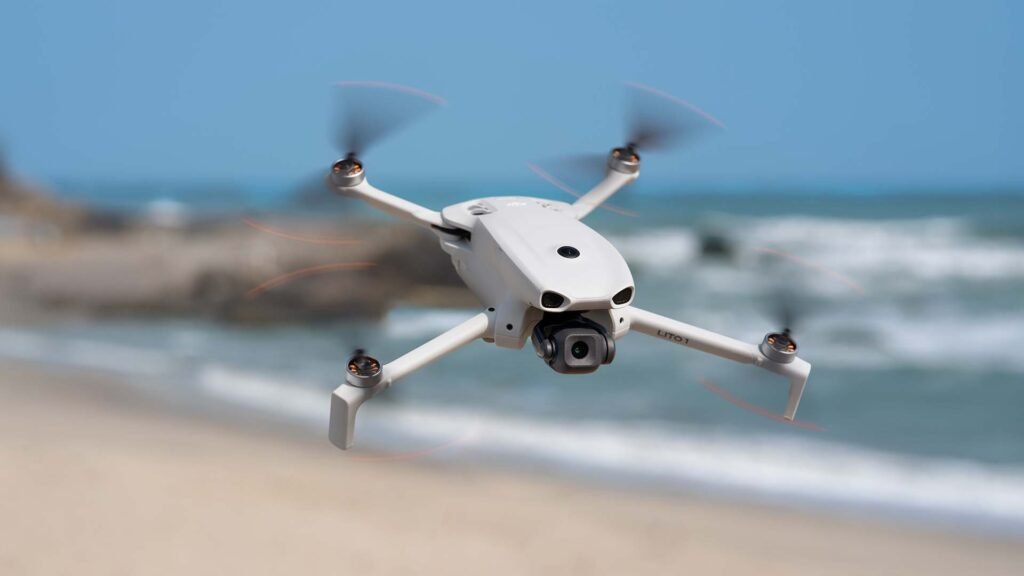
DJI has announced a new entry-level drone lineup, the Lito series, introducing two models aimed at first-time aerial users: the Lito 1 and Lito X1. The focus is on combining relatively high-resolution imaging hardware with automated flight systems and safety features typically found in more expensive drones.
HARDWARE AND IMAGING
The Lito X1 sits at the top of the range with a 1/1.3-inch CMOS sensor delivering 48MP still images. It supports HDR video capture with up to 14 stops of dynamic range and records in 10-bit D-Log M, giving more flexibility for colour grading in post-production. The lens has an f/1.7 aperture, which should improve low-light performance compared to smaller-sensor drones.
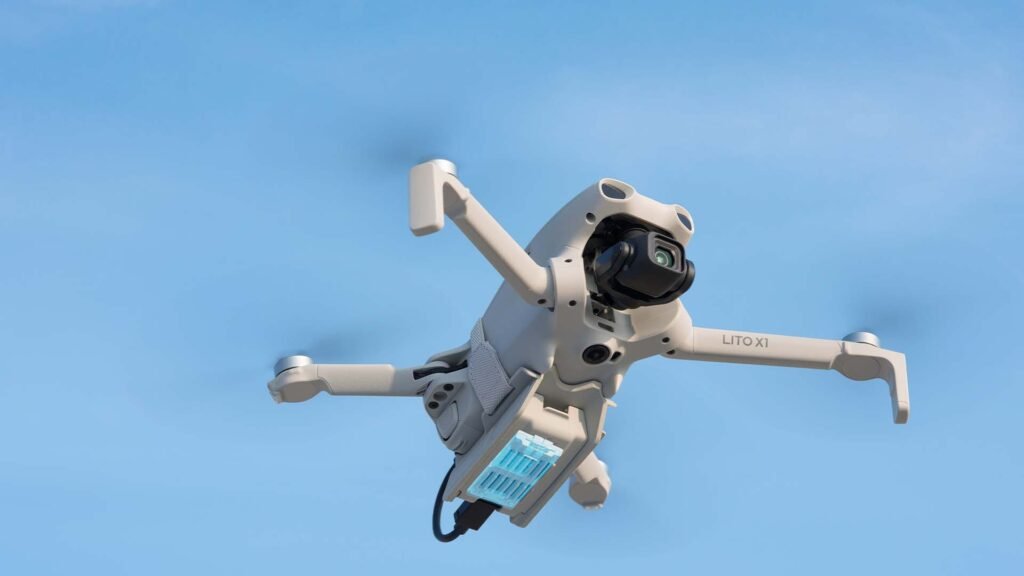
The Lito 1 uses a smaller 1/2-inch CMOS sensor, also at 48MP, paired with an f/1.8 aperture. It supports up to 8K photo capture and 4K video recording. While it lacks the advanced colour profiles and dynamic range of the X1, it still provides high-resolution output for basic aerial photography and video.
FLIGHT SYSTEMS AND OBSTACLE DETECTION
Both models include omnidirectional obstacle sensing rated for low-light conditions down to 5 lux. This system uses multiple vision sensors to detect and avoid obstacles in all directions.
The Lito X1 adds forward-facing LiDAR, improving depth perception and object detection in more complex or low-visibility environments. This is a notable inclusion at this price point, as LiDAR is typically reserved for higher-end drones.
The Lito series integrates automated flight modes, including ActiveTrack (subject tracking), QuickShots, MasterShots, Hyperlapse, and Panorama. ActiveTrack can follow subjects moving at speeds up to 12 m/s. These modes rely heavily on onboard processing to automate camera movement and framing, reducing the need for manual piloting skills.
FLIGHT PERFORMANCE AND CONNECTIVITY
Both drones offer up to 36 minutes of flight time on a standard battery and are rated for wind resistance up to 10.7 m/s. This places them in line with mid-range consumer drones in terms of endurance and stability.
File transfer is handled via Wi-Fi 6, with claimed speeds up to 50 MB/s. The Lito X1 also includes 42GB of internal storage, reducing reliance on external memory cards.
PRICE AND AVAILABILITY
The Lito series is available now in Australia through DJI’s online store and authorised retailers. Pricing is positioned in the lower-to-mid consumer drone segment:
The Lito 1 starts at AU$539.00, with a Fly More Combo priced at AU$779.00.
The Lito X1 starts at AU$619.00, with a Fly More Combo priced at AU$1,069.00.
An optional protection plan, DJI Care Refresh, offers device replacement for accidental damage, including flyaway incidents, for an additional cost.
THE BOTTOM LINE
The Lito series packages relatively advanced sensing (including LiDAR on the X1), high-resolution imaging, and automated flight modes into lower-priced hardware. The main differentiation between the two models is sensor size, video capability, and the inclusion of LiDAR on the X1, rather than major differences in flight performance.