Samsung Australia has officially launched its comprehensive 2026 television and audio lineup, marking the company’s 20th consecutive year as the world’s No. 1 TV brand. The announcement centres on a significant expansion of AI integration across the entire range, with the new Vision AI Companion (VAC) now available on all 4K-and-above models. This strategic move aims to transform the television from a passive display into an interactive entertainment hub.
THE RISE OF VISION AI COMPANION
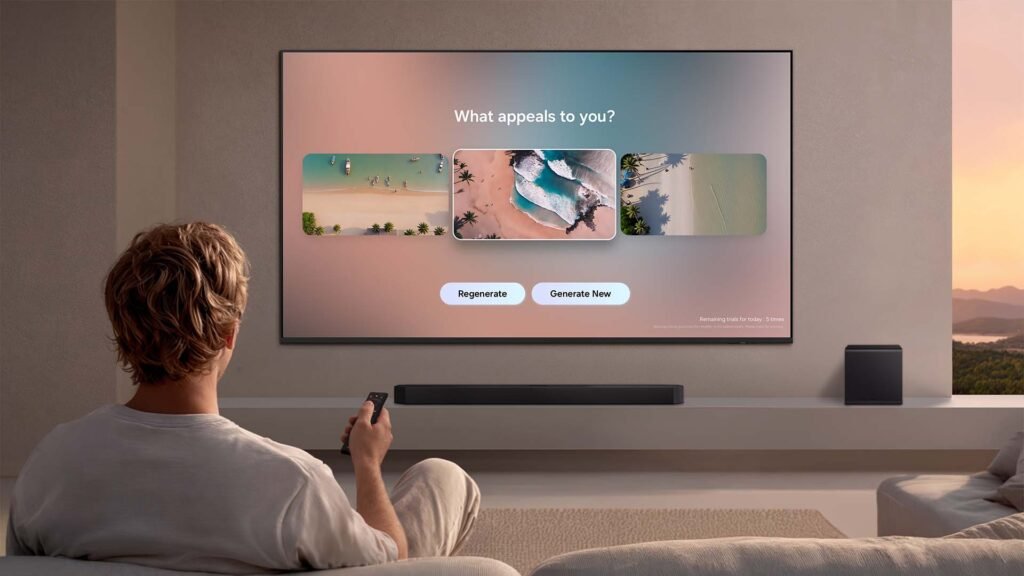
The headline innovation for 2026 is Samsung’s Vision AI Companion, a unified system that integrates multiple AI service platforms, including Bixby, Perplexity, and Microsoft Copilot. According to Simon Howe, Director of Visual Display at Samsung Australia, the development was driven by consumer behaviour insights showing that roughly half of viewers pick up a secondary device while watching TV to look up actors or locations. VAC addresses this friction by surfacing relevant information directly on-screen without interrupting the narrative flow.
Beyond simple information retrieval, the AI suite offers specialised enhancements for different content types. For sports enthusiasts, the AI Soccer Mode Pro analyses match scenes in real-time to optimise picture and sound for smoother ball movement and immersive stadium audio. Movie watchers benefit from AI Upscaling Pro, which enhances lower-resolution content with greater detail and contrast. At the same time, the AI Sound Controller Pro allows users to independently adjust dialogue, background music, and sound effects. These features are powered by advanced processors, such as the NQ4 AI Gen 3 in OLED models, which utilises 128 neural networks to refine the viewing experience.
PREMIUM DISPLAY TECHNOLOGIES
Samsung has expanded its Micro RGB technology with two new series, the R95H and R85H, offering screen sizes from 55 to 115 inches. This technology employs individually controlled red, green, and blue micro-sized LEDs to achieve a colour gamut ratio exceeding 100% of BT.2020, delivering highly precise light control and lifelike colour. The flagship R95H models feature certified Glare-Free technology, verified by UL Solutions, ensuring clear visibility even in bright Australian homes.
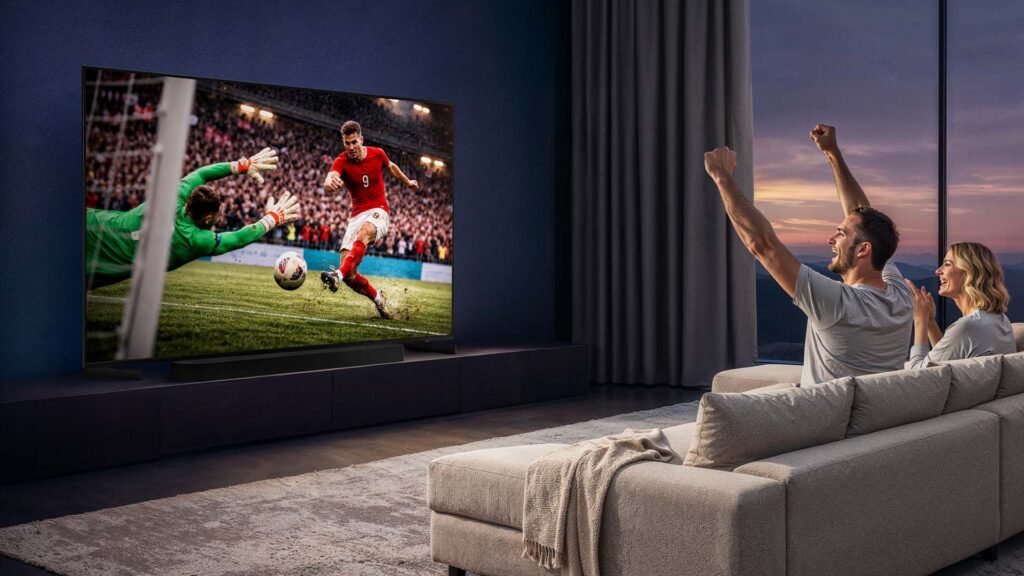
The OLED lineup has also seen significant upgrades, now comprising the S95H, S90H, and S85H models. Notably, Glare-Free certification has expanded from the previous flagship to both the S95H and S90H, preserving deep blacks and rich colours in varied lighting conditions. The S95H introduces a refined FloatLayer Design and Pantone Validated ArtfulColor, catering to both cinematic and artistic display needs. For gamers, the OLED range supports Motion Xcelerator up to 165Hz along with AMD FreeSync Premium Pro and NVIDIA G-SYNC compatibility, ensuring responsive and tear-free gameplay.
Samsung continues to diversify its mid-range offerings with the Neo QLED QN80H series, which spans 50 to 100 inches and utilises the NQ4 AI Gen 2 Processor. Additionally, the company has introduced ten new Mini LED models, led by the M70H series. These models bring brighter, richer viewing experiences with Pure Spectrum Colour and Motion Xcelerator up to 120Hz, making high-end features more accessible to a broader audience.
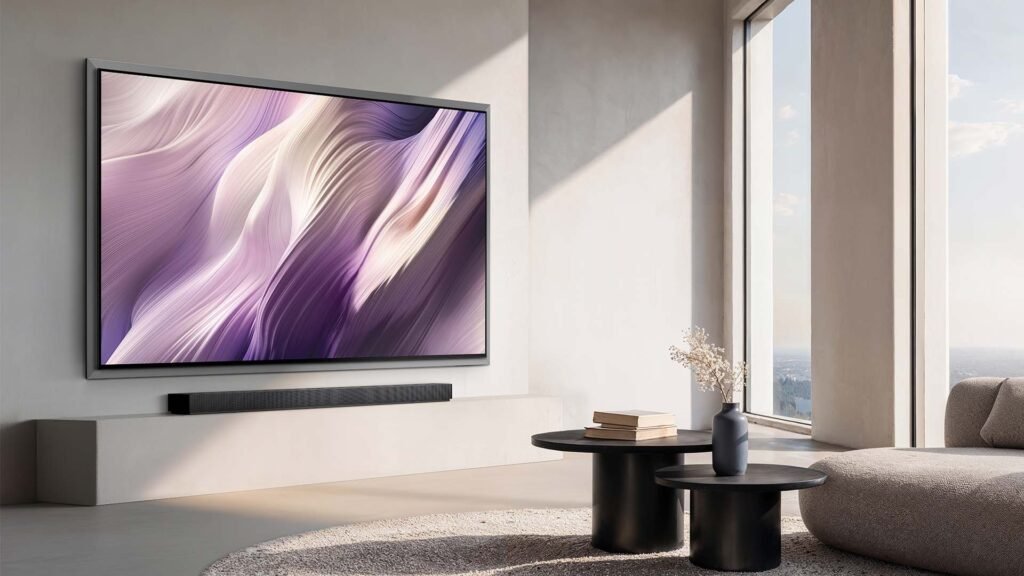
The popular Frame series has evolved into two distinct paths: the Frame Pro (LS03HW), which features Neo QLED picture quality and a Wireless One Connect box for a clutter-free setup, and the standard Frame (LS03HE), which offers QLED quality with a built-in in-wall installation option. Both models maintain Pantone validation and Glare-Free technology, ensuring that displayed art remains true to the creator’s vision.
AUDIO AND ECOSYSTEM INTEGRATION
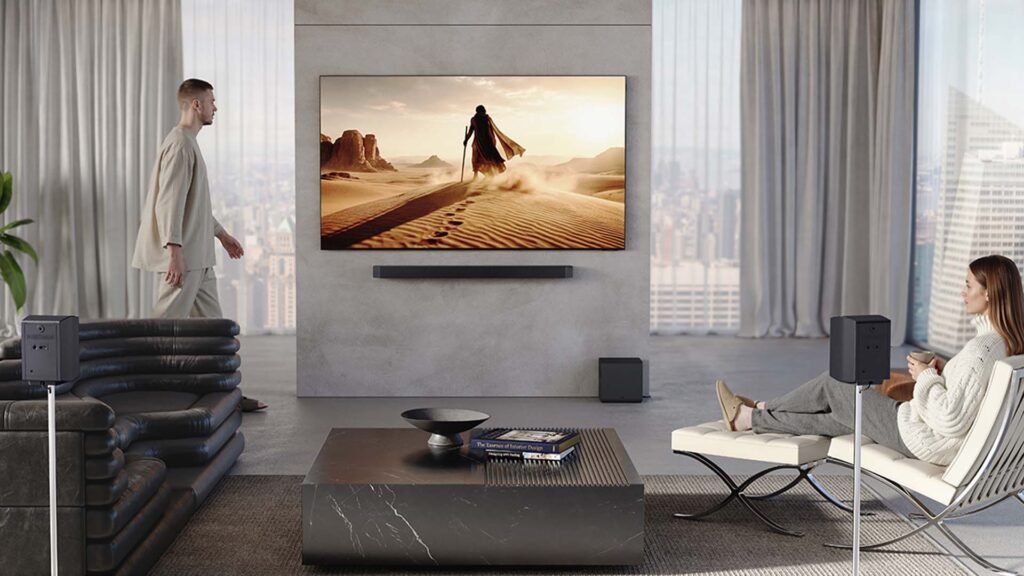
Complementing the visual upgrades, Samsung is celebrating its 12th year as the global No. 1 soundbar brand with an expanded audio portfolio. The new Music Studio Series includes the Music Studio 7, a 3.1.1-channel speaker system featuring Hi-Resolution Audio and a supertweeter that extends the frequency response up to 35kHz. For more compact spaces, the Music Studio 5 offers a design-forward aesthetic by Erwan Bouroullec, powered by AI Dynamic Bass Control to deepen low frequencies with minimal distortion. These speakers integrate seamlessly with the TV ecosystem through an expanded Q-Symphony feature, allowing up to five compatible sound devices to work in unison.
The 2026 lineup also strengthens its connectivity and content ecosystem. Samsung TV Plus continues to grow as a global media platform with thousands of on-demand shows, while new support for Google Cast allows users to stream content directly from mobile devices. Furthermore, Google Photos integration is now available on eligible 2026 models, offering a unique way to view curated photo memories on the big screen via Samsung Daily+.
PRICE AND AVAILABILITY
Samsung’s 2026 lineup spans a wide range of price points, reflecting just how broad this year’s portfolio has become. At the premium end, the new Micro RGB range commands flagship pricing, starting at around $2,499 for a 55-inch model and climbing sharply to approximately $41,999 for the massive 115-inch variant.
OLED continues to sit just below that tier, offering high-end performance at comparatively more accessible prices. Entry into the OLED range begins at roughly $1,999 for a 42-inch model, while the largest 83-inch options reach up to around $9,999.
In the mid-range, Samsung’s Lifestyle and Neo QLED offerings provide a balance between design, performance and affordability. The Frame series starts at about $1,799 for a 43-inch display and rises to around $4,999 for an 85-inch model, making it an attractive option for buyers who want their TV to double as a design feature. Neo QLED 4K models follow a similar trajectory, beginning at approximately $1,599 for a 50-inch screen and extending to about $6,999 for a 100-inch model, offering large-screen flexibility without the premium price tag of flagship technologies.
Even more accessible are the Mini LED and Crystal UHD ranges, which bring Samsung’s core smart TV experience to a broader audience. Mini LED models start at around $749 for a 43-inch TV and scale up to roughly $2,499 for an 85-inch screen, while Crystal UHD begins at the same $749 entry point and stretches to approximately $3,799 for a 98-inch display. These ranges represent the most affordable way into the 2026 lineup, particularly for buyers prioritising screen size and value.
Across the range, Samsung confirms that availability will be through leading retailers nationwide, with select models also available directly via Samsung’s online store. As always, final pricing may vary depending on retailer and promotional activity.