

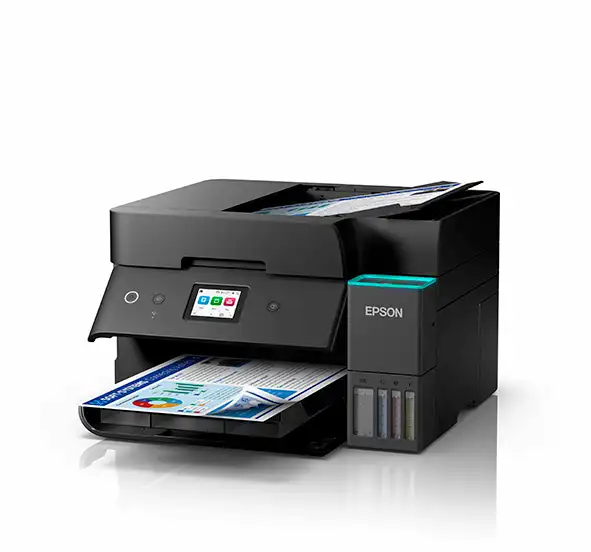
Epson has been the number one manufacturer and vendor of inkjet printers worldwide for two straight quarters with 34% market share. I thought this would have happened some time ago, given the hugely successful EcoTank range, which covers the home, small office, home office, and photo markets. EcoTank printers changed my life, no joke. I went through about a dozen printers and countless, expensive ink cartridges before seeing the light. My first EcoTank lasted 3.5 years before needing a refill.
Unbelievable.
But it hasn’t been an overnight success because the printers tend to be more expensive. The initial outlay is more, but the medium to long-term savings are astronomical. My advice is to avoid the temptation of buying a cheap printer only to be stung by costly, limited-life cartridges. It’s also better for the planet.
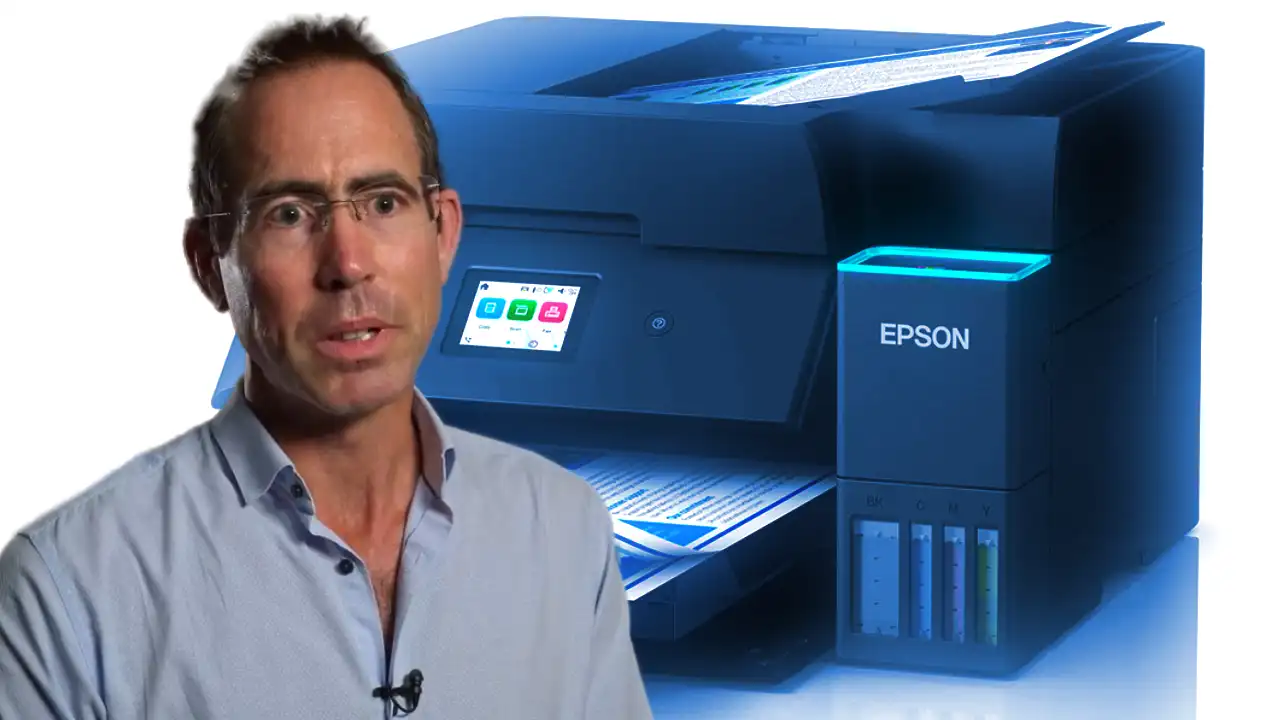
Image Matrix Tech spoke with Bruce Bealby, General Manager – Marketing, Epson Australia.
DJURO SEN
So, Bruce, tell me how big a deal it is to take #1 market share worldwide in inkjet printers?
BRUCE BEALBY
It’s the second quarter in a row that we’ve got the number one spot, and we’ve never held it before. So yes, it’s a pretty big deal for Epson and a big achievement globally. The main reason and the main driving force for this is EcoTank. The market is shifting towards EcoTank now quite rapidly. And because we’re such a dominant force in that type of tank printer, yes, as the market shifts, we’re getting stronger. So, if we go back, I’m just looking at a chart now, that if you go back 15 years, then, there were no tank printers at all. It’s now, I would say in 2026, 50% of all printers will be, in this kind of consumer space, tank printers. So it’s grown, on average maybe around 7% per year, the shift between ink cartridge and tank. So yes, now it represents about 50% of the market.
DJURO SEN
So it turns out that your move to the EcoTank system has been one that’s a long-term winner?
BRUCE BEALBY
Yes, absolutely but we’re talking global figures here. So there are certain countries, particularly in South America, for example, that there are the only printers that are sold are tank printers. So, we’re not there yet, but some countries have already phased out ink cartridges with printers altogether. And that’s because of the environmental benefits and the convenience and also the cost. So it is growing in Australia as well, year on year, but we’re not quite at the same level as other countries are.
DJURO SEN
Do you still sell cartridges in any sort of number?
BRUCE BEALBY
Yes, we do. And still significant, but all our development now is in tank printers. It’s been a decision that we made five, six, seven years ago. There are some customers in certain segments, like photo printers, for example, they still prefer ink cartridge printers. But in general, yes, we’re trying to shift all our customers across.
DJURO SEN
So with those highly specialised printing processes, is there any reason why tanks can’t just dominate as well?
BRUCE BEALBY
No, they can. There’s still hesitation from some customers about the whole value proposition because it still requires that upfront investment. And that’s the obstacle for us making that 100% switch. It’s very tempting for our customers to spend $50, $60 on a printer, but of course, when they go to buy cartridges, the longer-term value just isn’t there. And it’s just a case of getting awareness out there so customers can understand that longer term, it’s better to get an EcoTank printer.
DJURO SEN
I think for many years, Bruce, companies have relied on people just buying a cheap printer with enormous printing costs. So it’s only when you decide to get a tank-based printer you realise there’s no going back, and I speak about that as a personal experience. Is that what you find? If once they’ve just made that decision, there’s no heading back.
BRUCE BEALBY
Yes, that’s right. But it’s awareness. And when we hear about the cost of living and the other factors that are going on at the moment, people tend to look in the short term. So, as much as possible in our marketing, we try and explain to customers that if they are printing reasonable volumes, then it doesn’t make any sense at all buying a cartridge printer.
DJURO SEN
I’m assuming that the tank system fits with a philosophy of Epson as well, making sure that the environment isn’t cluttered with cartridges. And it sort of fits where Epson is heading. Is that fair enough?
BRUCE BEALBY
Yes, totally. People hang on to their printer for longer. The thing that pains me most of all is people who buy printers as a consumable. So they’ll buy one for $30, $40 and it will run out of ink. They chuck it in the bin and then they go and buy another one. And that is something that we walked away from a long time ago. And it still happens if you drive around your neighbourhood at council cleanup time. You see printers all the time on the nature strip, but you very rarely see a tank printer because people have invested more and they’ll hang on to it for longer. So there’s that aspect, but also the cartridges as well. With bottles of ink there’s just not as much plastic being recycled or turned over because we only fill up the tanks every couple of years.
DJURO SEN
It’s very frustrating indeed, isn’t it? Is there any hope of recycling printers at all? Because it doesn’t seem like the parts are conducive to recycling.
BRUCE BEALBY
Yes, you can. The e-waste facilities that are around the cities will take printers, and they do break them down into their keepable material. So it does happen. We recycle all of ours when we need to. But yes, it requires that effort from the person who’s getting rid of it, and quite often it just goes in the trash.
DJURO SEN
What about the accuracy of the colours from a tank system as opposed to cartridges? Should anyone worry about that?
BRUCE BEALBY
No, it’s the same. In many cases, it’s the same ink formula. It just comes in a larger bottle as opposed to a cartridge.
DJURO SEN
What’s the response when people talk to you about using an EcoTank printer? What’s the first thing they say to you about the benefits over a traditional one-use system?
BRUCE BEALBY
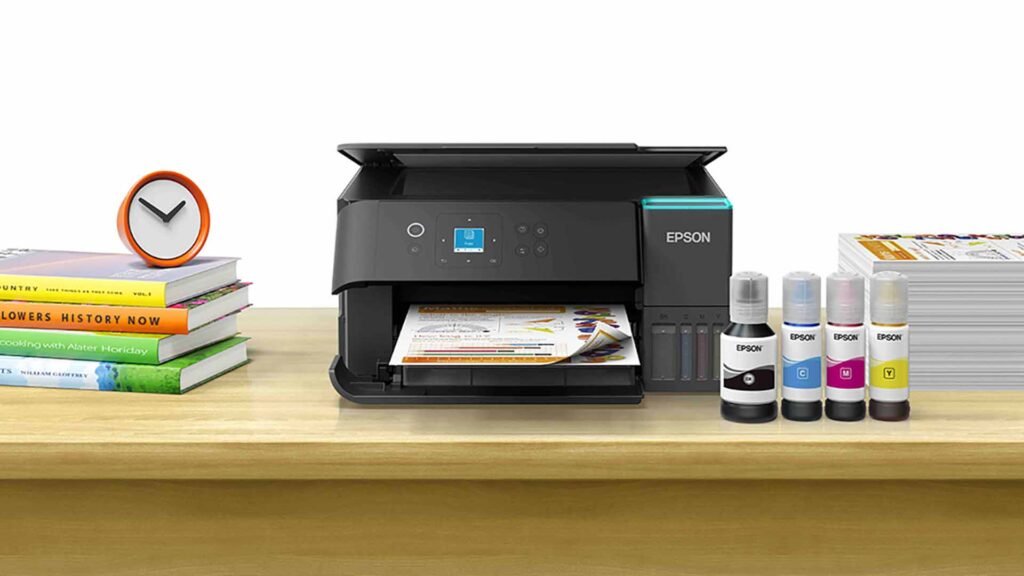
So there are a couple of things there. First of all, they wish that they had known about it earlier, so that we often hear that. And they’re always surprised how they haven’t had to change their ink at all. So we promote sort of around 2 years’ worth of ink, but if you’re not using your printer regularly, that can be a lot longer than that. So I frequently talk to customers that have never bought ink, and they kind of think that there’s this magic involved, we’re never going to run out. And then the other issue is people kind of have the confidence to print again. Because when you’re using a cartridge printer, particularly if you’ve got kids, the prospect of them printing out several pages of colour and then very quickly having to go and spend $90 on replacing the cartridges, it kind of makes printers, that kind of item in the house, that is forbidden to use. But with EcoTank, we just tell people to print as much as you like, and it’s kind of opening people’s eyes up again to how printers could be used.
DJURO SEN
So take me through the opposition. Is there competition growing in relation to this tank system that you’ve been pushing for several years now?
BRUCE BEALBY
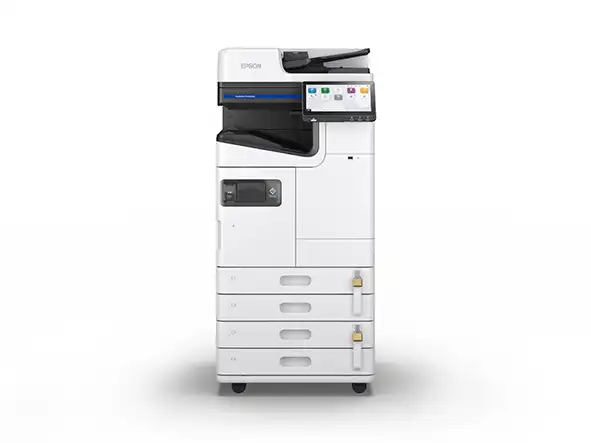
Yes, there are other brands out there now who have the same concept, but our range is the widest, staring at around $200 to $250, it goes right up to A3. More B2B type printers are sort of $1,500. So yes, there are other brands out there, but not with the range that we have.
DJURO SEN
Bruce, did Epson start EcoTank type systems for wider use?
BRUCE BEALBY
Yes. It started in South America, the first group of countries that we first started selling the concept.
DJURO SEN
Why did it come out of South America?
BRUCE BEALBY
The reason, as far as I know, is that there was quite an industry in South America of companies that would take a cartridge printer and adapt it for bottles. So they would do a bit of a hack. And that was growing in popularity. So we thought rather than people trying to hack our printers, we’d just develop a printer that enabled them to do what they wanted to do.
DJURO SEN
And then it spread around the world. When did it start taking off in Australia?
BRUCE BEALBY
That’s a good question. Maybe about 10 years ago, I’m going to say. We started off with just one or two models and there was a lot of kind of angst from our channel because they weren’t sure whether it was going to work. But we kind of knew. We knew it would be a slow start, but once it started, it very quickly took hold.
DJURO SEN
And now you have a huge range of these tank printers?
BRUCE BEALBY
Yes.
DJURO SEN
What are you trying to offer people who have to stand there and go, which printer should I get?
BRUCE BEALBY
Yes, so look, there are a couple of things. The easiest, if I was going to segment them, we have a couple of printers that are dedicated for photo users, so both A3 and A4. So they have more colours. They have an ink formula that will give you that professional photo type image. So we’ve got two printers there. We’ve got an A3 EcoTank, which I mentioned earlier. And then the bulk of the range, it really depends on the features that you want. So do you want a scanner? The speed and how much ink comes in the box. So yes, we try to make it as simple as we can on our website. We do have a carousel where you can scroll through each model and compare the features. But yes, we kind of try to cater for every type of customer.
DJURO SEN
Do you notice that there’s more colour printing happening?
BRUCE BEALBY
Yes, and more photos as well. Our kind of fastest growing area is photography and photo EcoTanks. So, that’s taken us a little bit by surprise, but, I think people realise now that you can get great quality on a photo EcoTank, then you can literally print hundreds of photos on the one set of tanks.
DJURO SEN
So this is a win for the environment in general, isn’t it?
BRUCE BEALBY
It’s a win for the planet.