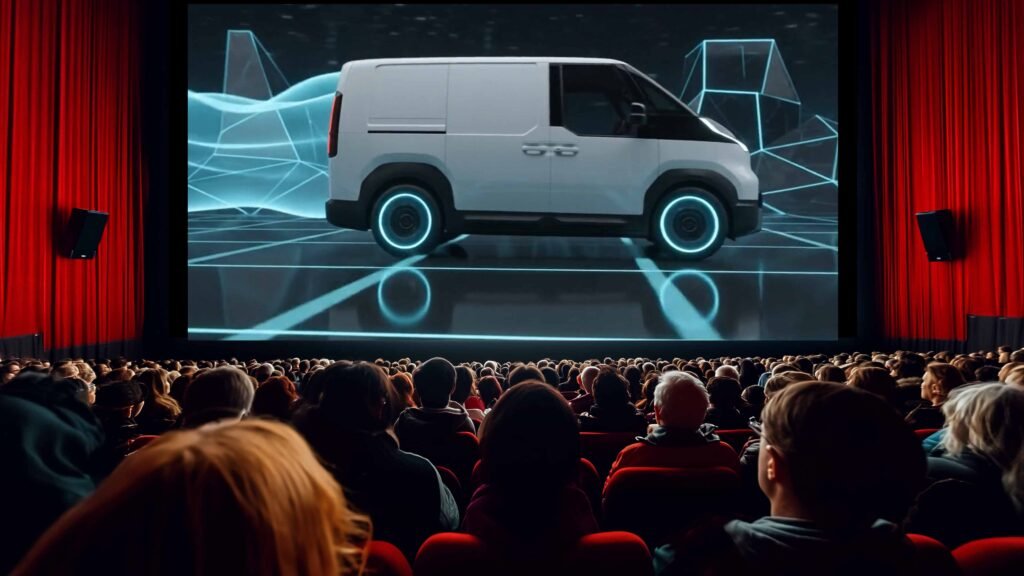
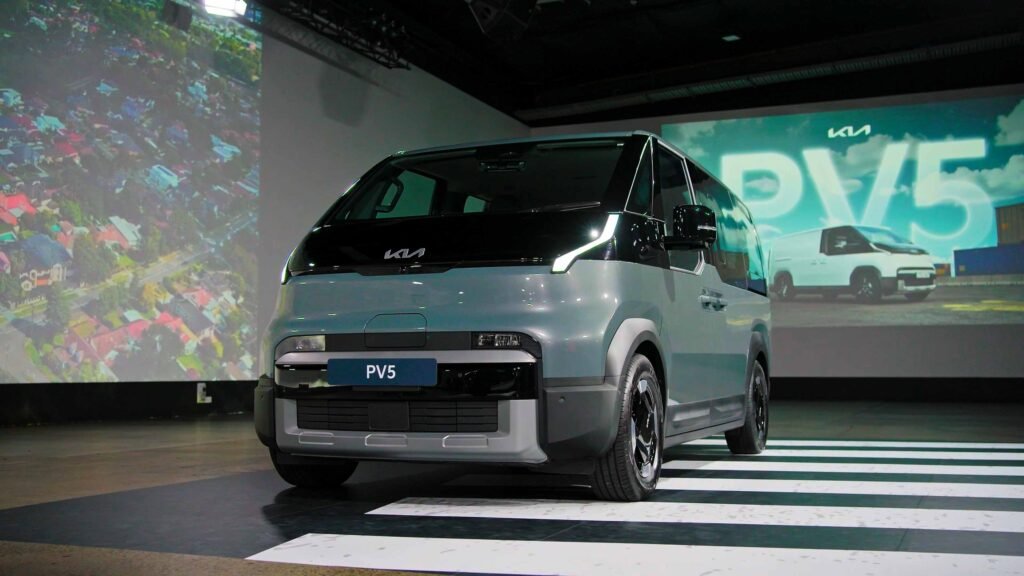
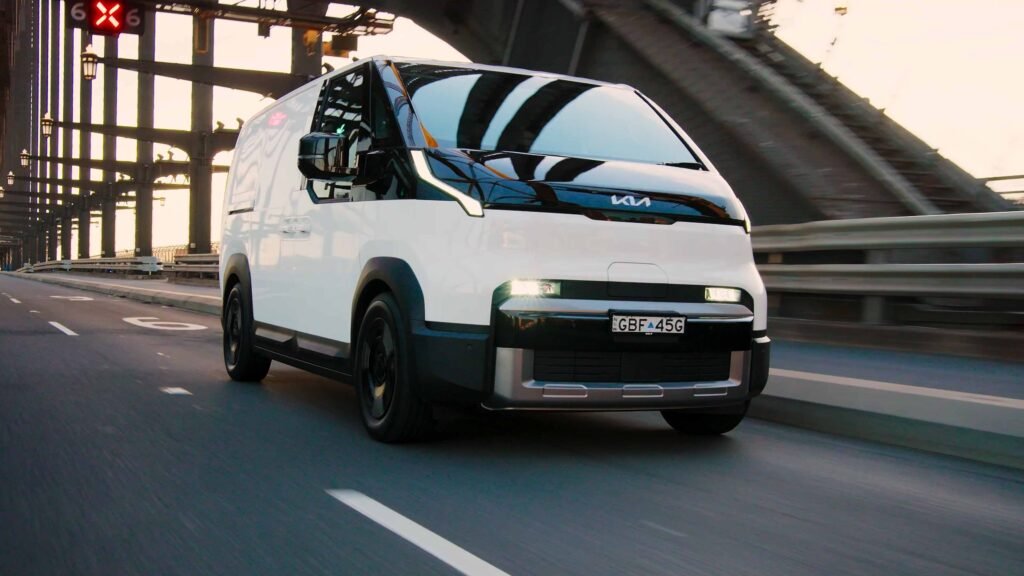
Kia’s PV5 Cargo is a van that looks like it came from the Tron universe to take on the electric light commercial category. The Tron-like aesthetic (as imagined by Gemini in my tech review video) makes this a futuristic-looking van on the outside, but it’s actually pretty plain on the inside. However, the sparse interior actually houses a lot of slick technology to match the modern-day needs of any driver.
The electric commercial vehicle segment is taking off in Australia, and now that Kia has entered the EV van game with a competitively priced option, it’s really heating up. Built from the ground up on Kia’s dedicated E-GMP.S platform rather than an adapted ICE chassis, the Kia PV5 makes the most of its efficient, compact design.
Priced from A$55,990 (plus on-road costs), the PV5 is worth serious consideration when compared with the competition.
Drivetrain & Charging Specifications
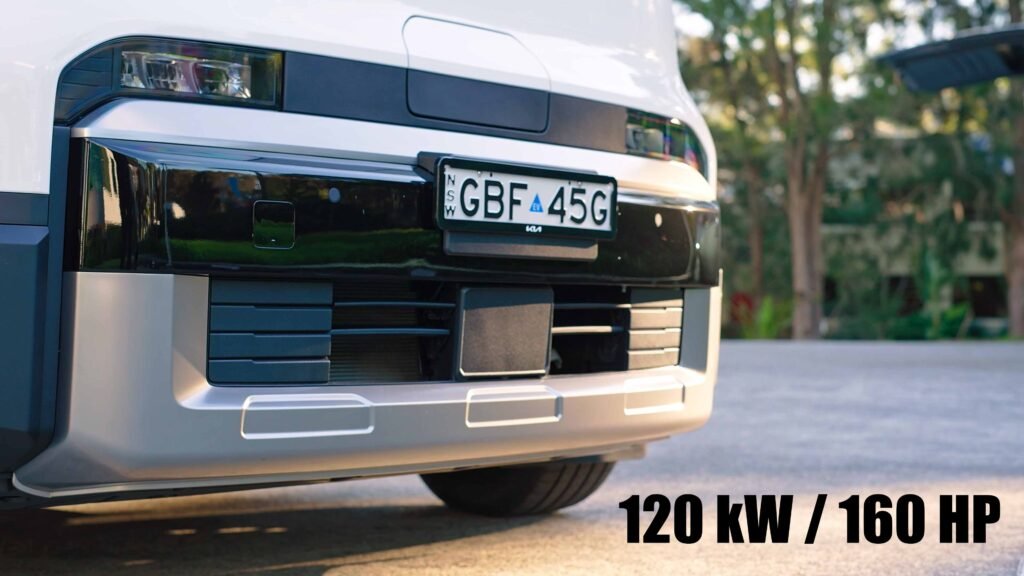
The front-mounted electric motor produces 120 kilowatts. Pushing the drivetrain to the front means you get a beautifully low, completely flat floor in the back. For city delivery drivers and tradies, the big talking point is the 416km WLTP range.
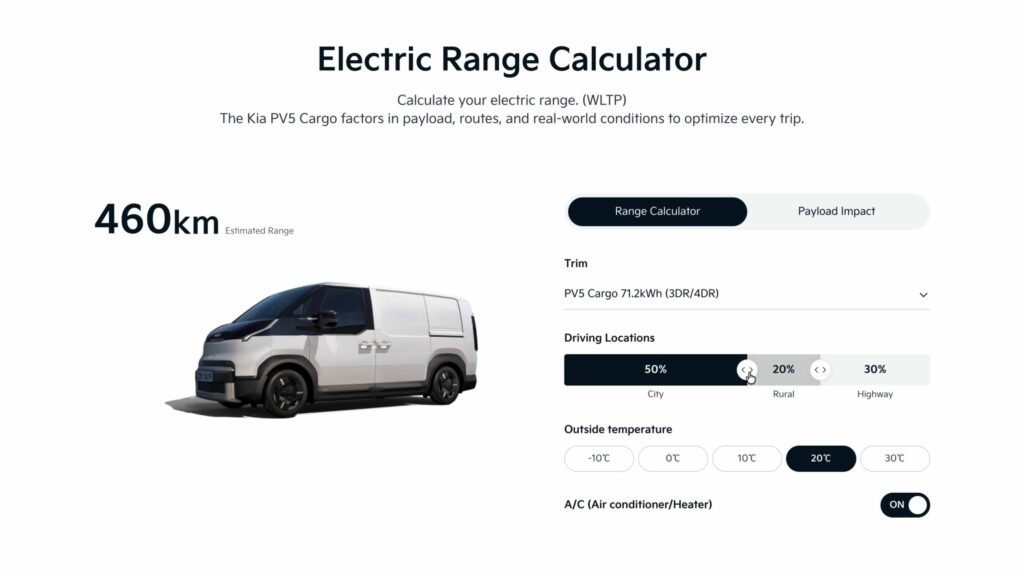
Kia has a brilliant range calculator on their website specifically for the PV5. I highly recommend trying it out because commercial driving has so many variables. It factors in whether you’re gridlocked in city traffic, doing heavy freeway driving, working in intense heat or cold, or carrying a maximum load.
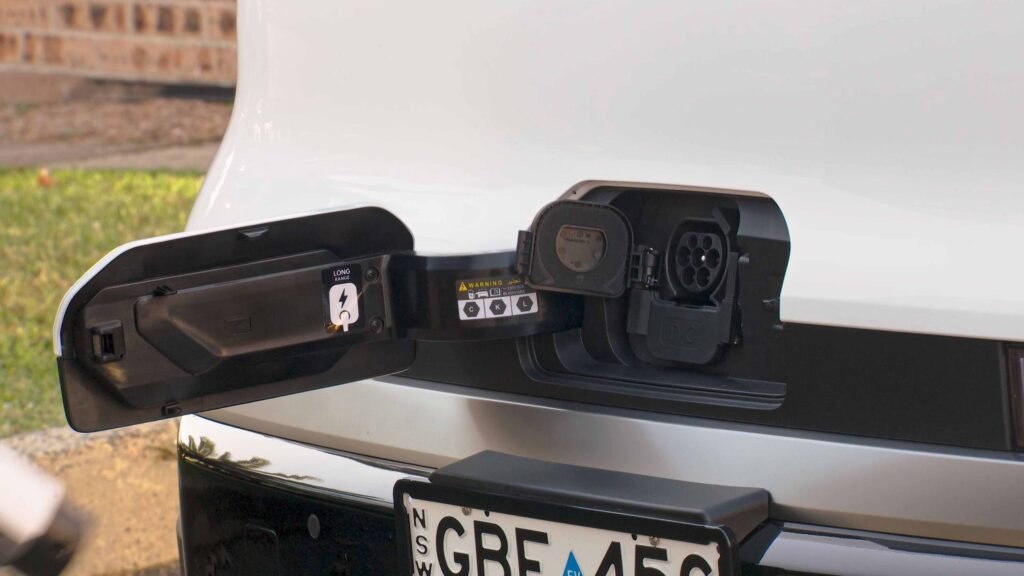
When you do need to top up, DC fast charging takes the 71.2kWh battery from 10% to 80% in about 30 minutes. If you’re charging overnight on an 11kW AC charger, you’re looking at around six and a half hours. Plus, with 3.6 kilowatts of Vehicle-to-Load (V2L) capability, you can run heavy power tools or charging stations directly from the van when you’re out on a job site with no mains power.
| Specification | Technical Data |
| Motor Output | 120 kW / 160 HP / 250 Nm (Front-Wheel Drive) |
| Battery Pack | 71.2 kWh Lithium-Ion NCM |
| Stated Range | 416 km (WLTP combined cycle) |
| DC Fast Charging | 10% to 80% in ~30 minutes (Max 128kW DC) |
| AC Charging | 0% to 100% in ~6.5 hours (11kW Three-Phase) |
| V2L Power Output | 3.6 kW Max (Bi-directional AC) |
Infotainment & UI Customisation
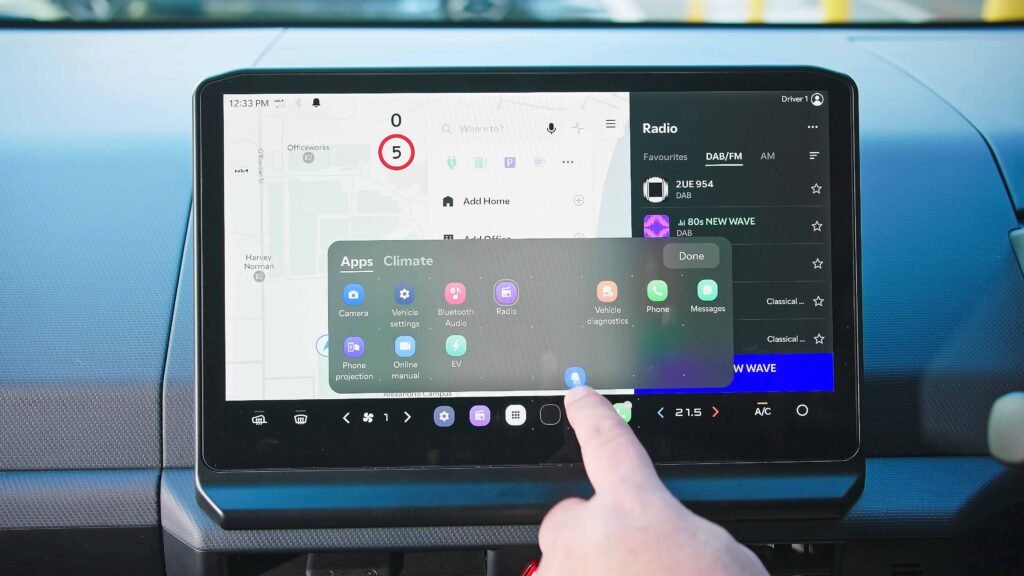
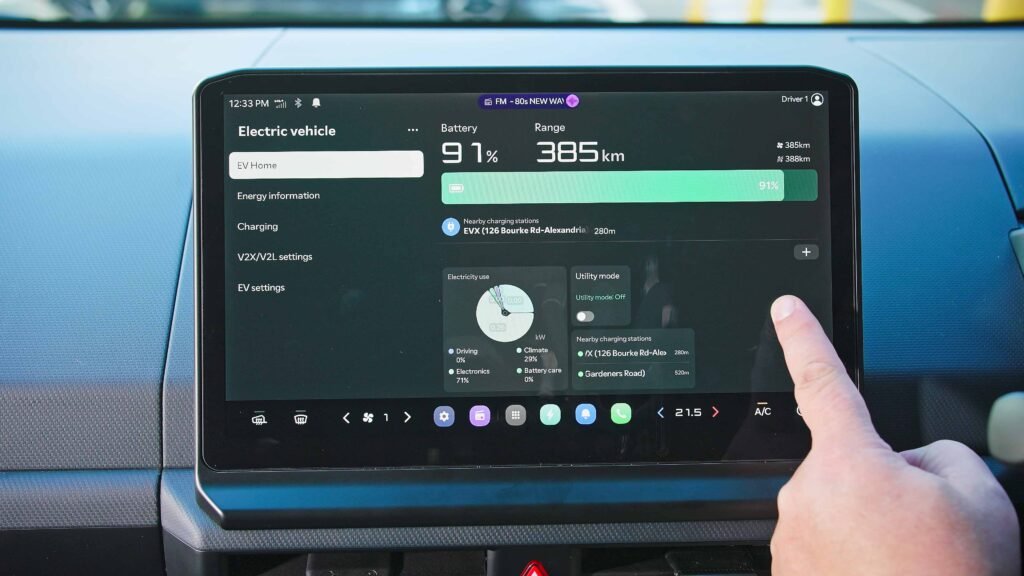
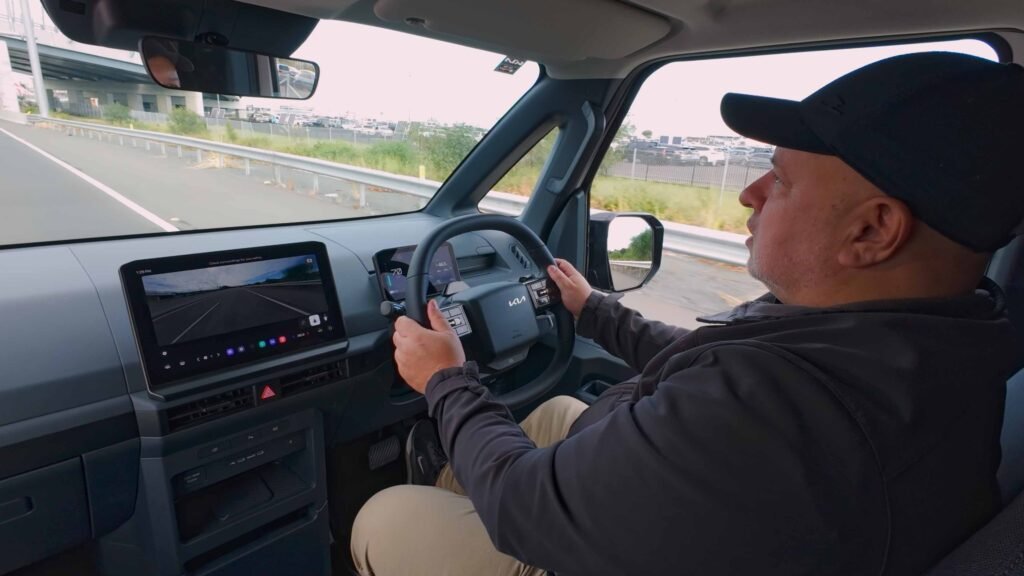
The interior of the PV5 Cargo adds some car luxuries to a stark commercial interior design. Drivers will be pleased with a high-visibility 7.5-inch digital instrument cluster framed cleanly through the steering wheel. The centrepiece of the dashboard is a 12.9-inch primary infotainment display debuting Kia’s latest generation user interface.
The system operates with tablet-like responsiveness, allowing drivers to customise a permanent lower quick-access dock via standard press-and-hold drag operations. Crucially, adjusting the app layout does not interfere with the static climate control overlay, keeping cabin comfort controls accessible at all times without menu diving. I note the lack of physical buttons, but it was pretty easy to use without groping the screen.
Wireless Apple CarPlay and Android Auto are fully integrated. Frankly, selling a vehicle in 2026 without wireless smartphone projection is just stupid, so kudos to Kia for executing this seamlessly. The dash layout looks minimal, but the utility is there. Right under the centre screen is a dedicated wireless charging mat. If you prefer a cable, you have access to some serious power delivery: a 100-watt USB-C port right on the console, alongside a traditional 12-volt, 180-watt socket. Kia also added a clever secondary USB-C port on the dash to the right of the steering wheel for phone mounts or dashcams.
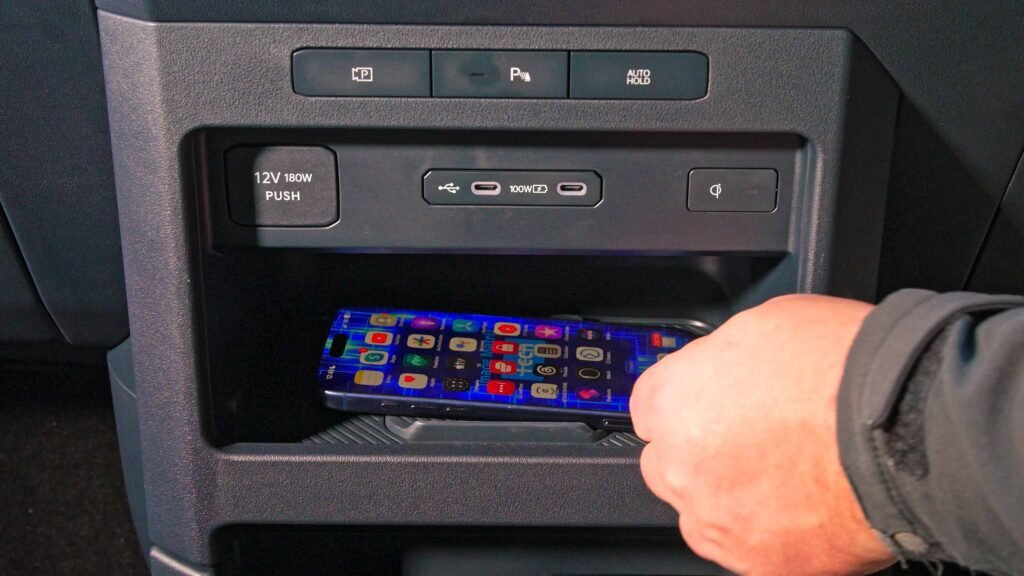
- 100W USB-C Port: Positioned centrally to handle rapid power delivery for modern laptops, tablets, and tool batteries.
- 180W / 12V DC Port: A heavy-duty auxiliary outlet for legacy hardware.
- Secondary Dashboard USB-C: Intelligently placed to the right of the steering wheel to power windshield-mounted devices or phone cradles without running messy cables across the steering column.
- Wireless Connectivity: Wireless Apple CarPlay and Android Auto are fully integrated as standard hardware kit.
Speaking of the wheel, it features Kia’s familiar ergonomic layout, complete with regenerative braking paddles on the back so you can adjust your braking resistance on the fly. You also get full integration with the Kia Connect app—meaning you can remotely turn on the climate control and warm the cabin up on freezing winter mornings before you even leave the house.
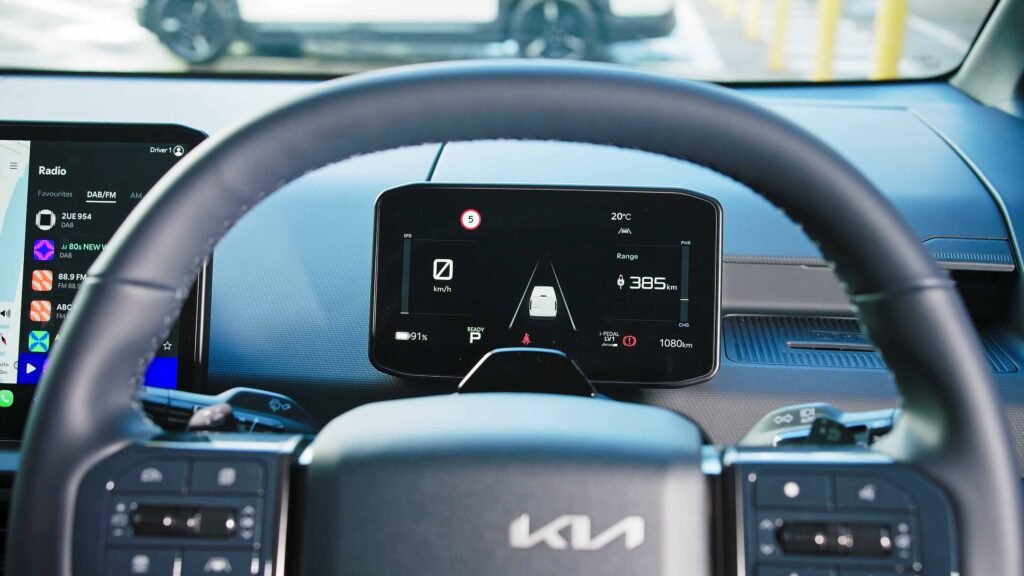
The rear vision mirror is good for checking your hair but not much else. Thankfully, you can pin the rear camera feed right to that massive 12.9-inch display. You can run it as a picture-in-picture window while navigating, or toggle it to full screen while driving so you always know what’s behind you.
You also get great motorised side mirrors and Kia’s excellent blind-spot monitoring, tech usually reserved for premium passenger cars. And honestly, a 360-degree camera system is a non-negotiable in a modern van. It’s incredibly frustrating when vehicles in this class omit it, so having it contextually laid out with independent angle selection here is a massive win.
Pet Mode
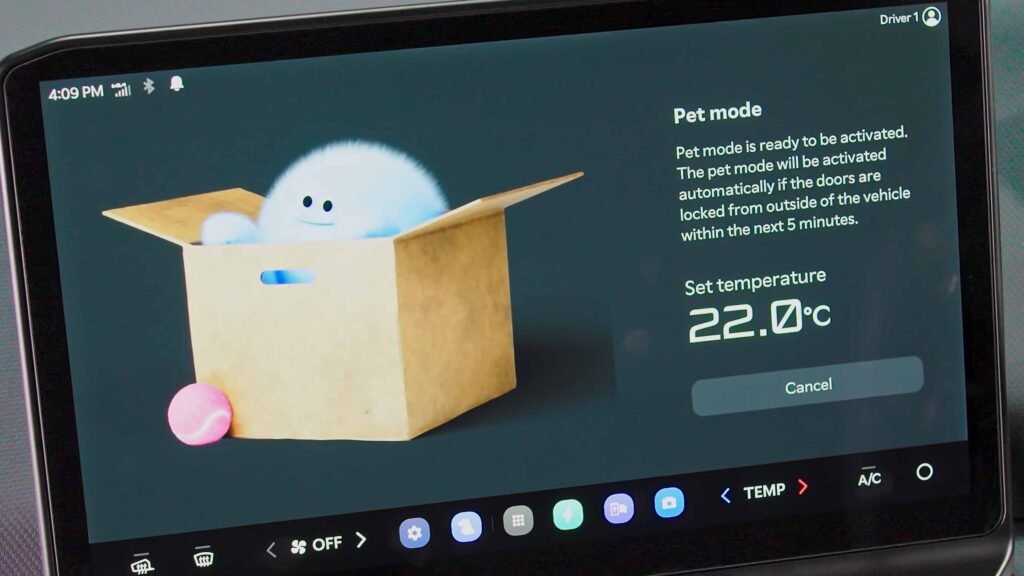
Another feature I absolutely love? Pet Mode. We’ve watched this tech grow from Tesla to other brands, and it’s a brilliant addition to a commercial vehicle. Plenty of tradies travel with their dogs. With Pet Mode on, you can lock the cabin, leave the air conditioning running at a perfectly safe temperature, and go tackle a quote knowing your best buddy is safe and cool.
The only real downside for me? No front bench seat option at launch. It’s a strict two-seater, which rules out having a third crew member in the cabin.
Digital Ecosystem & Fleet Control
The PV5 fully supports the Kia Connect app infrastructure. This enables fleet operators or owner-operators to monitor battery health metrics, review automated range scenarios based on payload variations via Kia’s dynamic online planning tools, and execute remote functions. This includes remote cabin pre-conditioning—a vital addition for optimising battery efficiency by heating or cooling the van while it is still tethered to an AC charger.
While the Cargo model ships strictly as a two-seater variant with dual sliding doors and 180-degree rear barn doors, Kia Australia has confirmed that a five- to seven-seat PV5 Passenger variant will join the local lineup later this year to cater to ride-share, family, and shuttle operations.
Payload and Towing Capacities
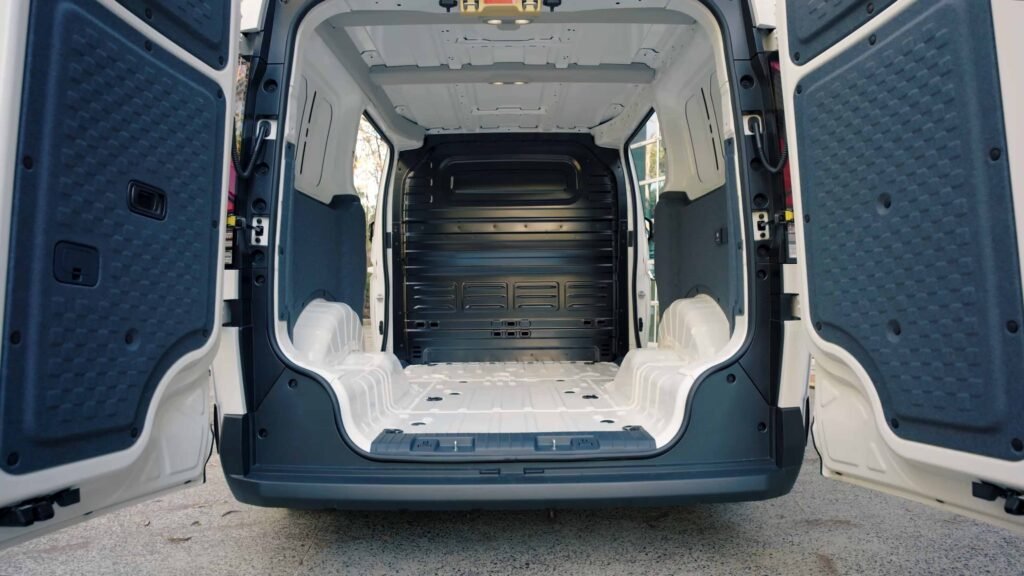
- Maximum Payload: 740 kg
- Towing Capacity (Braked/Unbraked): 750 kg
- Roof Load Capacity: 100 kg
- Load Volume: 4.4 cubic metres (4,420 litres)
Pricing and Availability
The Kia PV5 Cargo is available now and starts from $55,990 Australian dollars plus on-road costs.
The estimated drive-away price is about $60,800 to $62,800 depending on your state’s registration costs, stamp duty, and fleet/individual status.
Conclusion
On the road, this thing drives remarkably like a passenger car. Because it’s an EV, it is incredibly punchy off the line. Most traditional diesel vans struggle when laden, but the instantaneous 250Nm of torque here means you get effortless performance alongside that 416km range.
It’s easily the coolest-looking van on the market, and the value proposition is incredibly strong.