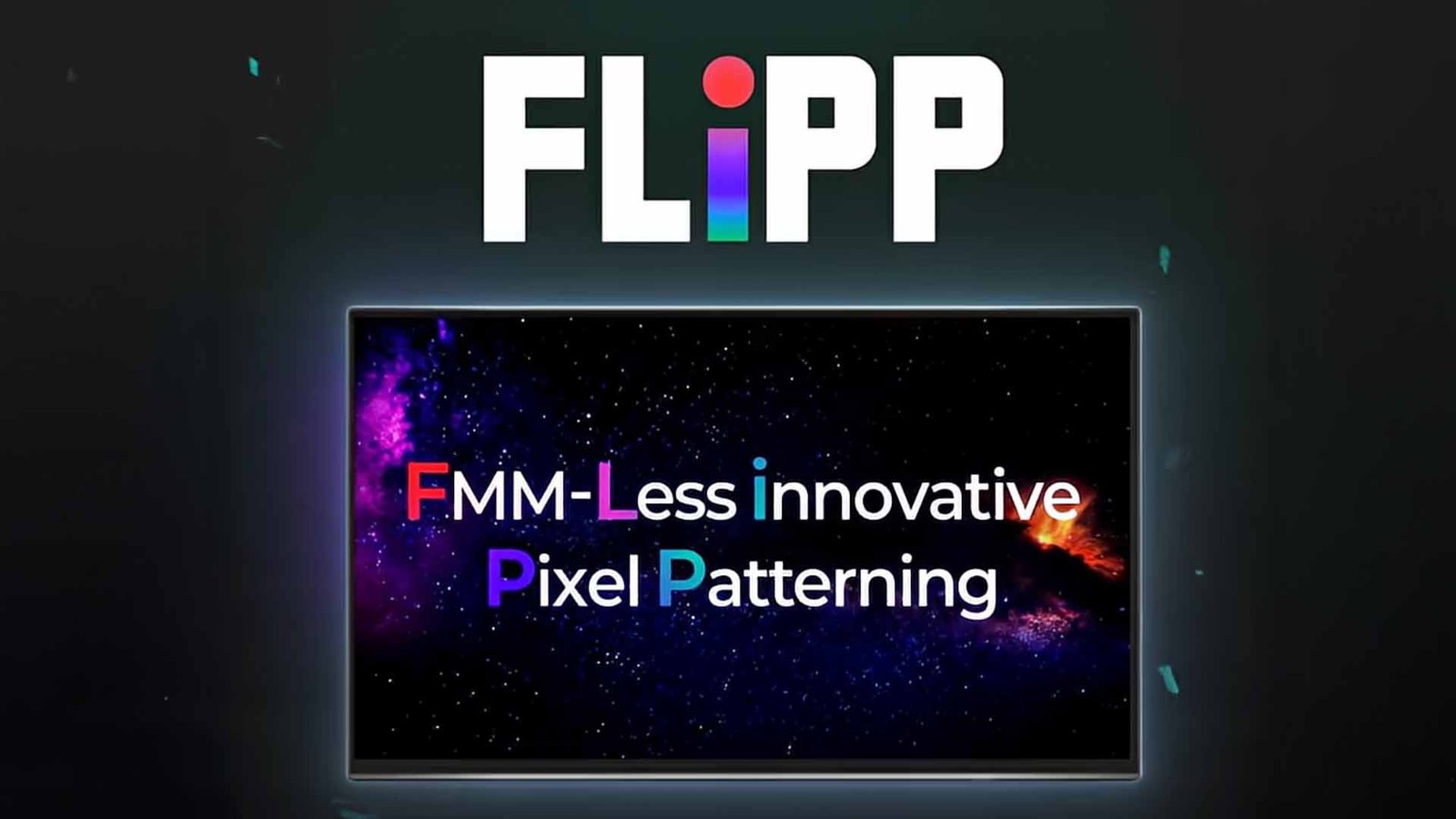



LG Display has just given OLED advocates a massive boost by announcing it had successfully developed a new production process that increases brightness by 1.6 times, extends lifespan by 2.4 times, and reduces power consumption by 13%. Looks pretty promising.
The method is called FLiPP (FMM-Less Innovative Pixel Patterning). This is the heart of the OLED production process, where the panel is born.
LG is planning to move on from the conventional fine metal mask (FMM) process, which essentially involves a thin piece of metal with millions of microscopic holes lined up where the sub-pixels go. It’s like painting with a very thin stencil. The FMM method is costly because new FMMs must be made to match resolution specs or panel sizes. Large metal masks tend to sag in the middle, causing misalignment and colour-mixing defects.
FLiPP does not suffer from the same issues. It does away with the mask entirely by evaporating organic materials across the panel substrate, then using UV to etch away the unwanted bits. This allows for a larger aperture ratio in each pixel area, boosting luminance significantly.
One of the biggest benefits of FLiPP is screen size flexibility. In theory, it can be used to produce displays ranging from 1 inch to 100 inches and can be applied not only to conventional panels but also to VR and AR displays. This covers every screen demand from 1-inch wearables to enormous TVs. FLiPP was shown for the first time this week at the International Meeting on Information Display (IMID) 2026 in Busan.
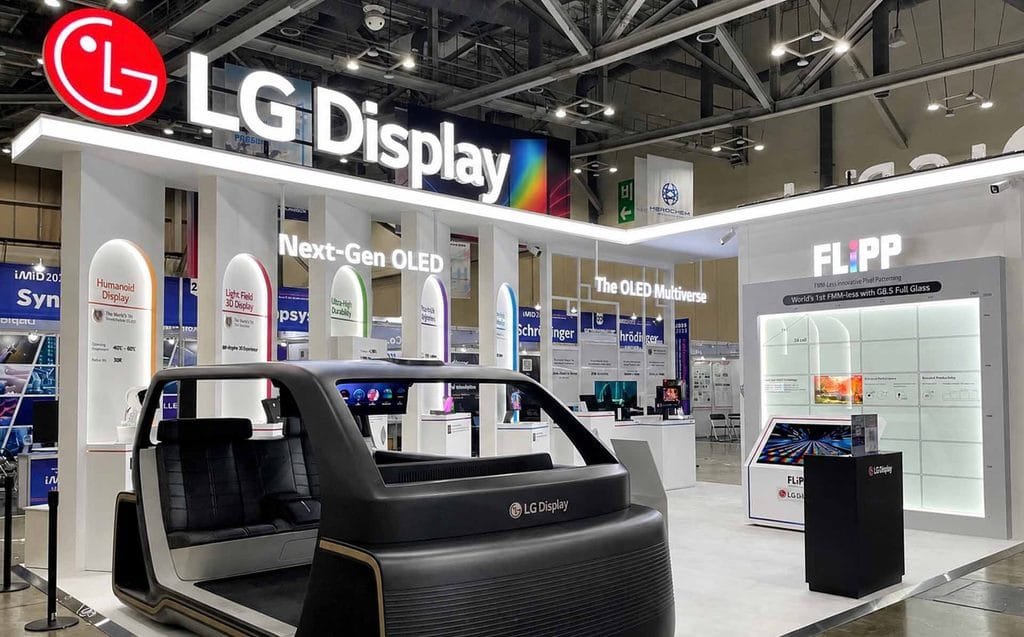
“We were able to successfully realise FLiPP, a next-generation OLED patterning technology referred to as a ‘dream technology,’ by bringing together our proprietary WOLED technologies and know-how,” said Choi Young-seok, CTO at LG Display.
“Through our participation in IMID, we will lead next-generation OLED technologies and accelerate market differentiation.”
As awesome as this development is for OLED fans like me, don’t expect a 100-inch-plus OLED TV anytime soon. You might be waiting a few years.