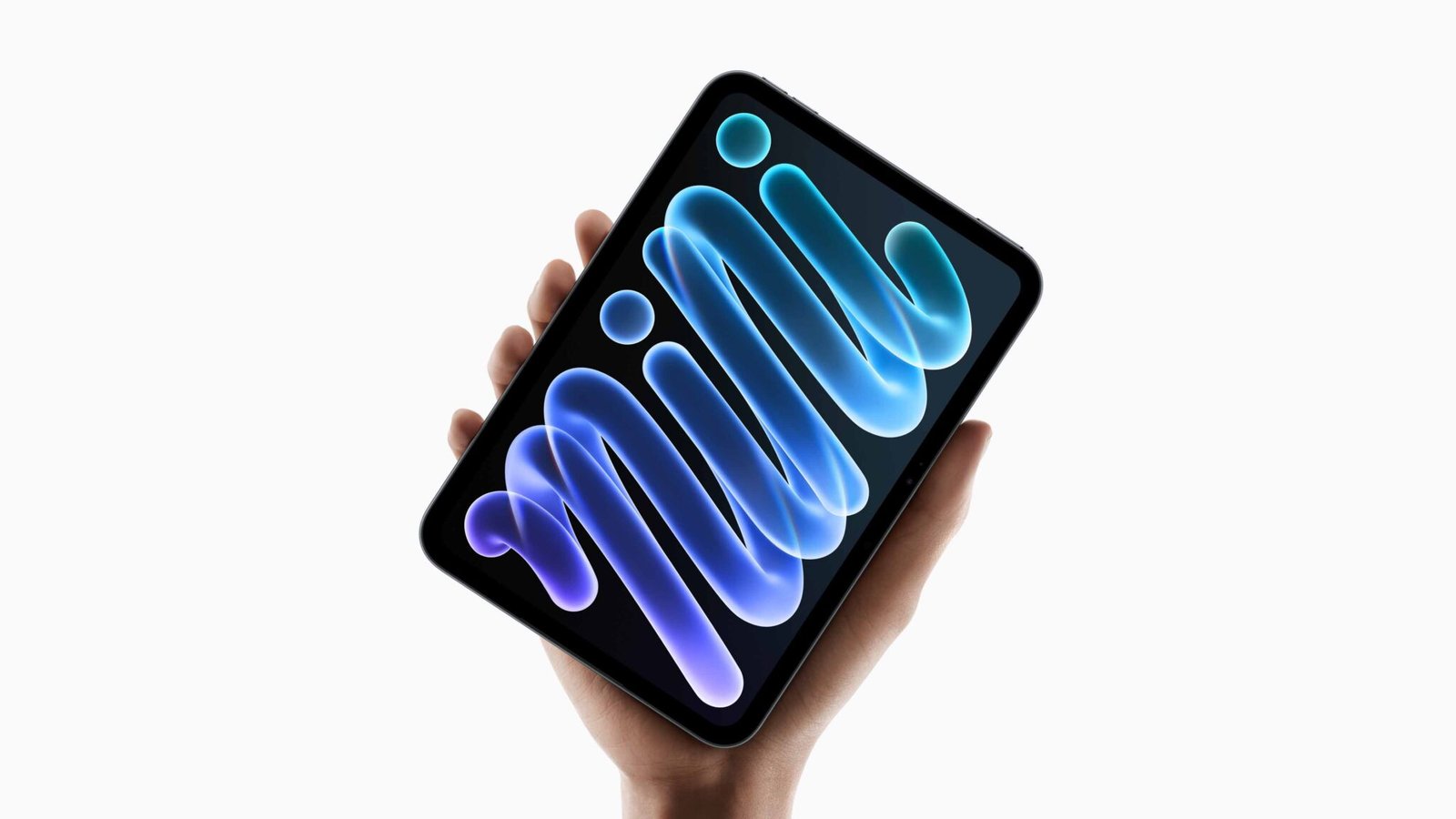


The iPad mini has some hardcore fans, and they’ll be first to place orders for the new model announced by Apple today. The 2026 iPad mini has a couple of standout features. The first is a larger 8.5-inch OLED display, and the second is an insane performance jump with the inclusion of the A20 Pro processor.
Combine those upgrades with a thinner, lighter form factor plus water and dust resistance, and you have a pretty compelling option for Apple’s smallest iPad.
“iPad mini is beloved for its fantastic portability, performance, and display by a wide range of users, from creators and small business owners to doctors, field service workers, and gamers,” said Dave Pakula, Apple’s vice president of Hardware Engineering.
“With a remarkably thinner and lighter design, a stunning new OLED display, the incredibly powerful A20 Pro, and water and dust resistance, the new iPad mini is a huge leap forward for users who love having the full iPad experience in the palm of their hand.”
| Key Area | Specifications & Feature Highlights |
|---|---|
| ◆ Design & Durability | Ultrathin 5.4mm chassis available in Midnight and Starlight finishes. Now engineered with an IP67 water and dust resistance rating for all-weather durability. |
| ◆ Display & Visuals | Larger 8.5-inch Super Retina XDR OLED with 24% thinner bezels, 1200 nits peak brightness, 2,000,000:1 contrast ratio, 1-nit low-light mode, and an optional anti-glare nano-texture glass. |
| ◆ Silicon & AI Engine | Powered by the 2nm A20 Pro chip featuring a 6-core CPU, 7-core GPU with ray tracing, and hardware Neural Accelerators delivering up to 4.5x faster AI performance. Top 512GB tier adds a Dual 16-core (32-core) Neural Engine. |
| ◆ Audio & Camera Systems | Debuts the Acoustic Display system with sealed under-glass woofers and tweeters. Features a repositioned landscape 12MP Center Stage front camera and a 12MP Wide rear camera with Adaptive True Tone flash and 4K60 capture. |
| ◆ Wireless & Connectivity | Custom N1 wireless chip introduces Wi-Fi 7, Bluetooth 6, and Thread. Cellular variants feature the C2 modem providing up to 50% faster data rates alongside full eSIM management. |
| ◆ Software & Intelligence | Runs iPadOS 27 featuring on-device Siri AI contextual reasoning, Image Playground, customizable Liquid Glass UI, and external windowed display expansion (iPadOS 27.2). |
| ◆ Pricing & Availability | Pre-orders open 29 October 2026, launching in stores on 6 November 2026. Australian pricing starts at A$1,099 (Wi-Fi) and A$1,349 (Wi-Fi + Cellular) in 128GB, 256GB, and 512GB capacities. |
The new iPad mini is powered by iPadOS 27 with the next generation of Apple Intelligence and Siri AI. This is made possible by the A20 Pro chip, which boosts graphics and AI-intensive tasks. It is built using Apple’s latest 2-nanometre process technology and a new package inspired by M-series chips. Powered by a 7-core GPU with Neural Accelerators in each GPU core, iPad mini delivers up to 4.5x faster AI performance than the previous generation — perfect for AI tasks ranging from running on-device models in creative apps to running local LLMs.
The latest graphics architecture, including dynamic caching and hardware-accelerated mesh shading and ray tracing, results in graphics performance jumps by up to 2.7x. A20 Pro also features up to a 6-core CPU for up to 60 per cent faster multithreaded performance for everyday tasks like editing photos and working across apps.
The 512GB configuration features a Dual 16-core Neural Engine, which offers double the processing power of the previous generation, accelerating tasks in apps like Draw Things and Detail. By engaging all 32 cores, A20 Pro becomes a powerhouse for more advanced on-device AI workloads.
In short, this iPad mini is a powerful little beast.
More on Design and Display
The iPad mini still has a place in the Apple ecosystem despite the arrival of the iPhone Duo. The iPad mini is much cheaper, and I know many people that prefer to separate their phone use from their tablet experience, regardless of the size of the tablet. At 5.4mm thin, the new iPad mini is more portable than ever. It comes in midnight and starlight colours, and its IP67 rating gives protection against water and dust.
The new 8.5-inch OLED display fits into the same footprint as the previous mini, thanks to 24% thinner bezels. The Super Retina XDR display delivers pixel-level lighting control for much deeper blacks and support for the P3 wide colour gamut. It also features peak brightness of up to 1200 nits, more than 2x higher than the previous generation. It supports 600 nits of full-screen brightness for SDR and HDR content, along with a 2,000,000:1 contrast ratio. With a 1-nit minimum brightness, the iPad mini is even more suitable for dim environments. The iPad mini also offers a new nano-texture display option that reduces glare in bright environments.

Pricing and Availability
- Pre-orders for the iPad mini with A20 Pro begin on Thursday, 29 October.
- iPad mini will be in Apple Store locations and Apple Authorised Resellers, starting Friday, 6 November.
- iPad mini will be available in midnight and starlight with 128GB, 256GB, and 512GB configurations.
- iPad mini starts at A$1,099 for the Wi-Fi model, and A$1,349 for the Wi-Fi + Cellular model.
- With education savings, the iPad mini starts at A$1,019.
- The new TechWoven Smart Folio is available in navy blue and taupe, and is available for A$129.
- Apple Pencil Pro and Apple Pencil (USB-C) are compatible with the new iPad mini. Apple Pencil Pro is available for A$219 and A$199 with education savings. Apple Pencil (USB-C) is available for A$139 and A$119 with education savings.