
- ◆A20 Pro with Purpose Build Cooling
- ◆iOS27 redesigned for the folding phone
- ◆Apple Pencil Compatibility
- ◆Second Screen becomes your viewfinder
- ◆Two Batteries Working as one
- ◆Sir AI becomes part of Multitasking
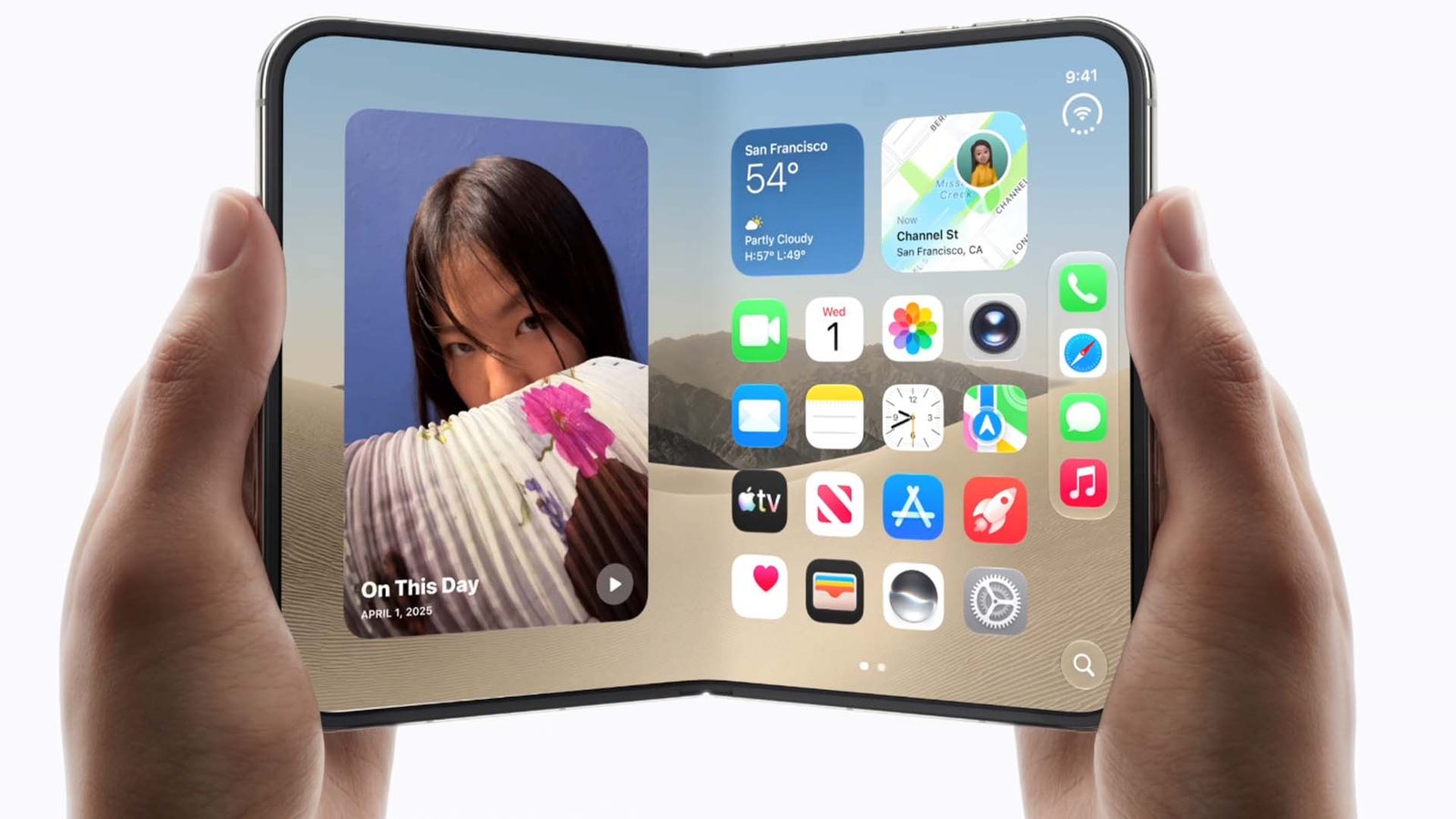
Apple has officially entered the foldable smartphone market, unveiling the iPhone Duo, its first folding iPhone and arguably one of the biggest physical changes to the iPhone since its introduction.

Rather than simply taking an existing iPhone and adding a hinge, Apple has developed the Duo around two distinct modes of use. Closed, there’s a relatively compact 5.4-inch display designed to work much like a conventional iPhone. Open it up and that expands into a considerably larger 7.6-inch display, giving users more room for entertainment, productivity and, importantly, proper multitasking.
Apple has also used the new form factor to rethink parts of iOS, the camera experience and even Siri, while packing the same A20 Pro processor found in the iPhone 18 Pro models inside.
The Internal Hardware
Powering the iPhone Duo is Apple’s new A20 Pro, the same 2nm chip found in the iPhone 18 Pro models. It combines a six-core CPU, seven-core GPU and upgraded Neural Engine, with Apple claiming up to 35 percent better sustained performance than the iPhone 17 Pro. A custom vapour chamber helps manage heat during gaming, multitasking and demanding AI workloads.
The folding design also required Apple to rethink the battery, placing one battery in each half of the phone and managing them as a single power source. Apple claims up to 31 hours of video playback using the inner display or 44 hours using the outer screen, with 50 percent wired charging possible in around 20 minutes.
Connectivity includes Wi-Fi 7, Bluetooth 6 and Thread through Apple’s N1 chip, alongside the C2 cellular modem. The iPhone Duo is also eSIM-only worldwide, partly to free up additional internal space for the battery.
The Screens
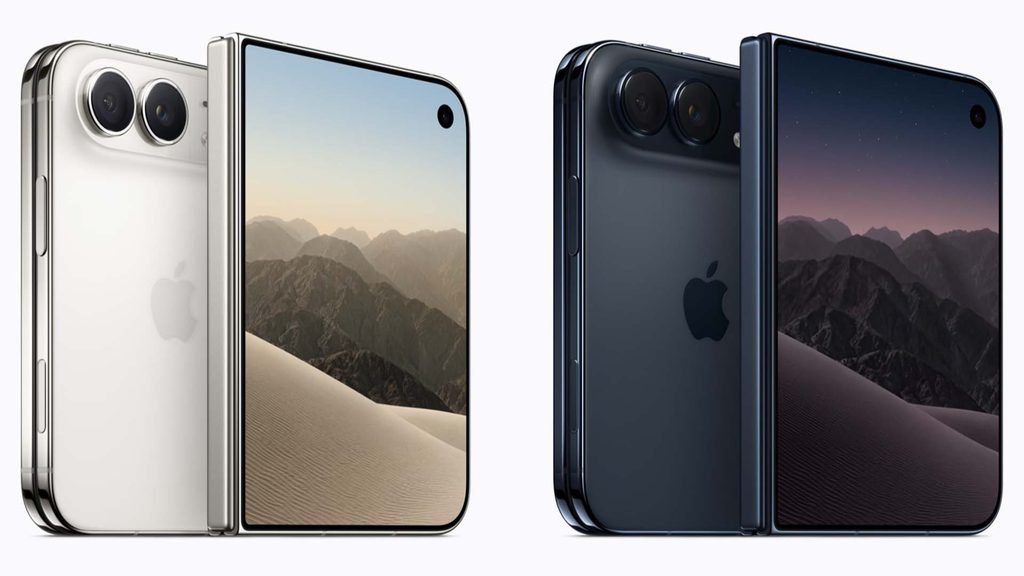
The displays are naturally the headline feature of the iPhone Duo. When closed, users have access to a 5.4-inch Super Retina XDR outer display, which Apple says provides around 90 percent of the usable screen area of the iPhone 18 Pro while making the device significantly more pocketable.
Opening the Duo reveals a 7.6-inch Super Retina XDR display, which is around 50 percent larger than the display on the iPhone 18 Pro Max. Both screens support ProMotion, Always On functionality and up to 3,000 nits of peak outdoor brightness.
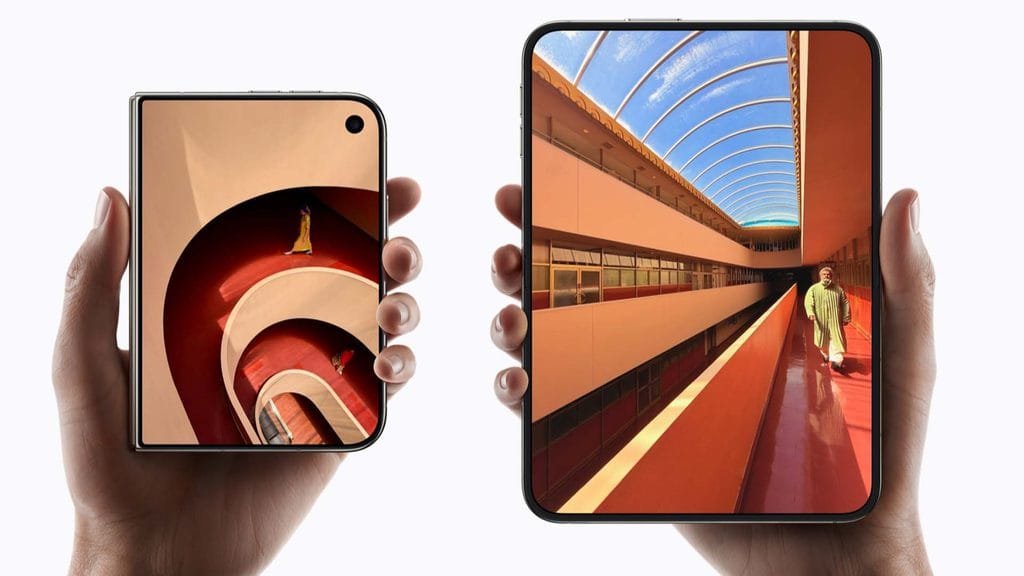
Apple has also given the internal display a nano-texture finish designed to reduce reflections while making the inevitable folding crease less visible. Interestingly, the inner and outer displays use the same aspect ratio, allowing content to scale more naturally as you move between the two.
There’s another rather unexpected addition coming later in the year: Apple Pencil support. The USB-C Apple Pencil will work across both displays, allowing the Duo to effectively become a very small digital notebook when unfolded.
Authentication also changes with the new form factor. Instead of Face ID, Touch ID is integrated into the side button, making it accessible regardless of whether the device is folded or open.
The Cameras
The iPhone Duo gets a dual 48MP rear-camera system, led by a 48MP Fusion Main camera with sensor-shift optical image stabilisation. It can capture full-resolution 48MP images, defaults to 24MP for everyday shooting and provides an optical-quality 2x crop for telephoto shots.
It’s joined by the same 48MP Fusion Ultra Wide camera found on the iPhone 18 Pro range, which also handles macro photography. A Centre Stage front camera handles conventional selfies, while another FaceTime camera sits beneath the internal folding display.
Users can shoot selfies using the higher-quality rear cameras while framing themselves on the outer screen. Duo Preview similarly lets the subject see the composition while someone else takes the photo. Smart Take uses on-device AI to recognise when people are posing and automatically capture the shot, while Kid Cue can display Peanuts animations on the outside screen to encourage children to look towards the camera.
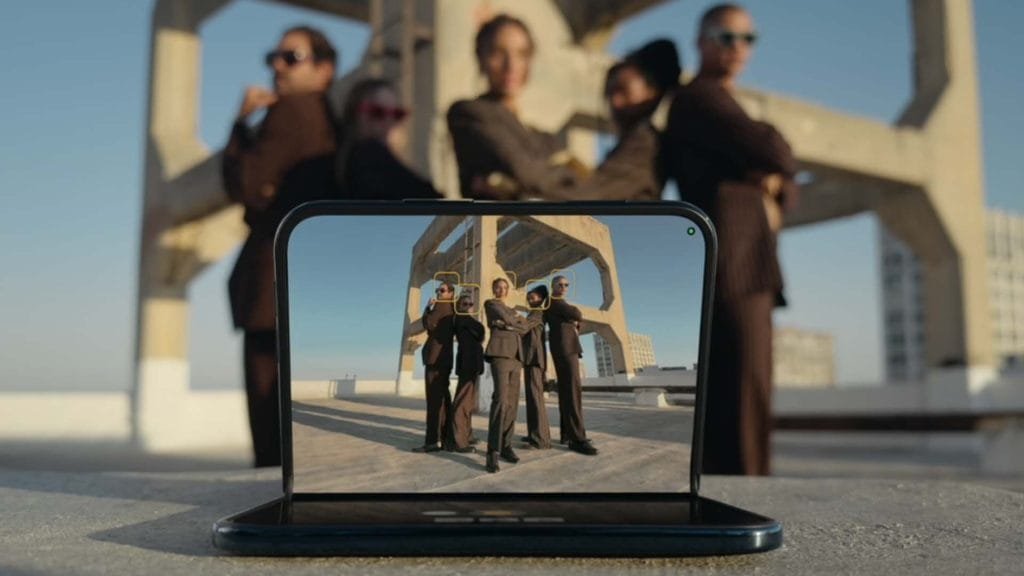
The folding design also effectively provides its own tripod. The Duo can be partially folded and placed on a surface for FaceTime, photos, time-lapses or video without requiring a separate stand.
For video, the main camera supports 4K Dolby Vision at up to 120fps, while Cinematic effects can be applied after capture at up to 60fps.
Software and AI
Hardware is only half of the foldable equation, and iOS 27 has been redesigned in several areas specifically for the Duo.
When opened, users can display two Home Screen pages simultaneously, while interface elements including the Dock, navigation controls and Dynamic Island have been repositioned to better use the wider display.
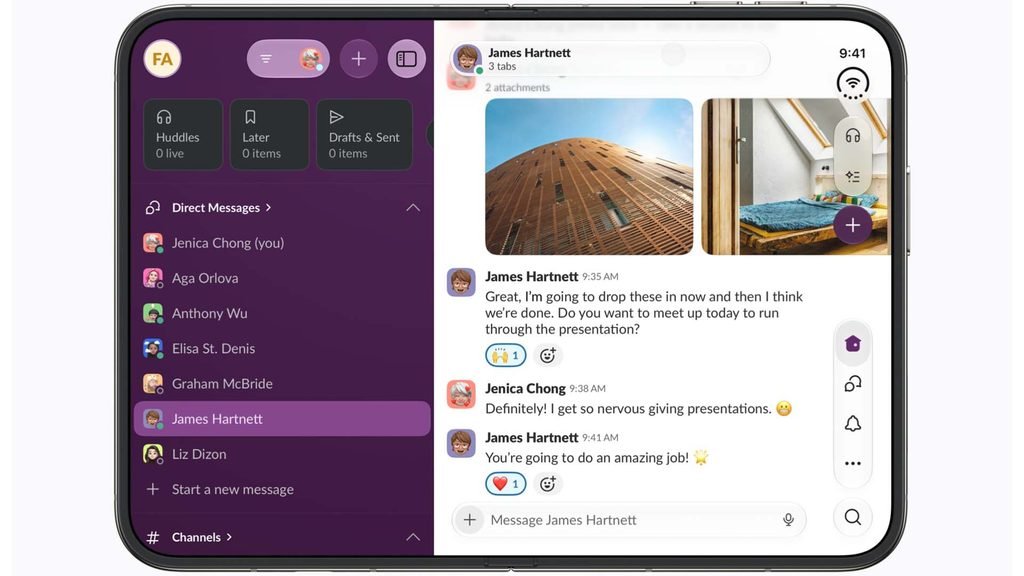
Perhaps most importantly for productivity on the device, the Duo introduces proper Split View multitasking to the iPhone. Two apps can run side-by-side; users can open two windows of the same application — such as two Safari windows — and frequently used pairs of apps can be saved for quick access later.
Apps can also respond dynamically as the phone is folded, rotated or flipped between displays. Apple says developers can adapt their apps using its updated SDKs, with apps including Netflix, Zoom and Slack already making use of the larger screen. StandBy also becomes considerably more useful. The Duo can enter StandBy using either display and, unlike existing iPhones, it doesn’t need to be charging to do so.
Rolling out in beta alongside iOS 27, Apple’s new Siri can use personal context across messages, emails and photos, understand what’s currently displayed on screen and take actions based on that information. There’s also a dedicated Siri app with conversation history synchronised privately between Apple devices.
Apple Intelligence adds Spatial Reframing, Extend and an upgraded Clean Up for photo editing, while Image Playground gains photorealistic image generation. Safari’s new Notify Me feature can monitor websites for changes such as a product returning to stock or dropping in price.
Apple says its AI functionality continues to combine local processing with Private Cloud Compute when more processing power is required.
Pricing and Availability
The iPhone Duo starts at an RRP of A$3,499 in Australia, putting Apple’s first foldable firmly into the ultra-premium smartphone territory. It will be available with 256GB, 512GB, 1TB or 2TB of storage, with colour choices limited to Star White and Night Sky.
Australian pre-orders open at 11 pm AEST on Friday, 16 October, before general availability begins on Friday, 23 October. The device will ship with iOS 27.1.
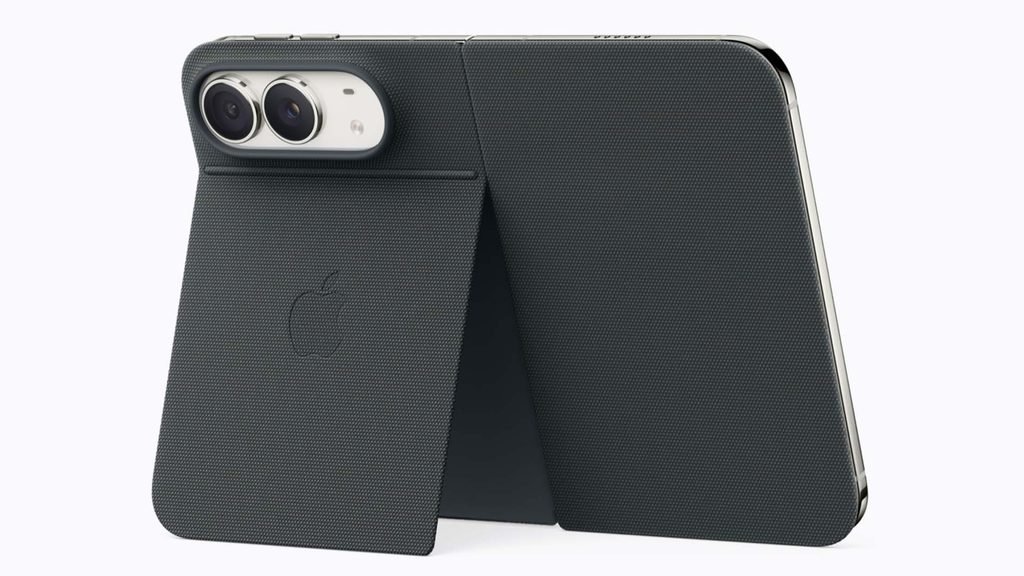
Apple is also launching two dedicated accessories. The two-piece iPhone Duo Case will cost A$119, while the iPhone Duo Folio with integrated kickstand will set buyers back A$199. Both support MagSafe and Qi2 charging.
Conclusion
Apple certainly isn’t the first company to make a folding smartphone. Samsung, Google, Motorola and several Chinese manufacturers have spent years developing the category, giving Apple the luxury of arriving considerably later than its competitors. But the iPhone Duo is significant precisely because Apple has finally decided that the foldable category is mature enough to put an iPhone badge on it.
There are some genuinely interesting ideas here beyond simply having a screen that folds in half. The 7.6-inch internal display combined with Split View could make the Duo a substantially better productivity device, while Apple Pencil support begins to blur the line between iPhone and iPad. The ability to use the outer screen as a camera preview also demonstrates some practical thinking around what two displays can actually offer.
There are still big questions that won’t be answered by a specification sheet. Durability will be particularly important, as will battery life under real-world mixed-display use, app support and just how noticeable that folding crease really is.
The iPhone Duo isn’t going to be the iPhone for everyone, and Apple isn’t pretending otherwise. What it does represent is something we haven’t seen from the iPhone family for quite some time: a genuinely different way of using an iPhone. And after nearly two decades of increasingly familiar rectangular slabs, that alone makes the iPhone Duo one of Apple’s most interesting launches in years.