

Ask anyone what the most frustrating part of using a gimbal is, and I’ll guarantee they’ll say – balancing. When you’re in a hurry, the bloody thing just won’t sit right. Well, I’m pleased to announce that DJI has virtually eliminated ‘balance anxiety’ with the release of the RS 5 globally.
Balancing
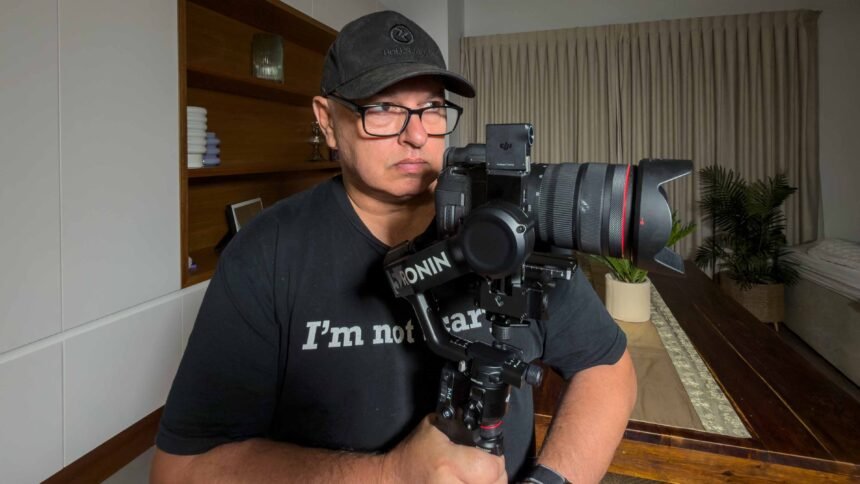
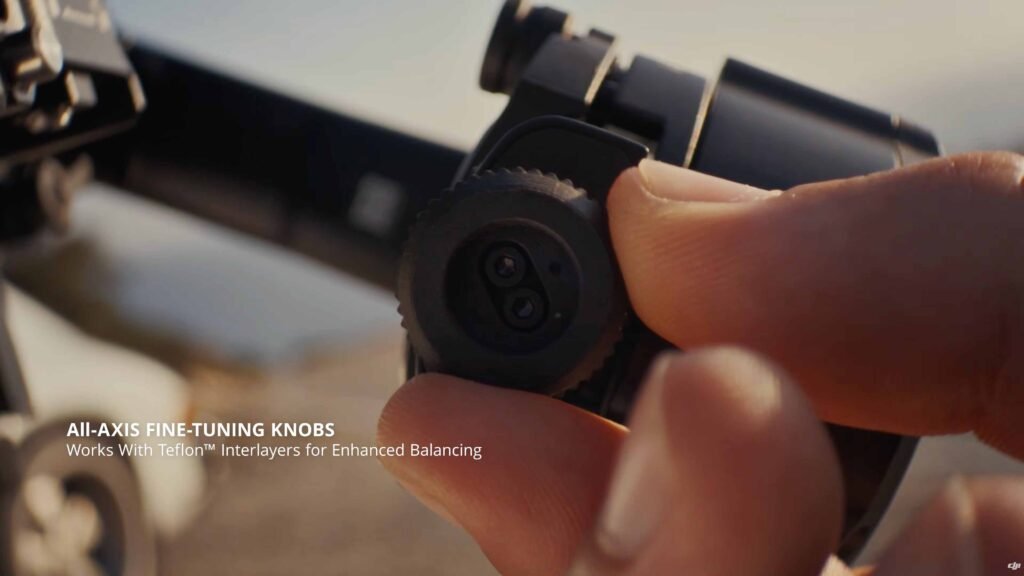
Fine-tuning knobs on each axis arm (front-back, tilt, roll, pan) are very easy to adjust thanks to the aluminium alloy and Teflon interlayers. This is soooo good. I found them far smoother than the RS 4 Mini I bought last year. I was able to balance the Canon R5 MII and 24-70mm zoom lens quite quickly. This isn’t a light payload, so I’m impressed. If you absolutely hate balancing a gimbal, this could be the main reason to buy the RS 5; it’s that good.
The changes to vertical shooting mode are pretty seamless, and although I never use it, I might be convinced to give it a go this time around.
Intelligent Tracking
The RS 4 Mini was first to get the Intelligent Tracking Module, and it’s been a great feature but not always bang on. The new RS system is a big upgrade in a short space of time. The new module allows videographers to frame live footage and track any subject right from the gimbal’s touchscreen.
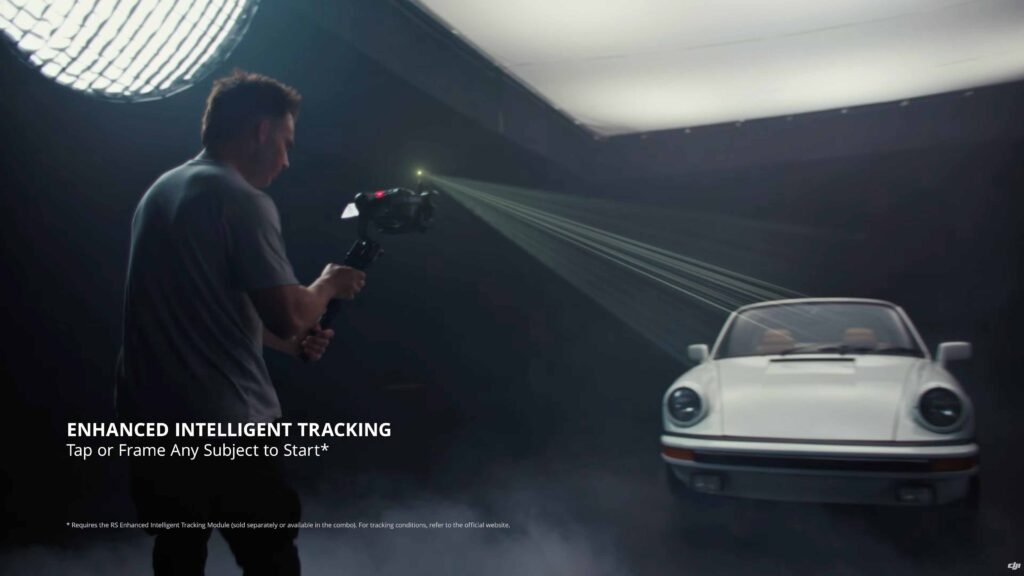
The new module also provides the ability to track objects other than people, such as vehicles, pets, or any object, and can maintain locked focus on a human subject up to 10 metres away. If the subject leaves the frame, the module can easily reacquire them, saving the camera operator from chasing the subject.
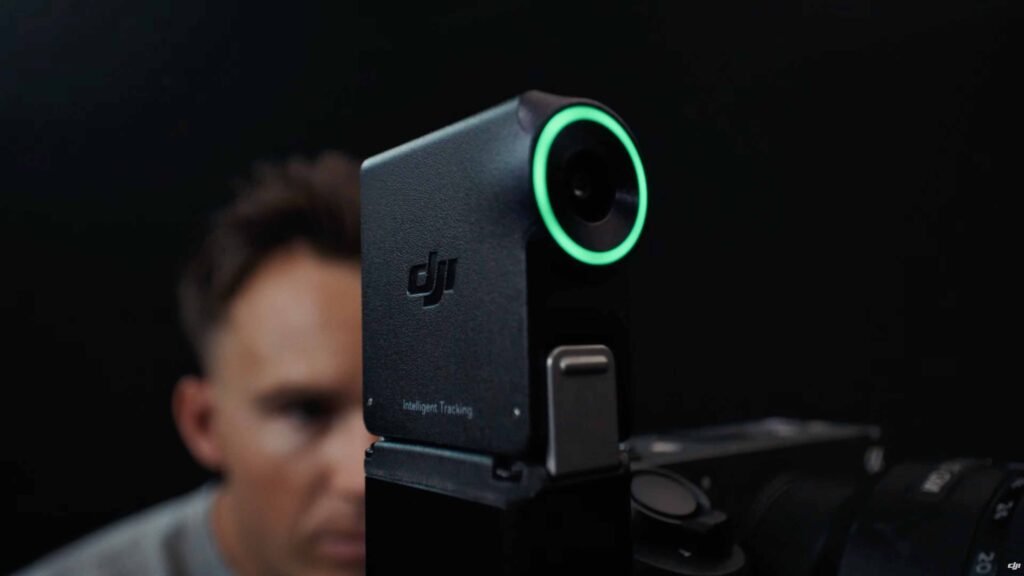
The module sits on top of the gimbal magnetically, without the need for an adapter or other accessories. It’s now a simple process for solo shooters to pull off surround shots, reverse tracking, or single-person fixed-camera tracking.
Stabilisation
The DJI RS 5 features the 5th generation RS Stabilisation Algorithm, improving peak motor torque by 50%. Although the payload 3 kg limit is less than the RS 4 Pro’s 4.5 kg, the RS 5 gimbal performs brilliantly whether walking or running.
The gimbal itself is pretty light, weighing just 1.46kg with the battery grip.
Operation
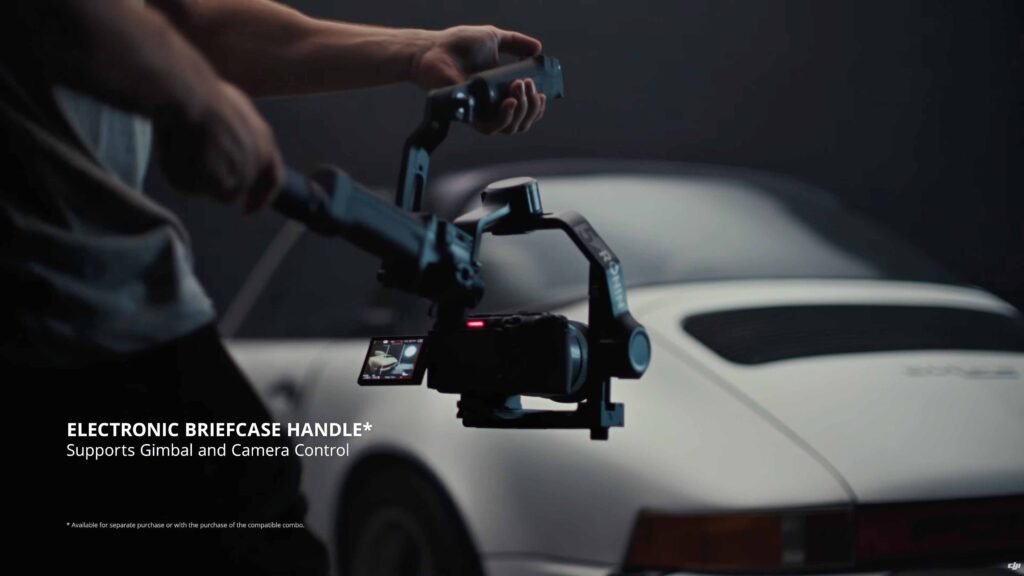
The RS 5’s new Electronic Briefcase Handle makes it possible to capture different camera angles from above or below the subject, while offering electronic control of the camera. Its comfortable grip and easy-to-reach joystick or button controls allow for one-hand operation.
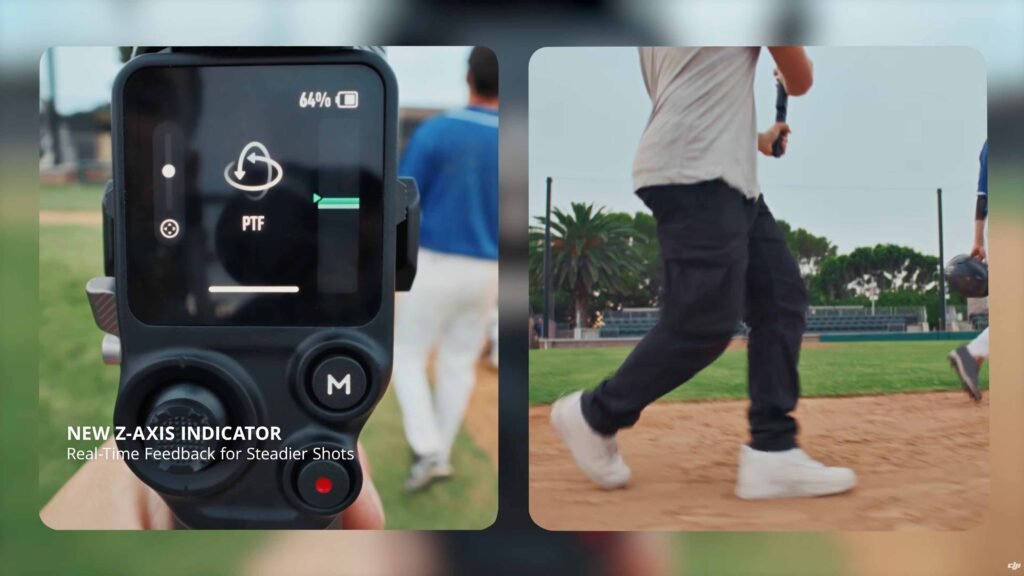
Although there’s no Z-Axis stabilisation, as many punters had hoped for, there is an all-new on-screen Z-Axis indicator which suggests how the videographer should adjust their gait and pace to reduce image shake.
The RS 5 has expanded compatibility for wireless control, with RS 5’s Bluetooth shutter now supporting Panasonic and Fujifilm cameras, in addition to previously supported cameras from Sony, Canon, and Nikon.
2nd-Gen Automated Axis Locks automatically unlock the gimbal when it powers on, ensuring creators are ready to film in an instant. Similarly, the gimbal locks immediately upon power-off or during sleep mode.
Battery Life
Battery life is excellent on the RS 5. It can be fully charged in one hour, a spec I can confirm. It’s a 60% improvement in charging efficiency compared to RS 4. The standard battery delivers 14 hours of power while the new BG70 High-Capacity Battery Grip extends RS 5’s runtime to 30 hours.
The 3rd-Gen Native Vertical Switch allows videographers to switch to vertical shooting.
Pricing and Availability
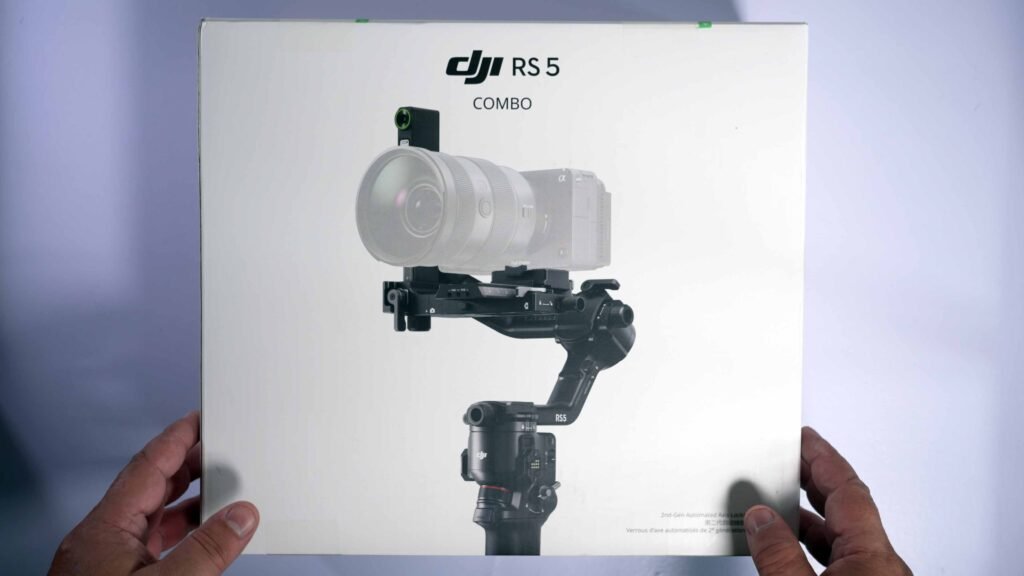
DJI RS 5 is available now from authorised retailers and at dji.com/au. I would strongly recommend going for the Combo package.
- The standalone DJI RS 5 retails for A$839 and includes one Gimbal, one Quick-Open (Tripod), one Lens-Fastening Support, one Screw Kit, one Upper Quick-Release Plate, one Lower Quick-Release Plate, one BG33 Battery Grip, and one Multi-Camera Control Cable.
- The DJI RS 5 Combo retails for A$999 and adds the RS Enhanced Intelligent Tracking Module, one Electronic Briefcase Handle, one L-Shaped Cable, and a Carrying Case.