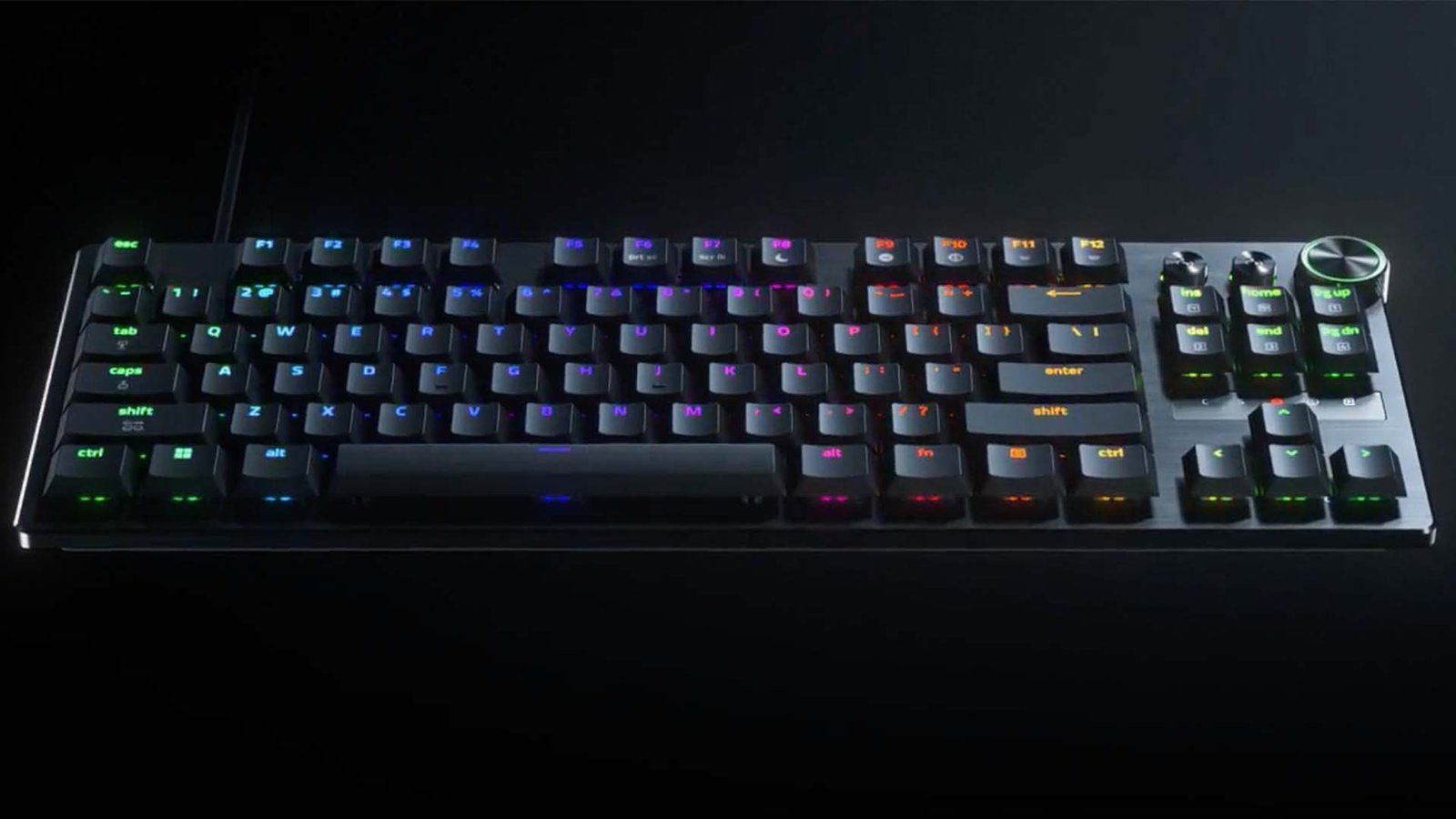

The Razer Huntsman V3 Pro Low-Profile Tenkeyless arrives as, perhaps, Razer’s most ambitious gaming keyboard yet, packing next-generation analogue optical technology into a slim form factor. With an 8,000 Hz polling rate and Gen-2 analogue switches, it promises to push the boundaries of what mechanical keyboards can deliver for competitive gaming.
Design & Build Quality
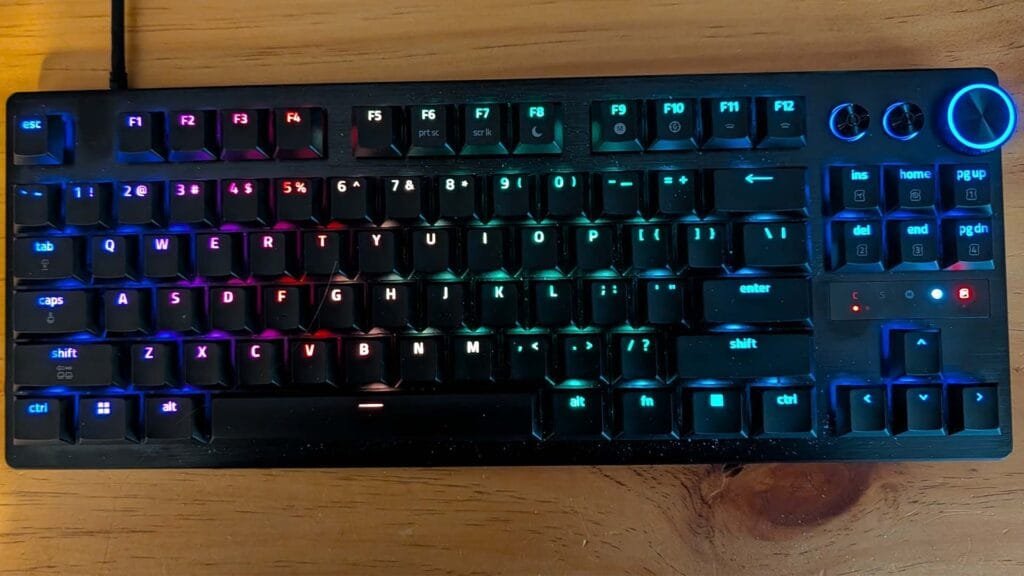
The low-profile form factor immediately sets this apart from traditional mechanical boards. The aluminium chassis provides rigidity without adding much weight, while the doubleshot PBT keycaps ensure durability and resist shine over extended use. The TKL layout preserves essential navigation with arrow keys and the function row—a practical choice for gamers who still want desk space for mouse movement.
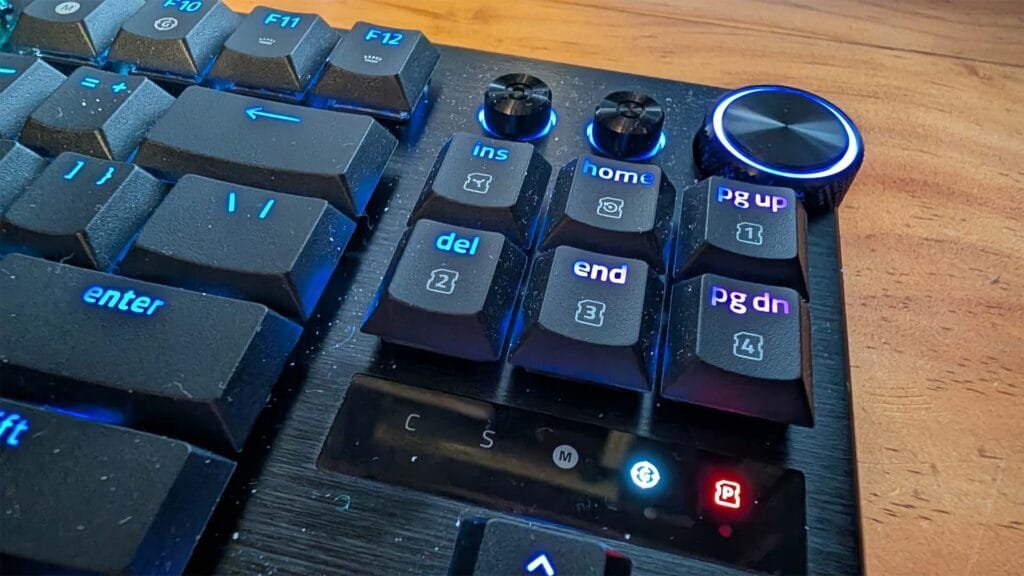
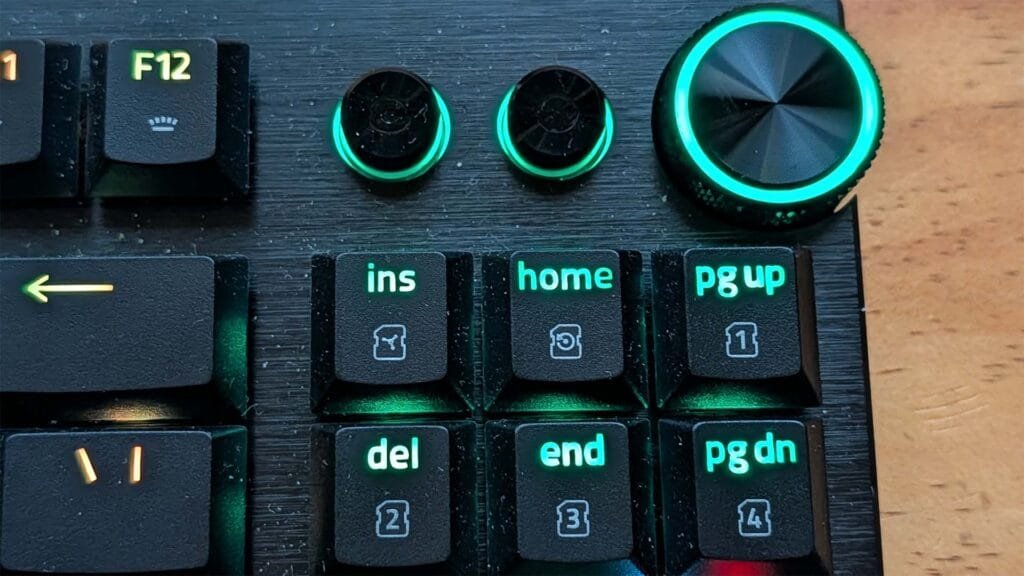
The multi-function digital dial and dedicated control buttons offer genuine, customisable utility rather than gimmicks, letting you quickly adjust volume, brightness, or game-specific macros without breaking focus.
Switch Technology & Performance
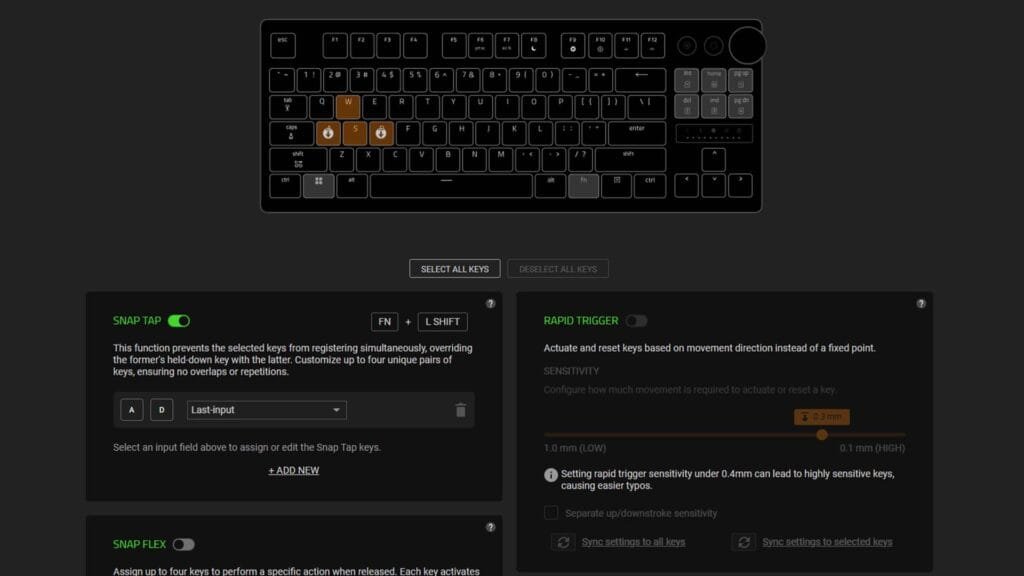
These aren’t your typical mechanical switches. Razer’s Gen-2 analogue optical switches offer adjustable actuation points from 0.1mm to 4.0mm, fully customisable per key, with rapid trigger technology that resets keys instantly upon release rather than at a fixed point. The lubricated internals provide smoother performance than previous generations. This means you can set WASD keys to register at 1mm with 0.2mm rapid trigger sensitivity while keeping shift, control, and space at a deeper 2mm to prevent accidental presses. Unfortunately, the only way to figure out what’s going to work for you is trial and error…
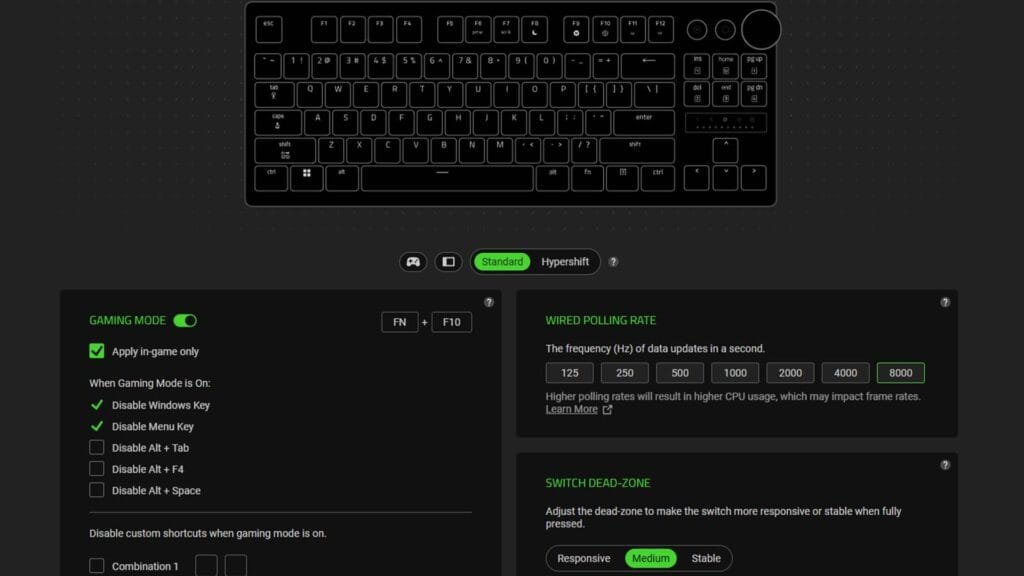
The 8,000 Hz polling rate theoretically reduces input lag to approximately 0.39ms—a meaningful reduction over standard 1,000 Hz boards for competitive FPS and rhythm games. Independent testing suggests the improvement is measurable, though the real-world benefit depends heavily on your monitor refresh rate and game engine.
In fast-paced titles, the combination of low-profile switches (shorter travel distance) and rapid trigger creates genuinely snappy response times. The Snap Tap feature on A/D keys enables instant counter-strafing in shooters like Counter-Strike, Escape from Tarkov and Valorant by registering directional inputs faster than human reaction time; even someone significantly younger than myself typically allows.
The low-profile design naturally favours gaming over extended typing sessions. While the lubricated switches feel smooth and consistent, the reduced key travel won’t satisfy enthusiasts accustomed to tactile click or deep bottom-out feedback. It’s a trade-off—performance over plushness.
Software & Customisation
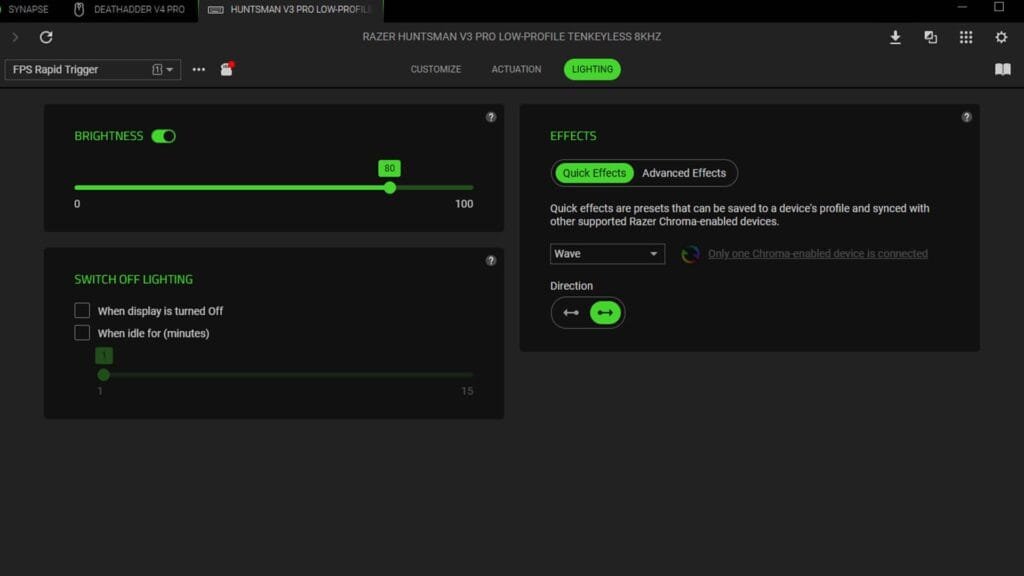
Razer Synapse handles all customisation, from actuation mapping to Chroma RGB lighting profiles. On-board storage saves up to five profiles directly to the keyboard, meaning settings travel with you to tournaments or LANs without relying on cloud-synced software.
Chroma integration remains strong if you’re invested in the Razer ecosystem—mice, headsets, and mousepads all synchronise for unified lighting effects.
At this price, it sits in flagship territory alongside competitors like the Wooting 60HE v2 and Keychron Q5 Max. Consider the price-to-value ratio for casual gamers who likely won’t notice the 0.39ms difference versus a quality 1K board. The wired-only USB-C connectivity removes wireless convenience, and the full feature set requires Synapse for maximum customisation.
Additionally, the low-profile typing experience is subjective—some find short-travel switches less satisfying for non-gaming use.
The Gaming Experience
Put the Huntsman V3 Pro Low-Profile TKL on your desk and start playing, and the differences become immediately apparent. In fast paced, or competitive shooters like Counter-Strike 2, Escape from Tarkov and Valorant, the rapid trigger technology transforms movement mechanics. Holding down A, releasing and re-pressing for counter-strafing happens faster than you’d expect—almost imperceptibly, but your aim settles noticeably quicker. This isn’t just marketing fluff; in ranked matches, those milliseconds compound over hundreds of rounds.
The adjustable actuation points let you optimise for different game genres without compromise. Set WASD to 0.8mm for instant directional changes in fighting games or fast-paced MOBAs, then dial up the spacebar to 2.5mm to prevent accidental bunny-hops during tense moments. Once configured, you forget about it—the keyboard simply responds the way you need it to, every time.
Rhythm games benefit similarly from the shorter travel distance and rapid reset. Notes hit cleanly without the mushy feel of traditional low-profile boards, and the 8,000 Hz polling rate ensures no input gets lost between frames, even at high refresh rates. In testing with tracks demanding sub-100ms reactions, the consistency held up throughout extended sessions.
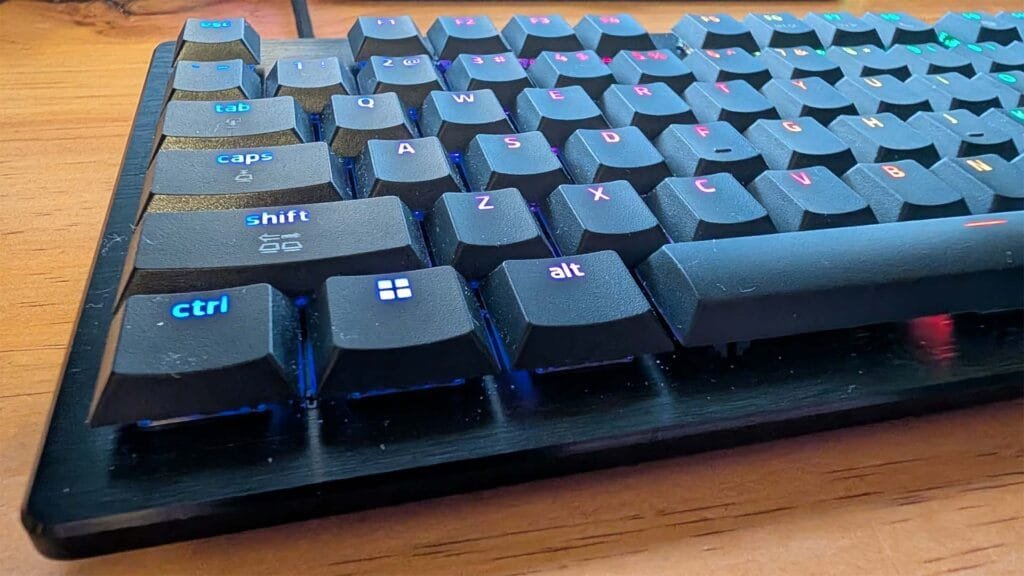
What surprised me most was how quickly these features became part of muscle memory. After a few hours of gameplay, reverting to a standard mechanical keyboard felt almost sluggish by comparison. The low-profile profile keeps fingers closer to the surface, reducing fatigue during marathon sessions. However, if you’re a fan of deep tactile feedback or enjoy the satisfying clack of full-travel switches, the Huntsman V3 Pro won’t satisfy that craving—it trades plushness for precision.
For competitive players chasing marginal gains, the real advantage lies not in raw latency numbers but in consistency. The lubricated internals mean every keystroke feels identical whether you’ve played for 30 minutes or three hours. There’s no break-in period, no variation in actuation force—just reliable, repeatable performance when it matters most.
Pricing and Availability
The Razer Huntsman V3 Pro Low-Profile Tenkeyless 8KHz carries an RRP of A$399.95. It is available now through Razer.com, RazerStores, and authorised retailers like JB Hi-Fi.
Conclusion
The Razer Huntsman V3 Pro Low-Profile TKL does redefine responsiveness in the way it markets—the technology genuinely pushes input latency into territory previously reserved for research prototypes. For competitive esports players, streamers, and hardware enthusiasts, it’s one of the most capable gaming keyboards currently available.
However, the premium pricing means it’s not a universal recommendation. Hybrid workers who use the same setup for gaming, Casual gamers or budget-conscious buyers will find relatively low returns. The real winners are those whose play style benefits from split-second advantages and who appreciate granular control over their peripheral behaviour.