
The United States has taken a significant step in tightening its cybersecurity stance, with the Federal Communications Commission (FCC) announcing that new consumer routers made overseas will no longer be approved for sale in the country.
In a move driven by national security concerns, the FCC has updated its “Covered List” to include all foreign-produced consumer-grade routers — the everyday devices found in homes that connect phones, laptops and smart home gear to the internet.
WHAT’S ACTUALLY CHANGING?
Put simply, this decision blocks new models of foreign-made routers from entering the US market. Any router added to the Covered List cannot receive the required FCC equipment authorisation, which is needed before products can be imported, marketed or sold.
However, there’s an important distinction for everyday users:
- If you already own a router, you’re fine.
- If a model is already approved and on sale, it can still be sold.
- The restriction applies only to new, not-yet-approved devices.
So there’s no immediate disruption for households or businesses already using existing networking gear.
WHY THE CRACKDOWN?
The decision follows advice from US national security agencies, which determined that foreign-made routers could pose what they described as “unacceptable risks”.
The concerns centre around two key issues: supply chain vulnerability and cybersecurity threats. Authorities warn that compromised networking equipment could potentially be used to disrupt critical infrastructure, enable espionage, or provide a foothold for cyberattacks.

In fact, previous cyber incidents — including campaigns referred to as Volt, Flax and Salt Typhoon — have reportedly leveraged weaknesses in network devices to target infrastructure and organisations.
NOT A TOTAL BAN (YET)
Interestingly, the move stops short of a blanket ban, which would leave precious few US-based manufacturers (primarily Cisco and Juniper Networks) to meet the needs of the entire country, if they move manufacturing back to US shores. Manufacturers still have a pathway to sell devices in the US — but only if they receive what’s called “Conditional Approval” from agencies like the Department of Homeland Security.
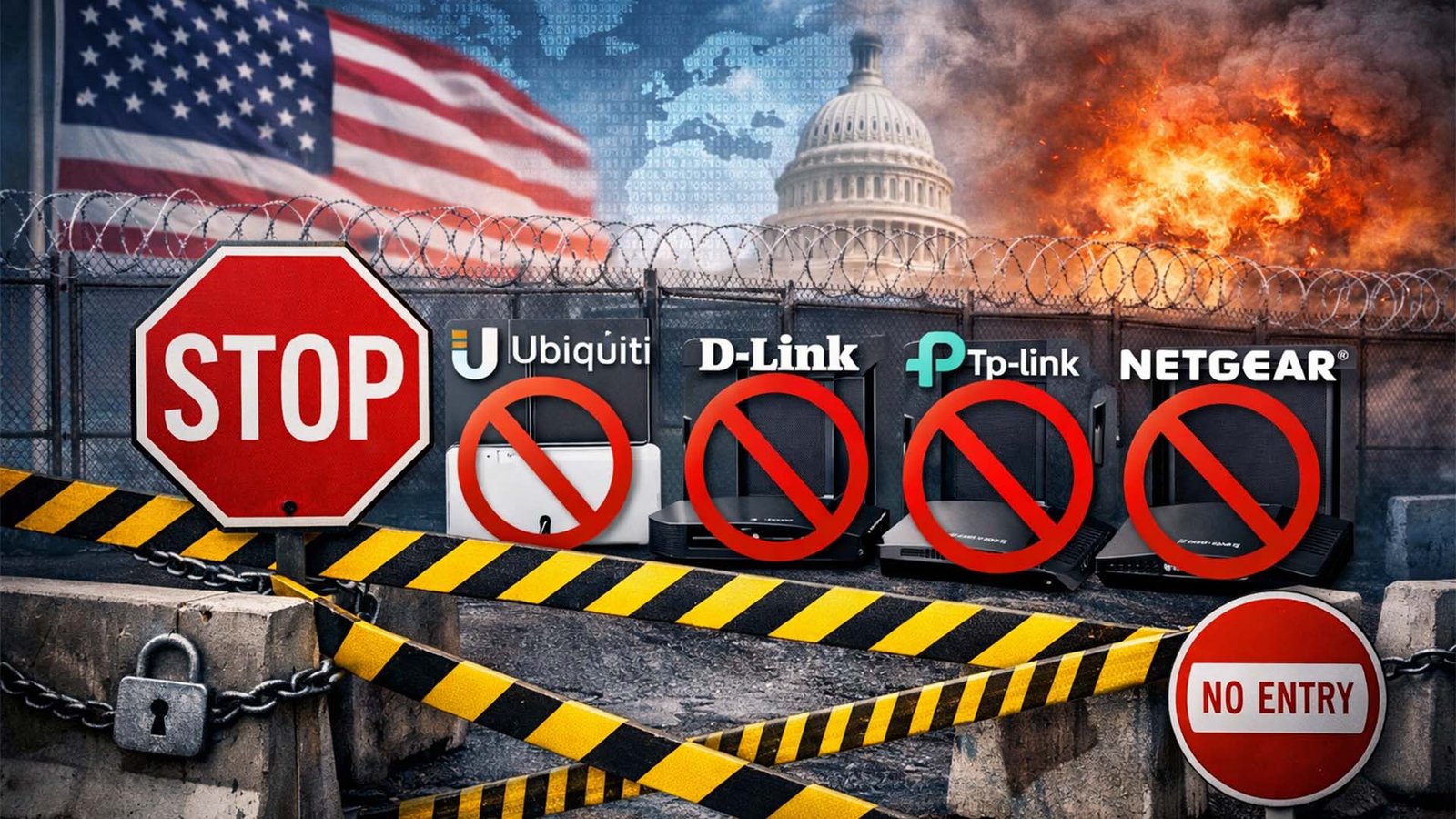
This means affected vendors such as Asus, Eero, Ubiquiti, D-Link and Netgear will need to prove their devices meet strict security requirements before being allowed into the market.
WHAT IT MEANS OUTSIDE THE US – INCLUDING AUSTRALIA
For Australian consumers, there’s no direct impact — at least for now. The FCC’s authority only applies within the United States, and there’s been no similar move announced by Australian regulators.
That said, decisions like this tend to ripple globally. Australia has already taken strong positions on telecommunications security in the past, so it wouldn’t be surprising to see increased scrutiny around networking hardware here over time.
For everyday buyers, it’s a timely reminder that routers — often “set and forget” devices — are actually critical pieces of infrastructure in the modern home. Keeping firmware updated, choosing reputable brands, and avoiding unsupported hardware remain just as important as ever.
THE BIGGER PICTURE
This move is part of a broader push by the US government to reduce reliance on foreign technology in critical systems. It reflects growing concern that everyday consumer devices could become entry points for much larger cyber risks.
While the immediate impact on consumers is minimal, the long-term effect could reshape the router market — potentially limiting choice, increasing costs, or accelerating the development of locally manufactured networking gear.
For now, though, if your home Wi-Fi is running smoothly, there’s no need to panic — but it might be worth paying a little more attention to what’s powering your network behind the scenes.