
There’s never been a more complicated time to buy a car.
Internal combustion engine (ICE) vehicles are still everywhere, hybrids are becoming mainstream, plug-in hybrids promise the best of both worlds, and full electric vehicles (EVs) are being pushed as the inevitable future. On paper, it should be simple—go electric and be done with it.
But in reality, the decision isn’t necessarily that clean.
After weighing up all the options, I landed on a hybrid vehicle. Not a plug-in hybrid, not a full EV—just a conventional hybrid. And honestly, it feels like the most practical choice for my needs now.
Understanding the Options (Without the Marketing Spin)
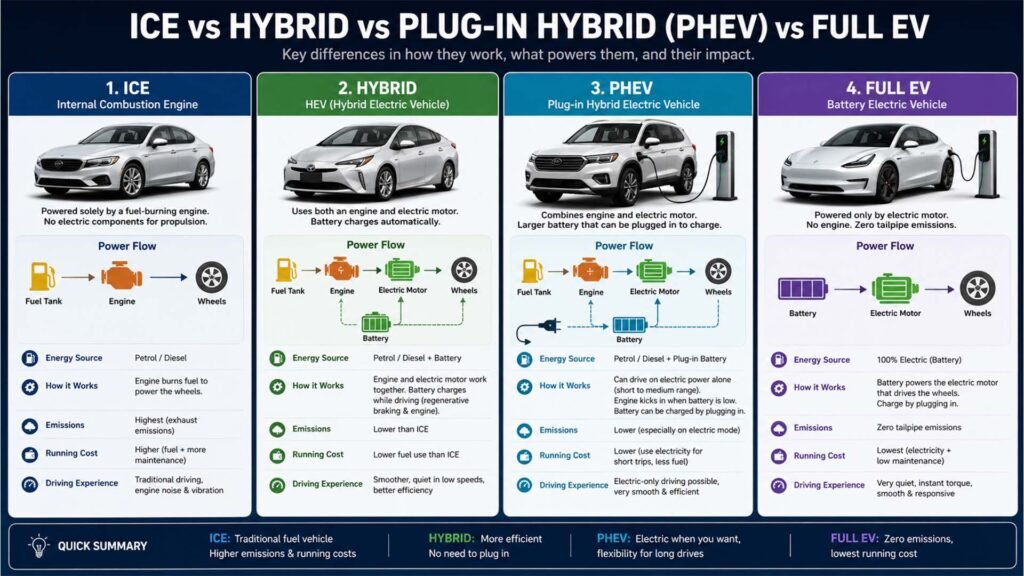
Before getting into the “why”, it’s worth quickly grounding each option’s meaning in day-to-day use.
- ICE (Internal Combustion Engine):
The traditional petrol or diesel vehicle. Reliable, familiar, but increasingly inefficient and facing long-term phase-out pressures.
- Hybrid (HEV):
A self-charging hybrid that uses a petrol engine and an electric motor together. No plugging in—ever. The car manages everything.
- Plug-in Hybrid (PHEV):
A larger battery that you can charge via a power outlet. Offers limited electric-only driving, but still relies on petrol for longer trips.
- Full EV:
No petrol at all. Battery-only driving that requires regular access to charging infrastructure, whether that’s at home or one of the many commercial options in public spaces.
Each has its place—but for me, the differences become very real when looking at them with Australian conditions and driving habits in mind.
How the decision was made
A big part of this decision came down to something very simple: fuel use with the vision of long-term savings.
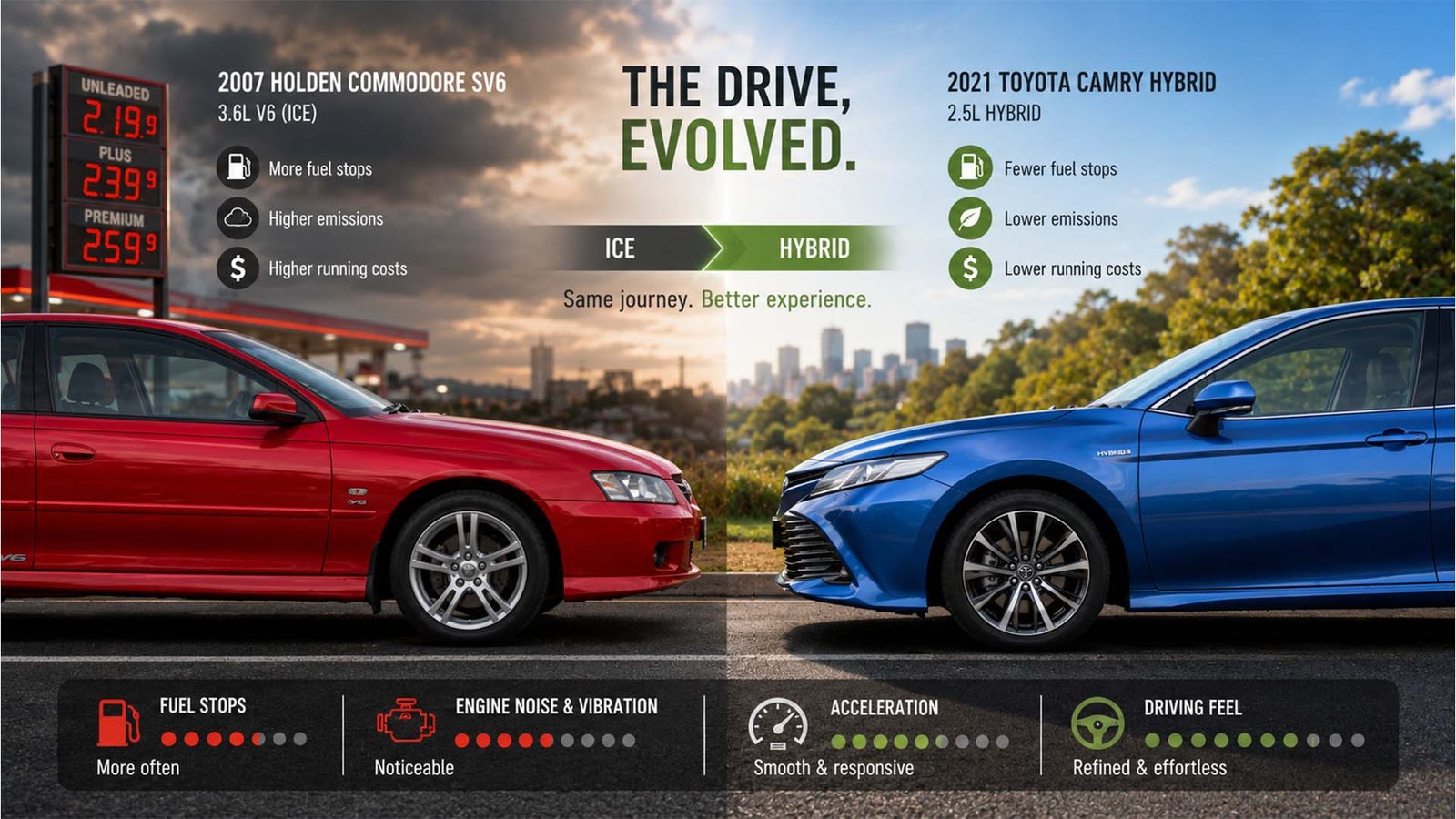
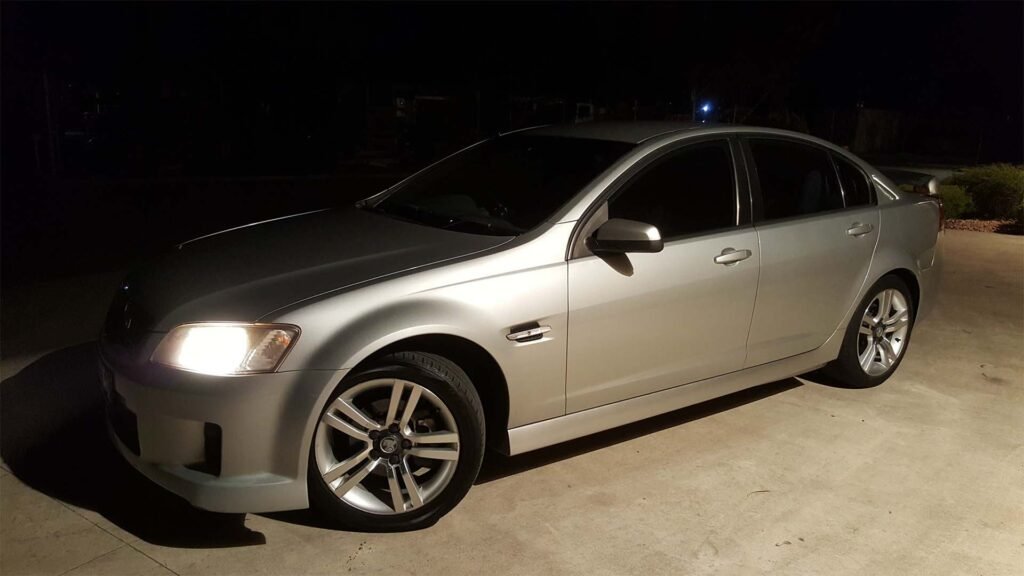
I’m coming from a 2007 Holden VE SV6 Commodore—a proper Aussie staple, powered by a 3.6L V6. It’s a great car in a lot of ways, and I loved the thing, but it’s also very much a product of its time.
Around town, I’ve consistently seen fuel consumption sitting between 10.8 and 11.5L/100km. That’s on a good day. Throw in an Adelaide summer, crank the air conditioning, and it’s not unusual to see that climb to 13.1L/100km or more.
That’s just the reality of a naturally aspirated V6 doing stop-start suburban driving.
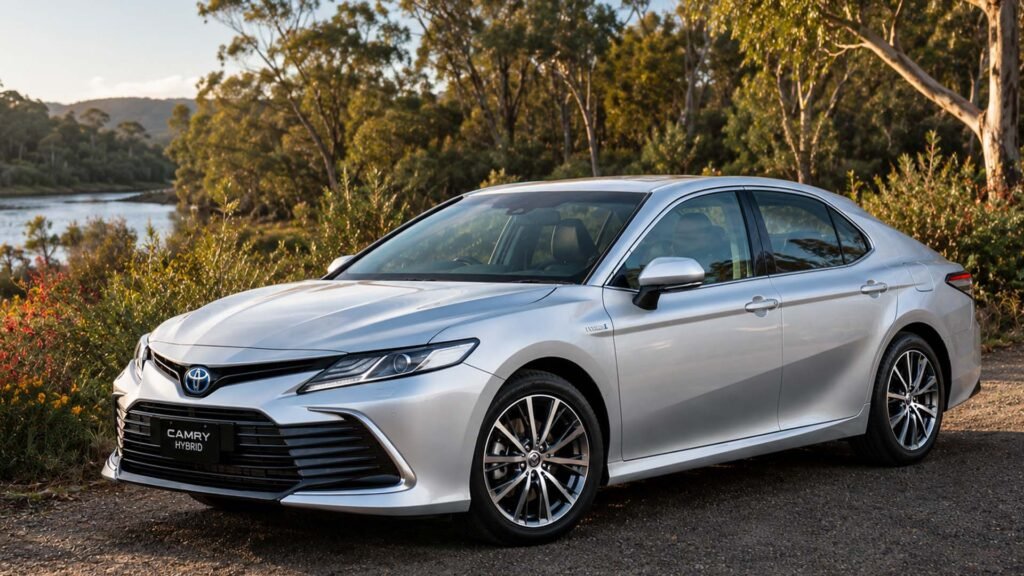
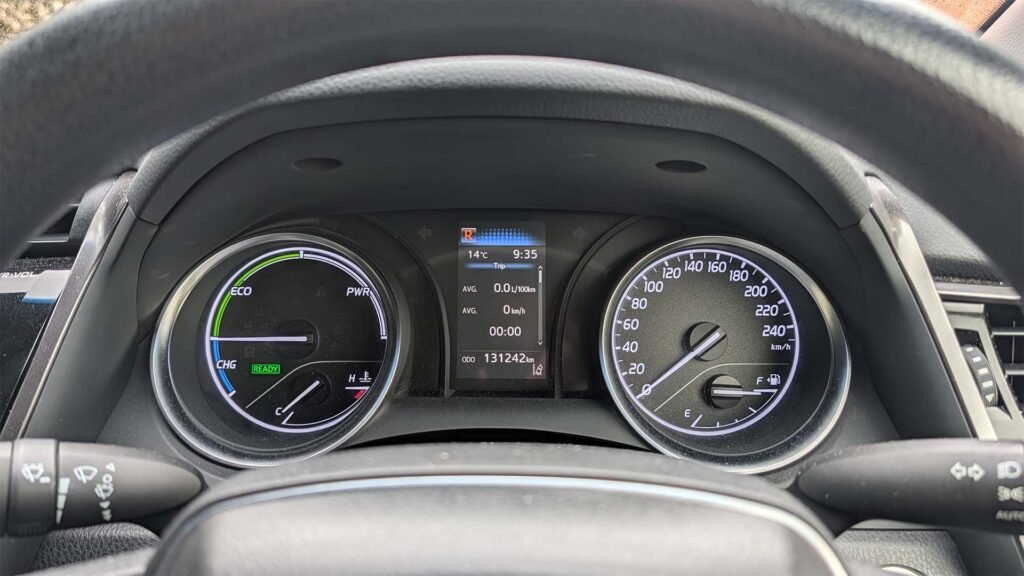
Now compare that to what I’ve recently moved into—a 2021 Toyota Camry Hybrid, which, on paper, and based on real-world reports, I’m getting somewhere around 4.0 to 4.5L/100km in similar urban driving conditions.
That’s not a small improvement—it’s a massive shift.
Putting That Into Perspective
Even without getting too deep into spreadsheets, the difference is pretty stark.
- VE Commodore: ~11–13L/100km around town
- Camry Hybrid: ~4–4.5L/100km
That’s effectively cutting fuel consumption by more than half.
In real-world terms, that means:
- Fewer trips to the servo
- Much lower weekly fuel spend
- Less exposure to fluctuating petrol prices
And importantly, it’s achieved without changing how I drive, where I drive, or how often I drive. Added to that, if I purchased a full EV, or PHEV, that (although only momentarily) increases the time it takes to get out of the house; and as a Volunteer Firefighter, seconds literally can count!
Why This Matters More Than Specs Sheets
This is where hybrids really make their case.
The fuel savings aren’t theoretical—they’re immediate and consistent, especially in urban environments where hybrids spend a lot of time running on electric power at low speeds.
Unlike a PHEV, I don’t need to think about whether I’ve charged the battery to get those benefits and unlike an EV, I don’t need to change how or where I refuel; or invest in home based infrastructure to support effective charging of the car.
It just… happens.
Every time I slow down, brake, or crawl through traffic, the car is clawing back energy and using it to reduce fuel consumption.
Adding to this, the availability of public charging stations in greater metropolitan Adelaide and country SA isn’t great yet. In conversation with some EV owners I know, those charging stations are often already occupied, which just costs time you may not have.
A Quiet but Significant Upgrade
What surprised me most is how effortless this change feels.
Going from a V6 petrol sedan to a hybrid sounds like a big shift—and in terms of efficiency, it absolutely is—but behind the wheel, it doesn’t feel like a compromise. The Commodore was bigger, more powerful and – a quite rare – manual transmission and a joy to drive.
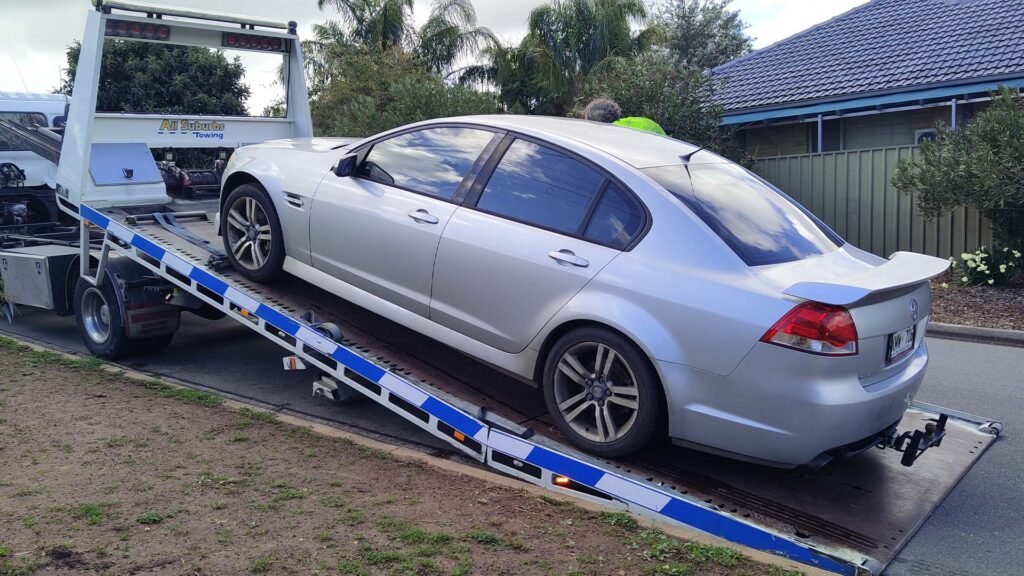
So it’s quite a change, losing about 30% of the power under my right boot; and going to the automatic gearbox of the Camry. While it’s a pretty significant change, but if anything, it feels like a significant upgrade:
- Smoother in traffic
- Quieter in general, particularly so at low speeds
- Less “work” being done by the engine
- Added creature comforts of the 15 year newer vehicle
- Adaptive Cruise Control
- Lane Departure Reminder
- Reversing Camera
- Seat Belt Warnings (useful with kids in the back!)
And all the while, it’s using a fraction of the fuel.
REAL WORLD RESULTS
After my first full month of having the Camry, I’m more than satisfied that I made the right choice. The first time I filled the tank was after a full month of motoring, which resulted in a 41-litre fill at about $72.00, which isn’t bad at all. Adding the consideration I put premium into the Camry at higher cost, and the Commodore would have certainly needed filling — at least 60 litres — twice in that time at a cost of around $200.00. The hybrid hasn’t just solidified itself as the right choice for me; it’s concreted in.
The reality is that my next vehicle after this one will almost certainly be a full EV. I see the benefits, long-term cost savings; although short-term, they’re a significant investment, running costs for an ICE vehicle are only going to increase over time.
The bottom line
It’s not just about future-proofing—it’s about what makes sense for your use today and the foreseeable future and fits within your budget. The changeover to a 5 year old hybrid vehicle was affordable, but dropping 40k + on a PHEV or full EV just isn’t realistic at this time for my family.
When you can cut your fuel use from 11–13L/100km down to around 4L/100km, without changing your habits or relying on infrastructure, the argument for hybrid becomes very hard to ignore.